


Málaga’s historic Palacio de la Tinta reopens as a luxury hotel inspired by Picasso
Built in 1908 as the headquarters of the Andalusian Railway Company, the landmark building has been transformed into the five-star Áurea Palacio de la Tinta, with 141 rooms, a spa, rooftop pool and interiors inspired by Picasso.
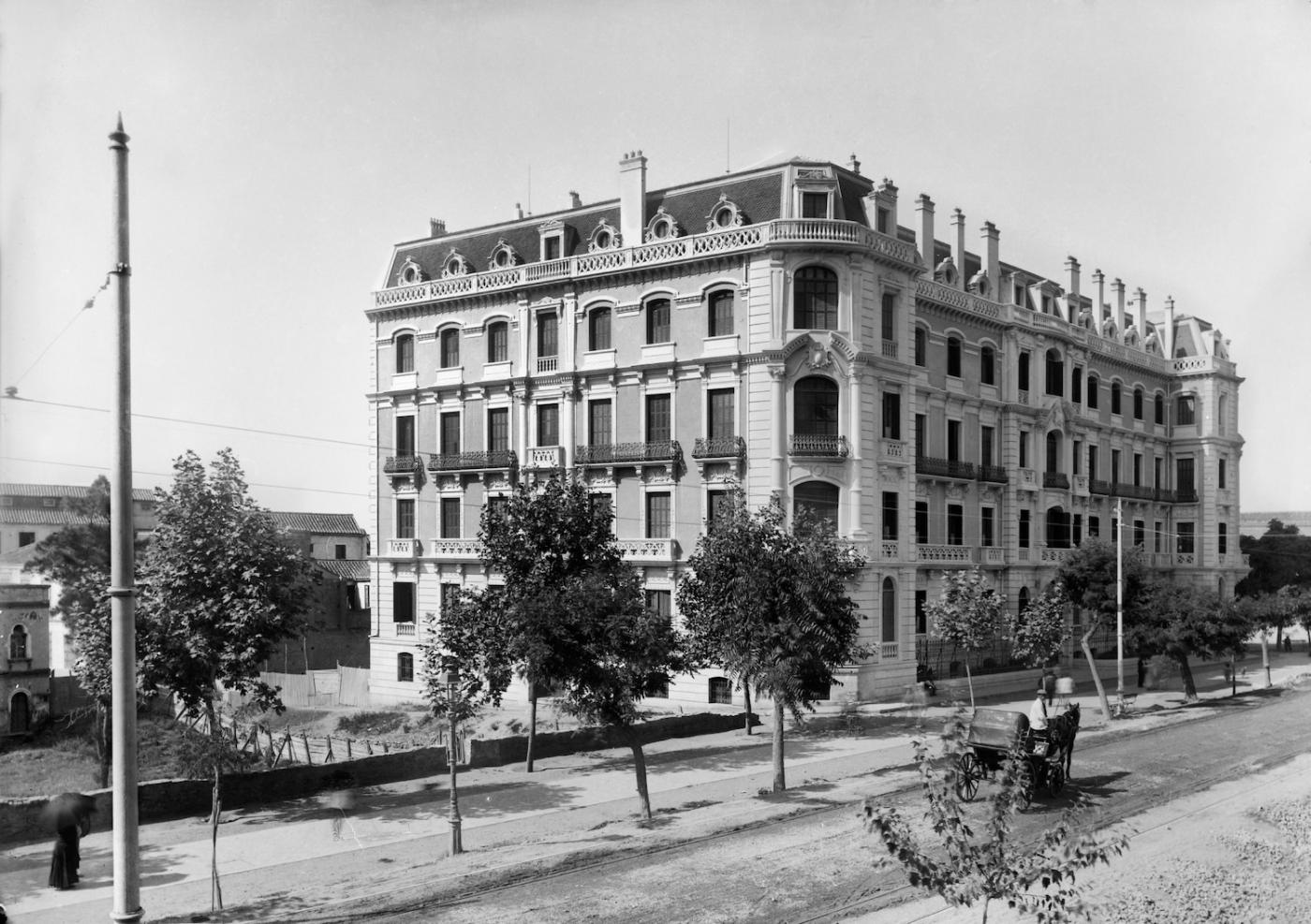

One of the most distinctive buildings on Málaga’s Paseo de Reding has begun a new chapter. The historic Palacio de la Tinta, built in 1908 and closely linked for decades to the railway and public administration, has been restored and transformed into the Áurea Palacio de la Tinta, a five-star hotel opposite La Malagueta beach.
The project brings new life to a building deeply connected with Málaga’s history and turns it into a high-end hotel combining architecture, design, gastronomy and references to the creative world of Pablo Picasso.
The restoration preserves some of the property’s most recognisable historic features while adding guestrooms, a spa, restaurant, event spaces and a rooftop terrace overlooking the Mediterranean and the Gibralfaro area.
From railway headquarters to five-star hotel
Long before welcoming hotel guests, Palacio de la Tinta served a very different purpose.
The building was constructed in 1908 to house the headquarters of the Compañía de los Ferrocarriles Andaluces, one of the companies that played a major role in the development of southern Spain’s railway network.
Administrative work related to the railway system was carried out from the building.
Train tickets were also issued during a period when much of this work was still completed by hand.
Why is it called Palacio de la Tinta?
The building’s unusual name is directly linked to its railway past.
During its years as an administrative centre for Ferrocarriles Andaluces, large quantities of ink were used to write and issue train tickets by hand.
That daily activity eventually gave rise to the nickname by which the building became known in Málaga.
More than a century later, the same name has been brought back as part of the identity of the new hotel.
Its railway history therefore remains present even though the building now serves a completely different purpose.
A 1908 landmark opposite La Malagueta
Palacio de la Tinta stands at 20 Paseo de Reding, just a short distance from La Malagueta beach and Málaga’s historic centre.
The building covers approximately 10,500 square metres and is one of the city’s most distinctive examples of early 20th-century architecture with strong French influences.
Its monumental façade and fin-de-siècle character have made it a familiar landmark in the area for decades.
Its location also places it close to some of Málaga’s most visited attractions, including La Malagueta, Muelle Uno, the Centre Pompidou and Gibralfaro Castle.
A building that has lived several lives
The end of its railway era did not mean the building was abandoned.
Throughout the 20th century it took on several administrative functions.
After the disappearance of the Andalusian Railway Company, the property became linked to public bodies and later housed offices including the Confederación Hidrográfica del Sur and the Agencia Andaluza del Agua.
These uses kept the building active, although for many years it remained largely disconnected from everyday public use.
Its conversion into a hotel changes that relationship with the city.
Áurea Palacio de la Tinta begins a new chapter
The hotel opened its doors in May 2026, followed by an official inauguration later in the year.
It forms part of Áurea Hotels, Eurostars Hotel Company’s collection of distinctive properties, owned by Grupo Hotusa.
The brand focuses particularly on hotels located in buildings with strong historical, architectural or cultural identities.
In Málaga, the history of Palacio de la Tinta itself is a central part of the hotel experience.
Picasso inspires the interiors
While the exterior reflects the building’s railway and architectural past, much of the interior takes inspiration from another unmistakably Málaga figure: Pablo Picasso.
The design draws particularly on his Cubist period.
Geometric forms, fragmented compositions, contrasting tones and visual references to Cubism appear throughout different spaces in the hotel.
The aim is not to reproduce individual works by Picasso, but to reinterpret elements of his artistic language through contemporary interior design.
A tribute connecting the hotel with Málaga
Choosing Picasso strengthens the hotel’s connection with the city.
The artist was born in Málaga in 1881 and remains one of the capital’s most important cultural figures.
Áurea Palacio de la Tinta incorporates that link without turning the property into a museum.
The references are mainly expressed through colour, geometry and decorative details.
The result brings together two different chapters of Málaga’s history: the railway expansion of the early 20th century and the artistic legacy of one of its most internationally recognised creators.
141 rooms inside a historic building
The hotel has 141 rooms, according to its official information.
Because of the historic structure of the property, its layout does not necessarily follow the uniform pattern of a purpose-built modern hotel.
That helps retain some of the original character while adapting the building to contemporary standards.
Natural materials, carefully planned lighting and artistic references complete the interior concept.
Historic features have been preserved
One of the main challenges of the restoration was transforming the property without removing the elements that tell its story.
The project has preserved significant features including the historic façade, main staircase and Patio de los Naranjos.
Particular attention has also been paid to some of the building’s original mechanical features.
Among them is its historic lift, a reminder of a time when such technology represented a major innovation in Málaga.
One of Málaga’s earliest lifts
Palacio de la Tinta was among the city’s buildings to introduce a lift at a relatively early stage.
The original mechanism has been preserved as a heritage feature inside the hotel, while a newer lift recreates part of its visual design.
In this way, an element that symbolised modernity more than a century ago remains part of the story of the property.
The restoration combines this preservation with modern lifts and accessibility improvements.
A spa beneath the historic palace
The new hotel also incorporates wellness facilities.
Guests have access to a spa and gym, extending the experience beyond accommodation alone.
Integrating these facilities formed part of a wider restoration that had to introduce the services expected of a contemporary luxury hotel within a structure built more than 100 years ago.
That balance between preservation and modern use is one of the defining features of the project.
A rooftop pool overlooking Málaga
One of the most striking spaces is found at the top of the building.
The rooftop includes a terrace with a swimming pool and sunbathing area, offering views towards the Mediterranean and the Málaga skyline.
The location makes it possible to take in some of the city’s most recognisable surroundings, from La Malagueta to the higher ground around Gibralfaro.
The rooftop has effectively transformed the historic roof into one of the hotel’s main social spaces.
Dining on the upper floor
The project also includes its own gastronomic offering.
Asador Contrapunto occupies part of the upper level and is open both to hotel guests and outside visitors.
Its concept focuses on produce-led cuisine and aims to incorporate references to Málaga and the surrounding region.
The restaurant also makes use of architectural features including timber structures and elevated views from the upper part of the building.
Heritage transformed into accommodation
The conversion of Palacio de la Tinta forms part of a wider trend in Málaga: historic buildings being given new life through hotel, cultural or gastronomic uses.
In this case, the main attraction is not simply its five-star status.
Its appeal also lies in staying inside a building that tells part of the story of Málaga’s economic and urban transformation at the beginning of the 20th century.
Its railway heritage survives through its name, architecture and the way the hotel presents its history.
From railways to tourism
The change of use is particularly symbolic.
More than a century ago, Palacio de la Tinta was closely connected with people travelling by train.
Journeys were managed from the building and tickets were written out there by hand.
Today it is once again connected with travellers, but in a completely different way.
Former administrative rooms now welcome tourists and business visitors arriving in Málaga.
A new five-star hotel for Málaga
The opening of Áurea Palacio de la Tinta also expands the city’s luxury hotel offer.
Málaga has increased its number of four- and five-star properties in recent years, particularly around the historic centre and coastal areas.
Palacio de la Tinta adds something different to that market: it occupies a landmark building that has been part of the cityscape for more than a century.
Its restoration has also returned regular activity to a property that spent many years serving administrative purposes.
Between the historic centre and La Malagueta
Its location is another major advantage.
From Paseo de Reding, guests can walk to La Malagueta beach, Muelle Uno, the port and much of Málaga’s historic centre.
The Centre Pompidou, Alcazaba and Gibralfaro area are also nearby.
This makes it possible to combine a stay in a historic property with easy access to some of the city’s main cultural and tourist attractions.
More than a century of Málaga history in one building
Few buildings in Málaga illustrate so many different stages of the city’s recent history as clearly as Palacio de la Tinta.
It began life as a railway headquarters, incorporated advanced technology for its time, later served as a public administration building and has now become a luxury hotel.
Its latest chapter also introduces a contemporary reference to Picasso and the growing importance of culture within Málaga’s tourism identity.
More than a century after litres of ink were used inside its offices to write train tickets by hand, the building is welcoming travellers once again.
This time, not to sell them a railway ticket, but to offer them a place to stay overlooking the Mediterranean.

Latest news



Similar News
Former Málaga Post Office moves closer to becoming a luxury hotel
Málaga
Gran Hotel Miramar turns 100: from luxury hotel to hospital, courthouse and back to five-star hospitality
Málaga
Málaga awaits the opening of the new Hotel Zenit San Telmo this September
Málaga
