Montecorto: The White Village in Málaga With Crystal-Clear Irrigation Channels and Roman Ruins You Need to Visit This Summer
Discover Montecorto, the white village in the Serranía de Ronda with dolmens, Roman remains, a Nasrid-era castle, and crystal-clear irrigation channels.
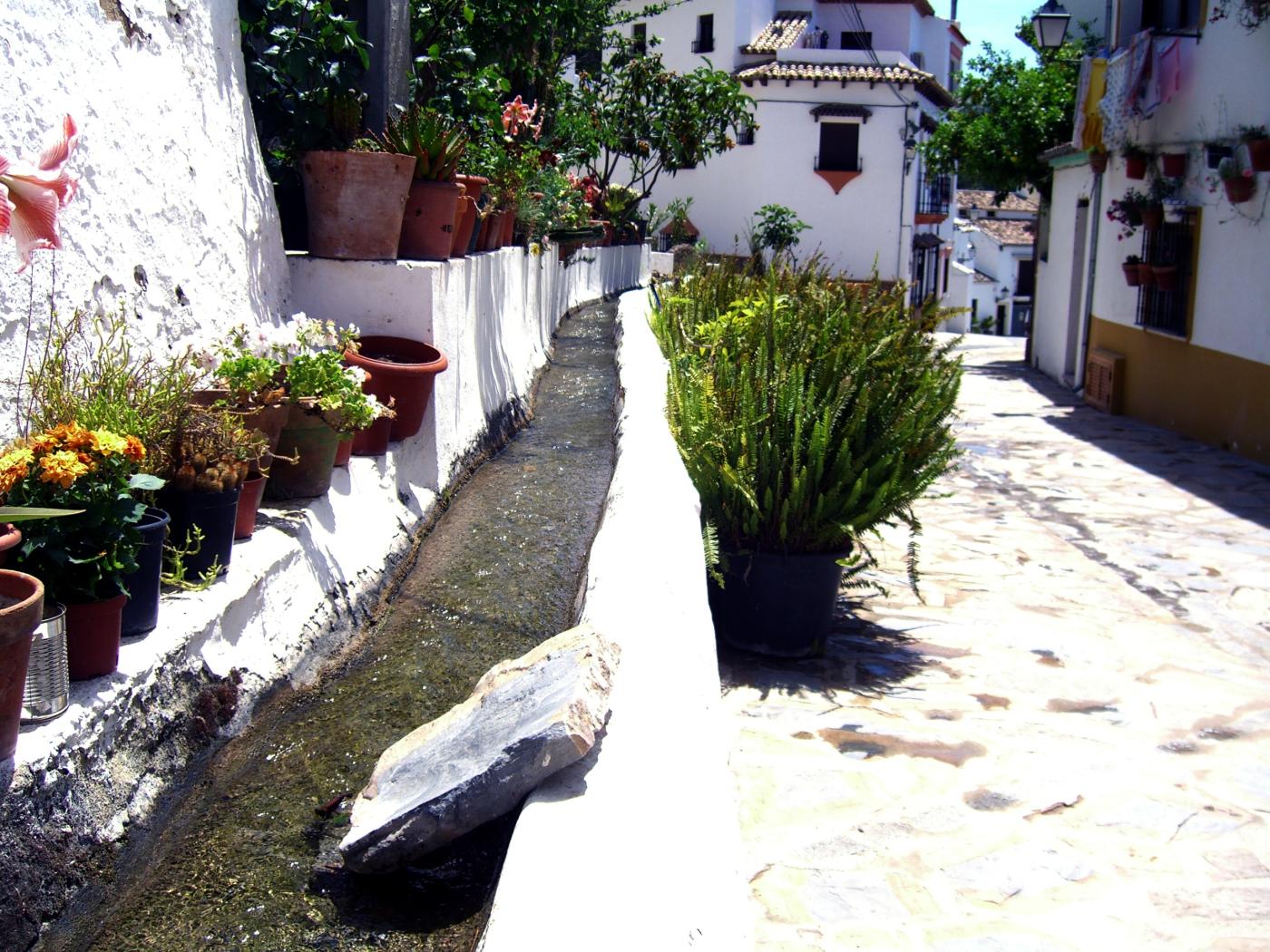

Some places seem to have been left untouched by time. Quiet streets, water flowing through ancient stone channels, archaeological remains recalling long-vanished civilizations, and mountain scenery wrapping around every corner. In the heart of the Serranía de Ronda, at the foot of the Sierra de Grazalema Natural Park, Montecorto brings all of that together in a town that has kept much of its original character intact, holding onto a historical and natural heritage as varied as it is surprising.
This small white village in the province of Málaga carries a legacy that begins in prehistoric times and runs through the Roman period, the Andalusi era, and the Christian age. Add to that a privileged setting, deeply rooted local traditions, and a cuisine tied to the land, and it's easy to see why this is one of the most distinctive destinations in inland Málaga.
A Village With Thousands of Years of History
Montecorto's origins date back to the Neolithic period, when the earliest farming communities found this a fitting place to settle, thanks to the fertility of the land and the abundance of water.
One of its oldest surviving traces is the Dolmen del Chopo, a prehistoric burial site that stands as the earliest major evidence of human settlement in this part of the Serranía de Ronda.
Centuries later, during Roman times, Montecorto fell under the influence of the ancient city of Acinipo, located about 15 kilometers from the village. Although only part of its rock-cut amphitheater still stands today, this site once boasted temples, baths, forums, and numerous public buildings at the height of its splendor. Inscriptions, coins, and capitals found in the surrounding area still hint at how significant this territory was under Roman rule.
Islamic Heritage Lives On in Fortresses and Viewpoints
The arrival of Muslim rule turned this territory into a strategic point along the frontier of the Nasrid Kingdom of Granada. The remains of the Castillo del Moral and the Torre de Audita survive from that era, though both structures were destroyed following the Christian conquest of Ronda in 1485.
One of the best spots to take in this past is the Mirador de la Frontera Nazarí, located at kilometer 20 on the A-2300 road. From there, visitors can view the ruins of the old castle and take in sweeping views over the Sierra de Ronda and much of the mountainous landscape surrounding the village.
Crystal-Clear Irrigation Channels: One of Montecorto's Great Symbols
Water has profoundly shaped Montecorto's development since its earliest days and remains one of its defining features.
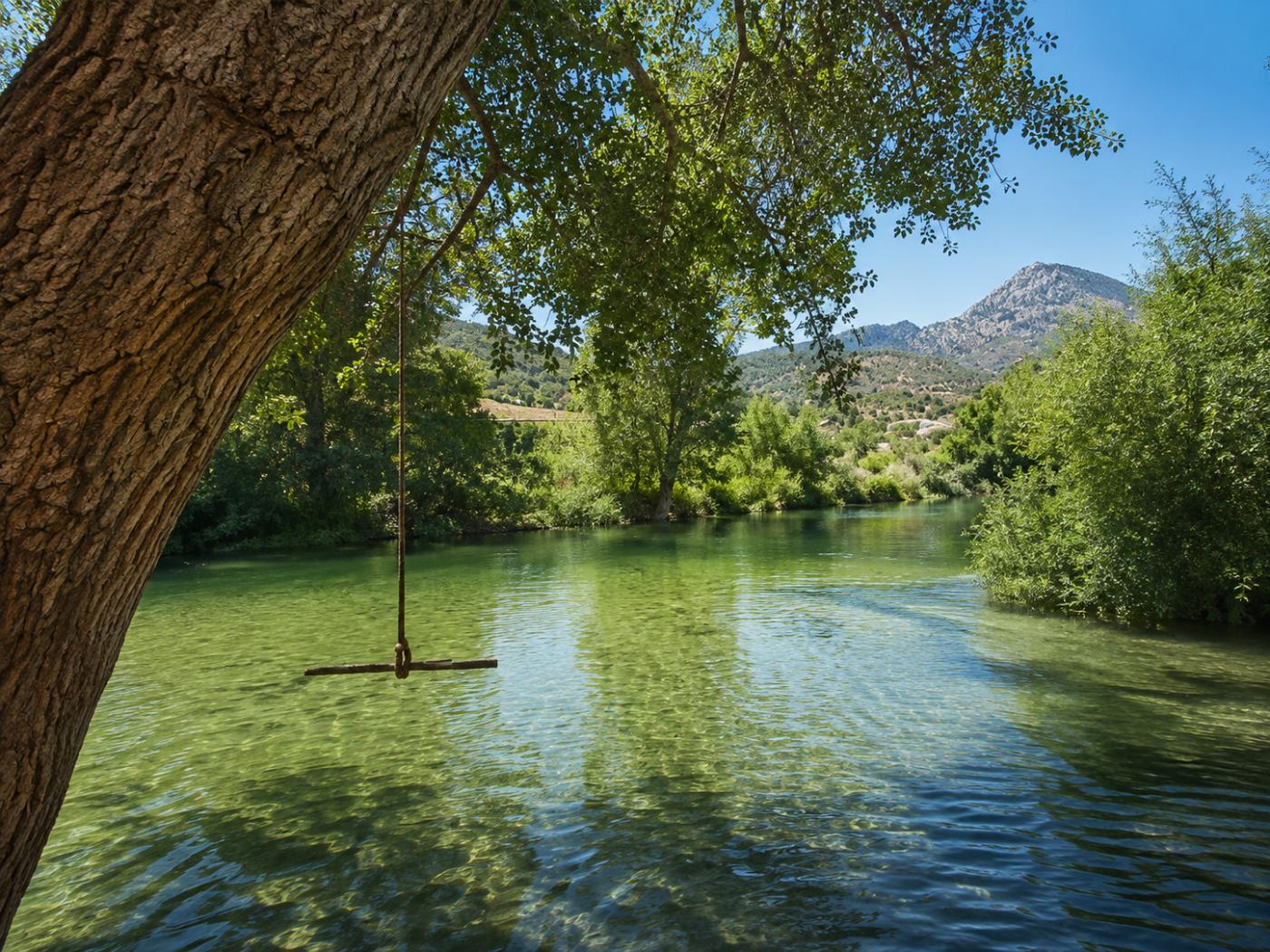
Right in the center of the village sits the Fuente del Dolmen, built in 2006 in Plaza Pablo Ruiz Picasso. Nearby is the source of the well-known Acequia Benito, an old stone channel carrying crystal-clear water traditionally used to irrigate the surrounding orchards. This small watercourse runs through part of the village before ending at an old water-powered mill, a reminder of just how central water management was to the local farming economy for generations.
Close by also stands the Church of Nuestra Señora del Carmen, the village's patron saint, which has undergone several rebuilds due to various natural events, most recently in 2002.
Nature at the Heart of the Sierra de Grazalema
Montecorto lies within the Sierra de Grazalema Natural Park, a protected area that has also been designated a UNESCO Biosphere Reserve.
This natural setting spans more than 50,000 hectares and offers striking landscape variety, with valleys, canyons, caves, and woodland areas that make it one of the most ecologically valuable spaces in southern Spain.
The area's diversity supports numerous routes for hiking, cycling, or horseback riding, along with spots for activities like climbing, canoeing, and caving. The park's many viewpoints offer sweeping perspectives over the Serranía de Ronda, showcasing the natural richness that defines this Málaga region.
Organic Wine, Local Festivals and Traditional Cooking
Farming still plays a significant role in Montecorto's economy. Among its standout producers is Bodega Cuesta La Viña, which specializes in organic wines and is closely tied to the area's winemaking tradition.
Local festivals are also part of the village's identity. In May, the traditional Romería pilgrimage sees residents and visitors travel to the Zahara lagoon to honor the Virgen de la Inmaculada. July brings the patron saint festivities in honor of the Virgen del Carmen, while the August Fair, Holy Week, and the October Andalusi Market round out a festive calendar full of cultural events, street parades, concerts, and food fairs.
Flavors Rooted in the Land and Livestock
Montecorto's traditional cuisine stays closely tied to local produce and livestock. Among its signature dishes are asparagus soup and "la olla," a hearty stew made with chickpeas, golden thistle, pork or poultry, and bacon. Game meats, especially rabbit and partridge, are also regular features on the traditional menu.
On the sweet side, standout homemade treats include rice pudding, custard, borrachuelos, buñuelos, pork-cracklings cake, and the popular almond tostaíllo. Local specialties also include figs and mistela, a liqueur made from native herbs.
The village's dining scene includes spots like Restaurante El Tropezón, known for its grilled meats and traditional cooking; Bar La Bodega, one of the village's most popular hangouts; and Fogón del Malaver, where charcoal grilling also takes center stage.
Reference source: malagahoy.es

Latest news


Upcoming events
17
Sep
La Pequeña Cuba Gastro-Cultural Festival in San Pedro Alcántara 2026
18
Sep
World Wellness Weekend Marbella 2026
18
Sep
Candlelight: Queen vs. ABBA in Málaga
18
Sep
Candlelight: Coldplay and Imagine Dragons in Málaga
18
Sep
3 de Corazones – Pancho Céspedes, Enrique Ramil and José Luis Jaén in Málaga
Similar News

Ronda’s Tajo Gorge Walk opens in full on 16 September: tickets cost €12 and the route stretches for almost one kilometre
Ronda
La Zúa Pool: a natural refuge in the Serranía de Ronda for escaping the heat
Ronda