Four Coastal Hiking Routes in Málaga That Are Ideal for Summer
The El Cantal cliffs, the eastern coastline, Fuengirola’s seafront and the Artola Dunes offer easy walks with views of the Mediterranean.
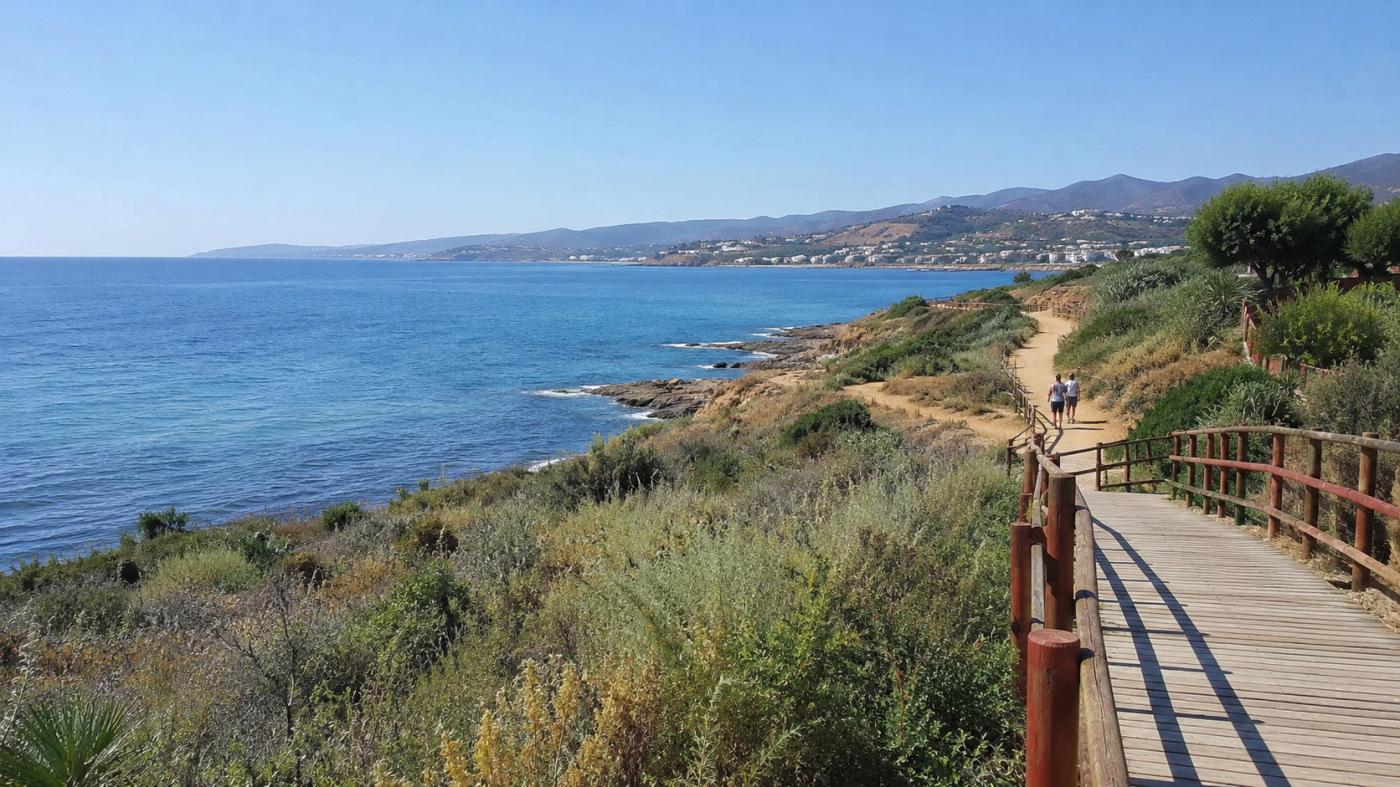

The arrival of summer heat changes the way hiking routes in Málaga need to be planned. During the hottest months, many inland trails are only suitable early in the morning because of the high temperatures and limited shade.
Walking beside the Mediterranean, however, provides an opportunity to continue enjoying weekend hikes while taking in coastal landscapes, beaches, former railway lines and protected natural areas.
From the Axarquía coastline to Marbella, Málaga province offers several low-difficulty routes combining walking, heritage and sea views. Some cross natural environments, while others follow promenades and urban areas closely connected to the coast.
These four seaside routes are excellent alternatives for those who want to keep walking during the warmer months.
El Cantal Cliffs Between Rincón de la Victoria and La Cala del Moral
The El Cantal Cliffs trail is one of the best-known coastal walks in the Axarquía.
The route connects Rincón de la Victoria with La Cala del Moral along an easy path of approximately three kilometres. Walkers pass beneath rocky cliffs rising above the Mediterranean and can enjoy different views of Málaga’s eastern coastline.
One of the main attractions is the series of old railway tunnels carved into the rock. Trains once used this line to connect Málaga with towns across the Axarquía, but the tunnels now form part of the pedestrian route.
The trail includes wooden walkways, viewing points and areas overlooking the sea. Its low level of difficulty makes it suitable for families and anyone looking for a short, manageable walk.
It also forms part of Málaga’s Coastal Path, a long-term project designed to connect much of the province’s coastline on foot.
From Peñón del Cuervo to Rincón de la Victoria
Another option follows the coastline between Peñón del Cuervo beach and Rincón de la Victoria.
The path runs almost entirely parallel to the Mediterranean, passing beaches, boardwalks and small communities linked to the area’s fishing tradition, including La Araña.
The route offers a variety of coastal landscapes, with views towards Málaga Bay and the El Cantal Cliffs.
It is an easy, mostly flat walk. The distance can range from five to 11 kilometres, depending on the chosen starting and finishing points.
This flexibility allows walkers to adapt the route to the time available and their fitness level. It is also possible to complete only one section before returning along the same path.
Several beaches along the way provide convenient places to stop, rest or cool down beside the sea.
Fuengirola’s Urban Seafront Trail
Fuengirola offers a more urban option for those who prefer walking close to services, restaurants and rest areas.
The route known as the urban seafront trail follows the promenade and connects several of the town’s best-known attractions.
It passes close to Sohail Castle and the mouth of the Fuengirola River before continuing along other parts of the coastline. Walkers can also visit the marina and the traditional fishing neighbourhood of Los Boliches.
The route is approximately two kilometres long, although it can easily be extended by continuing along the promenade in either direction.
Its flat and accessible layout makes it suitable for families, exercise or a relaxed walk towards the end of the day.
The nearby beach restaurants also provide opportunities to stop for refreshments or try traditional dishes such as grilled sardine skewers.
The Artola Dunes and Cabopino Beach
The Artola Dunes Natural Monument in Marbella preserves one of the most important dune systems on the Andalusian coast.
A network of wooden walkways allows visitors to cross the area while protecting the vegetation and preventing damage to this fragile ecosystem.
The route is approximately four kilometres long and has a low difficulty level. Along the way, walkers can see native coastal species including maritime juniper and juniper shrubs.
One of the best-known landmarks on the route is Torre Ladrones, a historic defensive watchtower.
The trail continues towards Cabopino beach and marina, allowing visitors to combine nature, heritage and time by the sea.
The walkways make it possible to enjoy the landscape without leaving the designated route, which is essential for protecting the dunes and their plant life.
Advice for Coastal Walks During the Summer
Although these routes are relatively easy, summer temperatures can still make coastal walking challenging.
It is best to walk early in the morning or later in the afternoon, avoiding the hours when solar radiation is at its strongest.
Sunscreen, a hat, sufficient drinking water and comfortable footwear are essential.
Walkers should also check the total distance before starting, especially on routes offering several possible lengths. On out-and-back walks, enough water and energy must be saved for the return journey.
Boardwalks and promenades can become very hot during the day, so walking barefoot is not recommended. Visitors should also follow signs, remain on authorised paths and take all rubbish away with them.
A Different Way to Discover Málaga’s Coastline
Walking routes beside the Mediterranean make it possible to continue enjoying weekend hikes without tackling more demanding inland trails during the summer heat.
The El Cantal Cliffs combine natural scenery with railway history, while the route from Peñón del Cuervo explores a large section of Málaga’s eastern coastline.
Fuengirola provides an accessible urban alternative, and the Artola Dunes offer the chance to discover a protected natural area beside Cabopino beach.
Together, these four routes show that Málaga’s coastline can be enjoyed not only from the beach, but also by walking beside the sea.
Information source: El Mundo

Latest news





Upcoming events
17
Sep
La Pequeña Cuba Gastro-Cultural Festival in San Pedro Alcántara 2026
18
Sep
World Wellness Weekend Marbella 2026
18
Sep
Candlelight: Queen vs. ABBA in Málaga
18
Sep
Candlelight: Coldplay and Imagine Dragons in Málaga
18
Sep
3 de Corazones – Pancho Céspedes, Enrique Ramil and José Luis Jaén in Málaga
Similar News

Fuengirola Will Have 24-Hour Emergency Services: Where the New Center Will Be Located and What Is Known About the Project
Fuengirola

Summer Plans in Fuengirola: These are the activities offered by the municipality for the summer season
Fuengirola