


Taking Care of the Brain as a Social Goal
Mental health is one of the health challenges of our time. Experts warn about the magnitude of brain disorders and propose promoting prevention strategies, especially among young people.
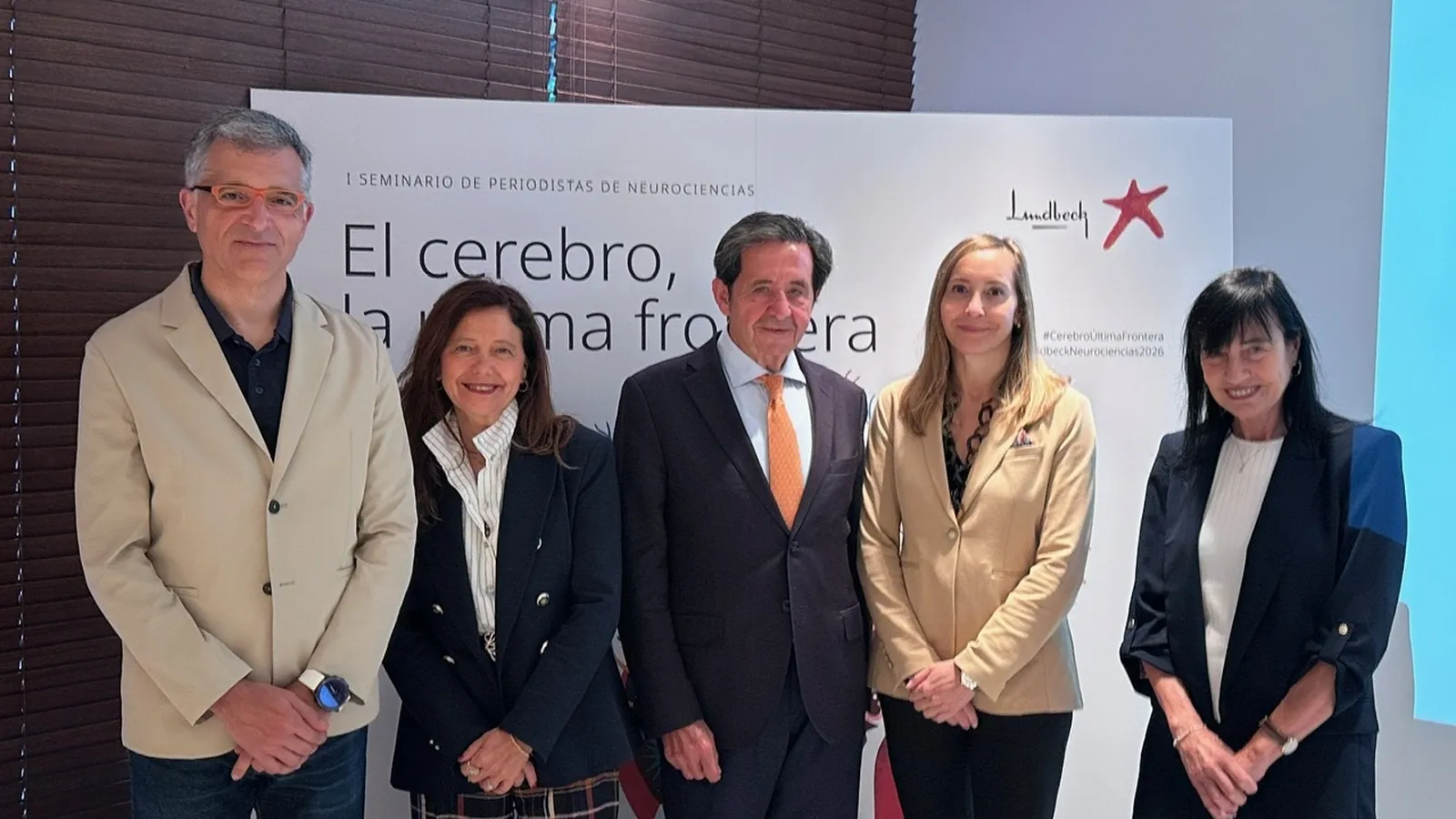

The brain is the organ that sets us apart from other living beings. Santiago Ramón y Cajal said, "From no other organ more than from the brain arise genius, madness, pain, love, generosity, and greed." And it is in its complexity that the ongoing challenge of ensuring its brain health resides. In Europe, half of the population, about 250 million people, has suffered or will suffer some brain disorder. In Spain, 43% of citizens suffer from some neurological disorder and 29% have some psychiatric disorder. These are some of the figures provided by Dr. Marina Díaz Marsá, president of the Spanish Society of Psychiatry and Mental Health (SEPSM), to highlight the scale and complexity of these pathologies, during the First Seminar on Neuroscience and Mental Health ‘The Brain, the Last Frontier’ organized by Lundbeck in Sitges, Barcelona.
The increase in life expectancy has raised the prevalence of neurodegenerative diseases "and to this, we must add other factors that affect brain health such as lifestyle, stress, toxic consumption, or loneliness," says Díaz Marsá. Looking into the next decade, an integrated approach that overcomes the traditional separation between mental health and physical health will gain importance, along with prevention strategies throughout the entire life cycle," explains Dr. Díaz Marsá. She adds a clarification, "well-being does not mean continuous happiness." "Discomfort, sadness, anger, or reactive anxiety to everyday situations are solved with our own capabilities or with the support of family and friends. Suffering is inherent to being human."
Regarding the social and economic impact, in Spain, the cost of brain diseases equals 8% of GDP, while only 2% is invested in mental health. Dr. Díaz Marsá states that in Europe, the burden of brain disorders exceeds the combined expenditure of diabetes, cancer, and cardiovascular diseases. Neurological diseases cause 6% of annual deaths in Europe; mental disorders, 4%. Depression is the leading cause of psychiatric disability and, in 2025, Spain recorded 3,953 deaths by suicide, behavior that is associated in 90% of cases with severe mental disorders.
The specialist also points out the vulnerability of young people: "Our young people do not have good child and adolescent mental health. The psychiatry wards and consultations are full of people with problems we had not previously seen. Likely, social media, bullying, and cannabis use are part of this increased prevalence."
Prevention of Brain Disorders
In light of this scenario, experts encourage fortifying health prevention. Preserving what Dr. José Miguel Laínez, head of the Neurology Service at the University Hospital Casa de Salud in Valencia, calls our cognitive reserve, understood as the brain's capacity to better tolerate biological and environmental aggressions. "If we increase neuronal connectivity, we will have a denser network and be more resilient when assaulted. That is the goal of improving the cognitive reserve," he explained. Intellectual work, educational level, bilingualism, stimulating work activity, and physical exercise contribute to building this reserve from childhood.
Diet plays a central role in this strategy. The neurologist championed the Mediterranean diet, "which unfortunately we are losing a bit," as one of the most effective shields against cognitive decline. Studies with more than 6,000 patients followed for years show that adherence reduces the risk of Alzheimer's. On the other hand, alcohol, its chronic consumption, "clearly accelerates brain aging and contributes to cognitive decline."
Physical exercise is another great ally. A study with 120 volunteers showed that aerobic activity increases the size of the hippocampus—the structure linked to memory—and reduces the accumulation of toxic proteins linked to Alzheimer's. Sleep hygiene is also crucial, as during rest the glymphatic system removes metabolic waste accumulated during the day, functioning up to 80% more than when awake.
Both experts agree on the urgency of an integrative approach. "It would not make sense to make a very deep distinction between neurology and psychiatry. Neurologists, psychiatrists, and neuroscientists are doomed to understand each other and to work jointly with patients on this brain health," concluded Díaz Marsá. Spain, with insufficient resources for early diagnosis, faces a debt that admits no further delays.

Latest news





Upcoming events
12
Nov
El Desembarco, la traición de Viriato at La Caja Blanca
12
Nov
HOMER El Mero Mero at Sala Trinchera Málaga
13
Nov
Marbella Startup Lab – Innovate & Collaborate
13
Nov
Candlelight: Coldplay & Imagine Dragons at Sala Fundación Unicaja María Cristina
13
Nov
Candlelight: Tribute to Ludovico Einaudi at Anantara Villa Padierna
Similar News

Marbella Launches ‘Summer Youth’ Programme with 2,500 Free Places
Marbella

Premium Tourism Drives Marbella’s Hotel Profitability to Record Levels as Overnight Stays Exceed 291,000
Marbella

‘Machos Alfa’ seeks extras in Marbella for filming of its sixth and final season
Marbella
