


Andalusia, at the forefront of cardiovascular health
The hospitals of the Quirónsalud group have incorporated technologies that are transforming the way to diagnose and treat cardiovascular diseases.
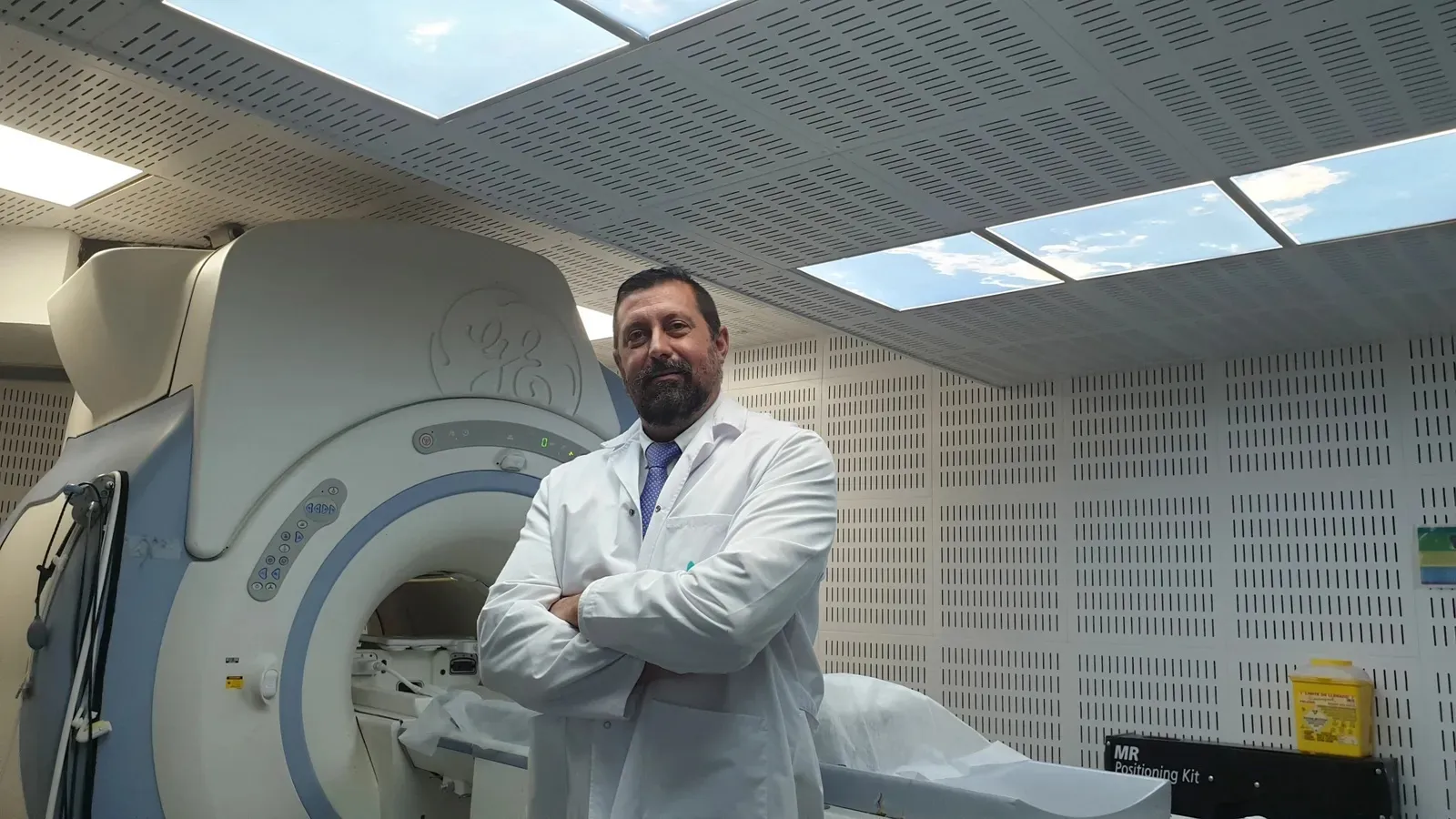

There are medical advances that make no noise, that never make the front page, but that, little by little, change the lives of thousands of people. In recent months, several hospitals from the Quirónsalud group in Andalusia have incorporated technologies that are transforming the way to diagnose and treat cardiovascular diseases. And they are doing it with one clear idea: to intervene earlier, with more precision and, above all, with less aggressiveness towards the patient.
At a time when cardiovascular diseases remain the leading cause of mortality worldwide, the response capacity of health systems depends, more than ever, on their ability to innovate. In this scenario, the Quirónsalud Group has taken a firm step to position Andalusia at the forefront of cardiac medicine, incorporating technologies that not only improve survival but also radically transform the patient's experience and safety.
To understand the importance of this deployment, it is necessary to analyze the data in our community that tells us that, in Andalusia, taking care of the heart is not just a medical recommendation, it is a public health priority. The most recent statistics from the Andalusian Institute of Statistics and Cartography (IECA) are a wake-up call: almost 20% of deaths in people aged 15 to 64 are due to circulatory system problems.
But the challenge goes beyond that. Reports like RECALCAR 2025 reveal an uncomfortable reality: hospital mortality due to cardiac causes in Andalusia is almost double that in other communities such as Catalonia. It's not that there is a lack of medical talent, it's that the high presence of risk factors—such as sedentary lifestyle or diet—means that more than 36% of total deaths in the region have a cardiovascular origin, a figure that particularly impacts Andalusian women.
Diagnosis in a heartbeat
At Hospital Quirónsalud Málaga, the incorporation of an innovative latest-generation Computed Tomography (CT) system thanks to its technology based on artificial intelligence—one of the few that exist in Spain—represents a qualitative leap in imaging diagnostics that has marked a before and after. It's not an exaggeration: it is now possible to obtain complete images of the heart in a single heartbeat.
Dr. José Antonio de la Chica, head of the Cardiac Imaging Unit, explains it clearly: “It has revolutionized diagnosis in cardiology. The reconstruction of the heart in a single heartbeat has a very positive impact on the safety and comfort of patients: in terms of safety, because it significantly reduces radiation and, in terms of comfort, because of the short time required for image capture, and with very short apneas."
Another great advantage that the cardiologist points out is that it allows them to diagnose with much more certainty and not only in common cardiovascular diseases, such as coronary artery disease and heart attack, but also allows them to more accurately plan structural cardiology procedures, like the implantation of prostheses through blood vessels. Translated into patient language: the use of this CT means less time inside the machine, less exposure, greater safety, and much more precise results.
This scanner also opens the door to more accurate diagnoses in other specialties, from oncology to abdominal pathologies. For Dr. Carlos Alonso, head of Diagnostic Imaging, the key lies in the real impact: “This type of advance allows us to diagnose earlier, better, and in a less invasive way, which translates into better clinical outcomes and greater peace of mind for patients”.
A new way to "turn off" arrhythmias
If diagnosis has taken a leap, treatment has not been left behind. At the same hospital in Malaga, atrial fibrillation—one of the most common arrhythmias—is beginning to be addressed with a technique that sounds almost like science fiction: pulsed field ablation (PFA).
Unlike traditional methods, which use heat or cold, this technology employs selective electrical pulses that act only on the diseased tissue. Dr. Antonio Esteban, head of Cardiology at Hospital Quirónsalud Málaga, summarizes its importance: “It represents a very significant advance in the treatment of atrial fibrillation, as it allows us to act with great precision on the tissue responsible for the arrhythmia, significantly reducing the risk of damaging nearby structures such as the esophagus or certain nerves."
That is the big change: surgical precision without harming what surrounds the heart. Something that Dr. Alberto Barrera, a specialist in Interventional Cardiology at Hospital Quirónsalud Málaga, also emphasizes: “The PFA allows the selective ablation of cardiac tissue without affecting other critical surrounding structures.” In practice, this translates into fewer complications, quicker recoveries, and a real option for patients in whom other treatments have not worked.
The operating room of the present (not the future)
Meanwhile, in Seville, Hospital Quirónsalud Sacred Heart has taken another decisive step with the launch of a hybrid operating room, a space that combines traditional surgery with high-resolution imaging equipment (such as angiography or intraoperative navigation) to see inside the body in real time.
This space allows for minimally invasive surgeries with extreme precision. Its greatest advantage is safety: if a complication arises, the medical team can switch from a catheter technique to open surgery instantly, without moving the patient, which saves vital time and reduces risks. It may sound technical, but the idea is simple: operate seeing everything with maximum precision and without having to move the patient.
Dr. Rosario Conejero, a specialist in Angiology and Vascular Surgery at Hospital Quirónsalud Sacred Heart, sums it up: "Being able to have high-definition imaging in real time within the operating room itself allows us to make more precise decisions during the intervention, be less invasive during the procedure, and reduce potential complications." Additionally, she adds that "the hybrid operating room improves the planning and execution of endovascular techniques, which translates into better clinical outcomes and, in many cases, a quicker recovery".
In that same operating room, teams from different specialties work at the same time. For Dr. Miguel Ángel Gómez Vidal, head of Cardiovascular Surgery at Hospital Quirónsalud Sacred Heart, this marks a paradigm shift: “It allows you to approach procedures in a minimally invasive way, we can perform cardiovascular interventions that previously required large incisions.” And he adds an idea that is increasingly repeated in modern medicine: “This is, in essence, where today's medicine is heading: multidisciplinary medicine with high technology”.
Less invasive, more human
Although all this sounds like cutting-edge technology… and it is, the ultimate goal is deeply human: to diagnose earlier, treat better, and make the patient suffer less.
Because behind each scanner, each catheter, or each hybrid operating room, there is something much more important: people who want to return to their lives as soon as possible. And in that race, innovation is no longer just an advantage. It is a necessity.

Latest news





Upcoming events
12
Nov
El Desembarco, la traición de Viriato at La Caja Blanca
12
Nov
HOMER El Mero Mero at Sala Trinchera Málaga
13
Nov
Marbella Startup Lab – Innovate & Collaborate
13
Nov
Candlelight: Coldplay & Imagine Dragons at Sala Fundación Unicaja María Cristina
13
Nov
Candlelight: Tribute to Ludovico Einaudi at Anantara Villa Padierna
Similar News

Marbella Launches ‘Summer Youth’ Programme with 2,500 Free Places
Marbella

Premium Tourism Drives Marbella’s Hotel Profitability to Record Levels as Overnight Stays Exceed 291,000
Marbella

‘Machos Alfa’ seeks extras in Marbella for filming of its sixth and final season
Marbella
