


The Hawaiian Adventure of the Farmers from the Costa del Sol
Estepona contributed the highest number of sugar cane workers to the Pacific islands. The great-grandson of an emigrant promotes contact with descendants who re-emigrated to California. Jiménez: the bank auditor who suffered the biggest robbery in Marbella.
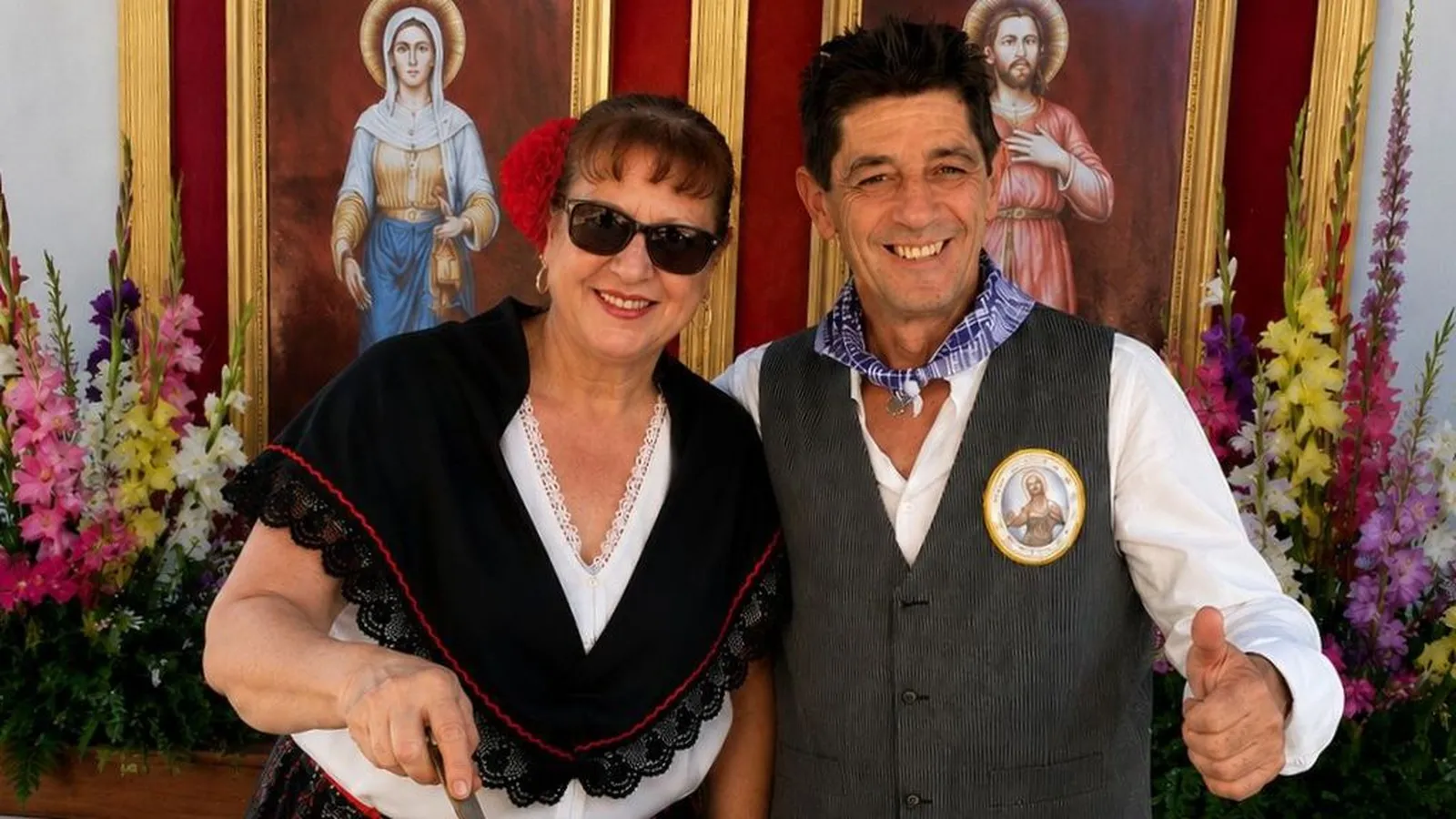

They believed they were going to escape poverty but were deceived. They thought the $24 salary they were promised was a fortune. They sought to overcome the hardships they had experienced with the Hawaiian adventure, which caused them much suffering. Explains Manuel Sánchez, great-grandson of one of the farmers from the Costa del Sol who migrated to Hawaiian plantations at the beginning of the last century, and who for a decade has been promoting and facilitating the connection of descendants of emigrants from Estepona.
The Spanish countryside suffered from agricultural backwardness. The large estates suffered from poor cultivation due to the risk aversion of their owners. The peasantry lived in subsistence conditions. This situation drove half a thousand Costa del Sol farmers, dedicated to sugarcane cultivation, tempted by promises displayed on posters and proclaimed by necktied commissioners, to seek a better future. The Spanish government banned, at the end of 1907, the recruitment of emigrants and the propaganda to promote emigration. This measure aimed to eliminate the abuses by emigration agencies that occurred on the Heliópolis, the vessel that departed from Malaga to Hawaii in March of that year. Following this ban, between 1911 and 1913, five ships sailed from Gibraltar and were staffed with labor from the western Malaga coast.
Families of José Fernández de la Herranz and José Zumaquero, from Marbella / M.HMen, aged 17 to 45, and women, under 40, were required, to whom they offered a free ticket, schooling for their children, and a $500 house with a plot for a garden. The new masters of the Polynesian archipelago, seized by the United States, decided to replace Asian laborers with European migrants. “For reasons not devoid of the racism of the time, sugarcane planters wanted to whiten and stabilize the workforce on the archipelago (...) They wanted ‘white’ families with knowledge of sugarcane cultivation,” summarizes James Fernández, professor of Spanish Literature and Culture at New York University and author of Invisible Immigrants, a book with three hundred photographs about Spanish immigration to the USA.
The emigrants from the Costa del Sol traveled 16,800 nautical miles (31,113 kilometers) on a route that from Gibraltar stretched to the ends of the American continent, to cross the Strait of Magellan, reach the Pacific, and head to the distant destination.
“They were treated like slaves, transported on cargo ships; families were separated by curtains, all mixed up; with many hygiene problems, children born during the journey had a high chance of catching infections,” points out Francisco Medina, a retired school director from Estepona, who studies the history of the emigrated families.
Descendants of emigrants to Hawaii in Estepona / M.HThe Hawaiian press detailed the interior of the cargo ship Orteric: Bunks were placed in rows in three holds, leaving the deck with ample space for walking. Each passenger was provided with a straw mattress, a pillow, a plate, a glass, knife, fork, and spoon. Some Spaniards carried musical instruments to liven up the journey, which was not without incidents. Some because they did not observe good hygiene; others for stealing food from the kitchen; there were clashes between Portuguese and Spaniards, women's fights ended with hair pulling, and men's with knives. This forced the captain of the ship to appear, revolver in hand, and to reduce the wine ration.
The chronicles reported that the ship, as it passed through Punta Arenas (Chile), departed the next day after loading 60 heads of sheep and pigs. During the journey, there were fourteen births and the death of fifty-seven children from measles, bronchitis, and childhood diseases. The bodies were thrown into the sea, except one that died of scarlet fever entering the port. The immigrants, who had to undergo a quarantine period, upon disembarkation were fumigated along with their suitcases.
¬The promises were not fulfilled; the $24 was per family, the couple had to work; the ownership of the house and the little garden after three years depended on agricultural yields and work behavior. If deemed negative, there was no house ownership. My grandfather spent six years in Hawaii and did not achieve it, recalls Manuel Sánchez.
The Spanish consul in Hawaii, Ignacio de Arana, after visiting compatriots on the islands' plantations, found that the salary they received, $24 a month, for working ten to twelve hours a day for 26 days, barely covered the expenses of a not very large family. In most houses, people lived in poverty and indebted to the stores and canteens, owned by the plantations themselves, which supplied basic food and hygiene products.
Family Caravaca / J.V. NARDONE¬ The ranchers were tough people, conditioned by miseries. The money they could barely save was not accepted in banks. The Great Depression of 1929 caught some families with cash, with which they were able to buy land in California, notes Medina.
¬ My great-grandfather had a relative who had moved to California, and he arranged the documentation to follow him. There he lost his son Antonio, twelve years old, in a motorcycle accident, and a girl during the journey, which he never mentioned. When I began to search for information, I discovered in the list of the ship Willesden that María Sánchez Mena, two years old, was one of the 16 minors who died on the ship, the sister my grandfather never knew.
The Hawaiian Gazette published in December 1911 its editorial The Lesson of the Willesden, which pointed out that “it is practically impossible to carry a steamship full of people such a long distance, crossing the equator twice, without running an unusual risk for the spread of epidemic diseases, despite all precautions.”
Route of ships from Gibraltar to Hawaii / M.HThe Government of Spain, through its consul in Honolulu, acknowledged that during the journey of the Willesden 18 people died, of which 16 were children; and in the Lazaretto of Honolulu, another 25 died, of which 24 were small children. The newspaper El País recalled that: “The Minister of State and the Council of Emigration are duty-bound to specify the causes of this true catastrophe that increases the horror of the exodus of Spaniards who leave their homeland with their family, even with small children, in search of work and bread.”
¬The hardships of that 54-day journey; the slavery experienced in Hawaii, of twelve-hour daily shifts, with a supervisor per area, who did not allow them to stop, they had to bend down, and then the death of his son, led my great-grandfather to reconsider his life: he was not comfortable nor happy. He decided to return to Estepona with little Manuel, who would be my grandfather, along with a 16-year-old daughter and another son. There, two daughters and a son remained. When he returned, as a celebration, he had a Spanish son, Francisco. Returning to Spain meant taking a weight off his shoulders, seeing the light. Although it was sacrificed, he lived well.
My grandfather Manuel was very proud of having been born in Honolulu; he boasted of being the only Hawaiian in the village. He loved sweet potatoes because he said they were from California. From Hawaii, where he lived until he was five, he only remembered the volcanoes and immense sugarcane fields, or streets like an avenue between the plots, where the mules came to collect them. If life in Hawaii was not rosy, in California they went from black to light purple.
Family Aguilae Hoyos / J.V. NARDONEDuring the Spanish Civil War my grandfather was arrested for giving provisions to bandolero Manolo El Rubio, who was wanted by the Civil Guard. My grandfather worked on the estate of don Cándido, a mayor one hundred percent to the right of Francoism, who helped my grandmother get him out of jail with the birth certificate, the baptismal certificate, and the American passport, after being imprisoned for several weeks. He never returned to California nor saw his sisters. I related a lot to my grandfather because he stayed to live here until he died, run over by a car on the old N-340.
Steve Alonzo, a descendant of the emigrants to Hawaii from Axarquía, keeps the count of all the Spaniards who participated in that migratory flow. He has counted 7,703 Spaniards from 583 towns who emigrated to the Pacific archipelago. Most came from Andalusia, Extremadura, and Castile. And Estepona was the municipality in all of Spain that contributed the most emigrants: 271, far ahead of the second, Macotera (Salamanca) with 156; from the western Costa del Sol, Manilva with 113 emigrants and Marbella with 104 stand out.
From the area of Las Chapas, from Marbella, it is known that two neighboring and friendly families set sail for Hawaii in 1911. Joaquín Gómez Velázquez, a descendant of the brother of José Fernandez de la Herranz Chacón, a blacksmith by trade, who with his wife Patrocinio Sánchez Merino, left in 1911, remembers.
¬The couple, with their four children, went on the ship Willesden. I know that from there, like many others, they re-emigrated to California, where their children married and continued there. My fourth cousins, still live in California, I have their names but we do not know each other.
With the relatives of Joaquín traveled the neighboring couple of the Zumaquero Pérez with their three children. The men worked in the forge of La Víbora.
José Vílchez Gil in a plantation / J.V. NARDONE¬It's complicated to find relatives who emigrated to the USA because women adopt their husbands' surnames. We have contacts of relatives who usually come to Spain and we pull the thread. I have between 25 and 30 direct relatives in California, from my grandfather's sisters. They are my third cousins, they have the same curiosity as us, and especially they want to know their roots that are here and the excitement of many of them to come here. I have received a relative who has a tomato plantation in San Francisco, on an estate that is toured by helicopter. I want to start my journey in Honolulu, where my great-grandfather was and my grandfather was born, and then visit San Francisco, San Diego, Winter, and many other towns, where every day with them will be a celebration. There they have the Immigrant Club, the Spanish Civic Center, where they celebrate Spain Day and their patron saint's day. I am in contact with them through social networks and the FamilySearch platform, with these tools we make a lot of progress, it helps us rebuild the family tree.
There is Mari Carmen Garín Rubio, who is a relative and who will soon come back here. With her, we are gathering a lot of information, I keep answering, data gathering is sometimes laborious and time-consuming, says Sánchez.
Medina, who is Estepona's favorite son, reports that the social relations of the emigrant families from the municipality, who settled in Hawaii and later in California, “were quite endogamous, so that the vast majority of marriages of the first and second generation were among Esteponeros or with partners from another Spanish locality and, exceptionally, of Filipino origin,” in his research on the “Exodus of Esteponeros to Hawaii,” which he shares on his blog, Avatares.

Latest news





Upcoming events
12
Nov
El Desembarco, la traición de Viriato at La Caja Blanca
12
Nov
HOMER El Mero Mero at Sala Trinchera Málaga
13
Nov
Marbella Startup Lab – Innovate & Collaborate
13
Nov
Candlelight: Coldplay & Imagine Dragons at Sala Fundación Unicaja María Cristina
13
Nov
Candlelight: Tribute to Ludovico Einaudi at Anantara Villa Padierna
Similar News

Marbella Launches ‘Summer Youth’ Programme with 2,500 Free Places
Marbella

Premium Tourism Drives Marbella’s Hotel Profitability to Record Levels as Overnight Stays Exceed 291,000
Marbella

‘Machos Alfa’ seeks extras in Marbella for filming of its sixth and final season
Marbella
