


The Silent Fear
There is a social perception that builds walls where there should be rights. 'Discafobia' disguises itself as protection, pity, or even admiration.


In a world that preaches equality and human rights, there exists a form of violence so subtle that it often goes unnoticed: ableism. It's not just about explicit insults or cruel mockery; its danger lies in its invisible nature, in how it disguises itself as protection, pity, or even admiration.
“Society responds with silence, with averted gazes, with prejudices that drag like invisible chains.” Living with a disability should not equate to being different, being less, or being invisible. Yet, ableism manifests in the everyday social barriers imposed by others.
It is that voice that decides to speak for you “because it knows what you need.” It is the hand that is not offered due to mistrust in your ability, or the one that pushes you without consent, as if your body or your will did not belong to you. It is, essentially, the annulment of personal autonomy under the guise of care.
“Isn't it contradictory that in a world that boasts of human rights we still have to justify that a person with a disability has the right to decide, to make mistakes, to love, to work, to be heard?” One of the most complex faces of this social phobia is hypocrisy. It feeds on a discourse wrapped in good intentions: “poor thing,” “how brave,” “an example of life.” Phrases that, viewed from the outside, seem like compliments, but that conceal a condescending and limiting view.
By labeling the everyday life of a person with a disability as an act of heroism, they are condemned to be seen as an extraordinary being, when in reality all they demand is the right to live an ordinary life, with their successes and also their mistakes.
“Living with a disability is not the problem. The problem is living in a society that fears difference, that believes inclusion is a favor and not a right.” True reflection invites us to turn the usual question around. For a long time, disability has been pointed out as the limitation, when perhaps the focus should be elsewhere.
This raises uncomfortable but necessary questions: What is more limiting, the disability or the collective inability to see with equality? Who is really bound, the one living with a disability or the one chained to their prejudices? Who has more barriers, the one facing a physical, sensory, or intellectual obstacle, or the one erecting invisible walls against the dignity of others?
These questions do not seek an easy answer, but to expose an uncomfortable truth: exclusion does not stem from some lacking abilities, but from a lack of humanity in many.
Concluding this article implies a paradigm shift. If we want to move towards an inclusive society, we must dismantle ableism from its roots. It's not about granting favors or celebrating "personal overcoming" as if it were a miracle, but understanding that social justice consists of ensuring that all people, in their diversity, have the same opportunities to build their own path.
Difference is not a threat; it is the raw material of humanity. Overcoming ableism is, ultimately, learning to look without prejudices and to understand that autonomy, respect, and dignity are not privileges, but non-negotiable rights for everyone.

Latest news





Upcoming events
12
Nov
El Desembarco, la traición de Viriato at La Caja Blanca
12
Nov
HOMER El Mero Mero at Sala Trinchera Málaga
13
Nov
Marbella Startup Lab – Innovate & Collaborate
13
Nov
Candlelight: Coldplay & Imagine Dragons at Sala Fundación Unicaja María Cristina
13
Nov
Candlelight: Tribute to Ludovico Einaudi at Anantara Villa Padierna
Similar News

Marbella Launches ‘Summer Youth’ Programme with 2,500 Free Places
Marbella

Premium Tourism Drives Marbella’s Hotel Profitability to Record Levels as Overnight Stays Exceed 291,000
Marbella
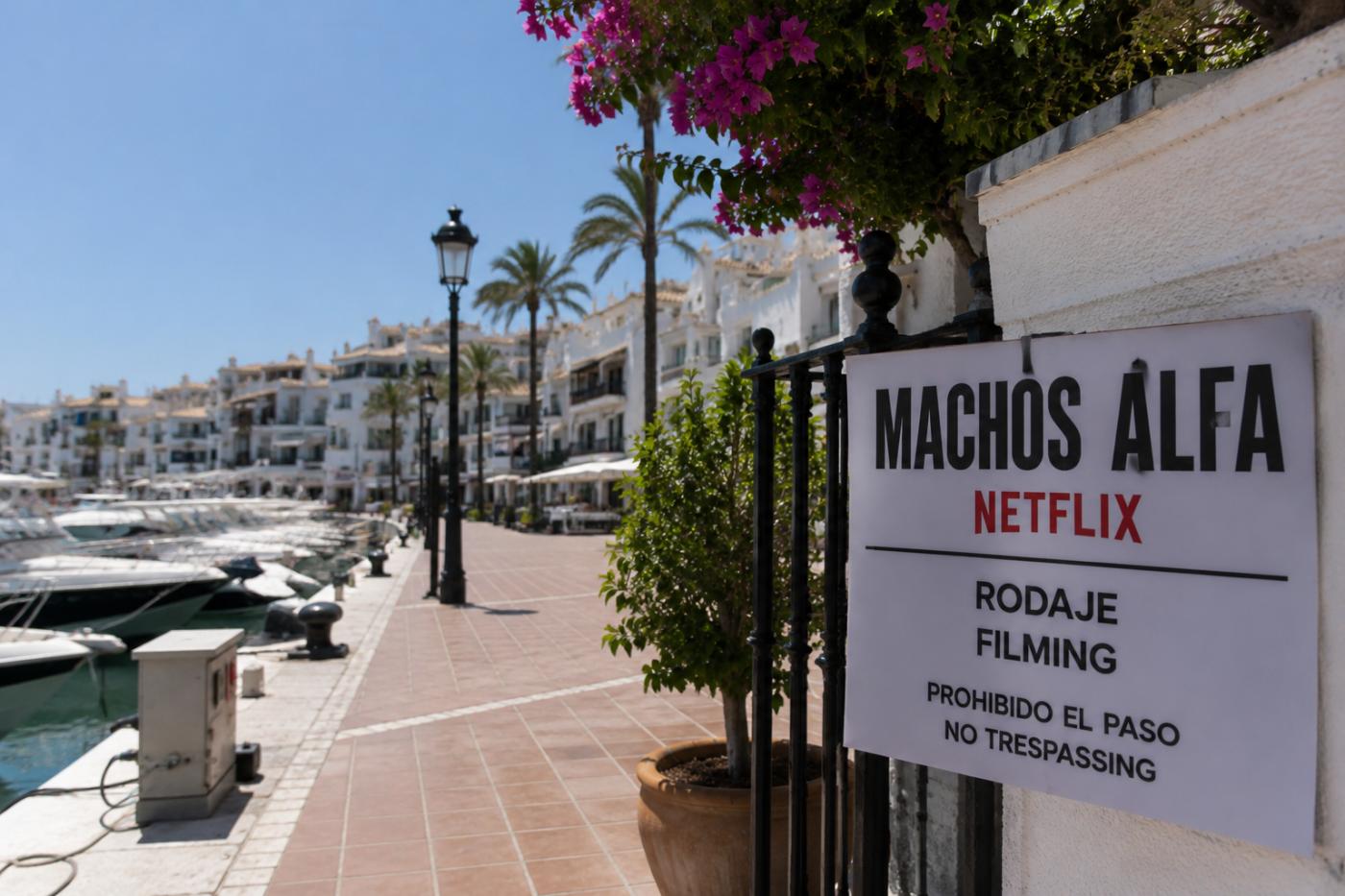
‘Machos Alfa’ seeks extras in Marbella for filming of its sixth and final season
Marbella
