


Hospital workers in Marbella sleep in their cars: "I lay the sheets, recline the seat, and lower the window"
Healthcare workers, mainly from other Andalusian provinces, are forced to sleep in their vehicles due to the high cost of rentals in the city. The CSIF union has requested the competent authorities to "provide some type of housing or building" where employees can stay overnight.
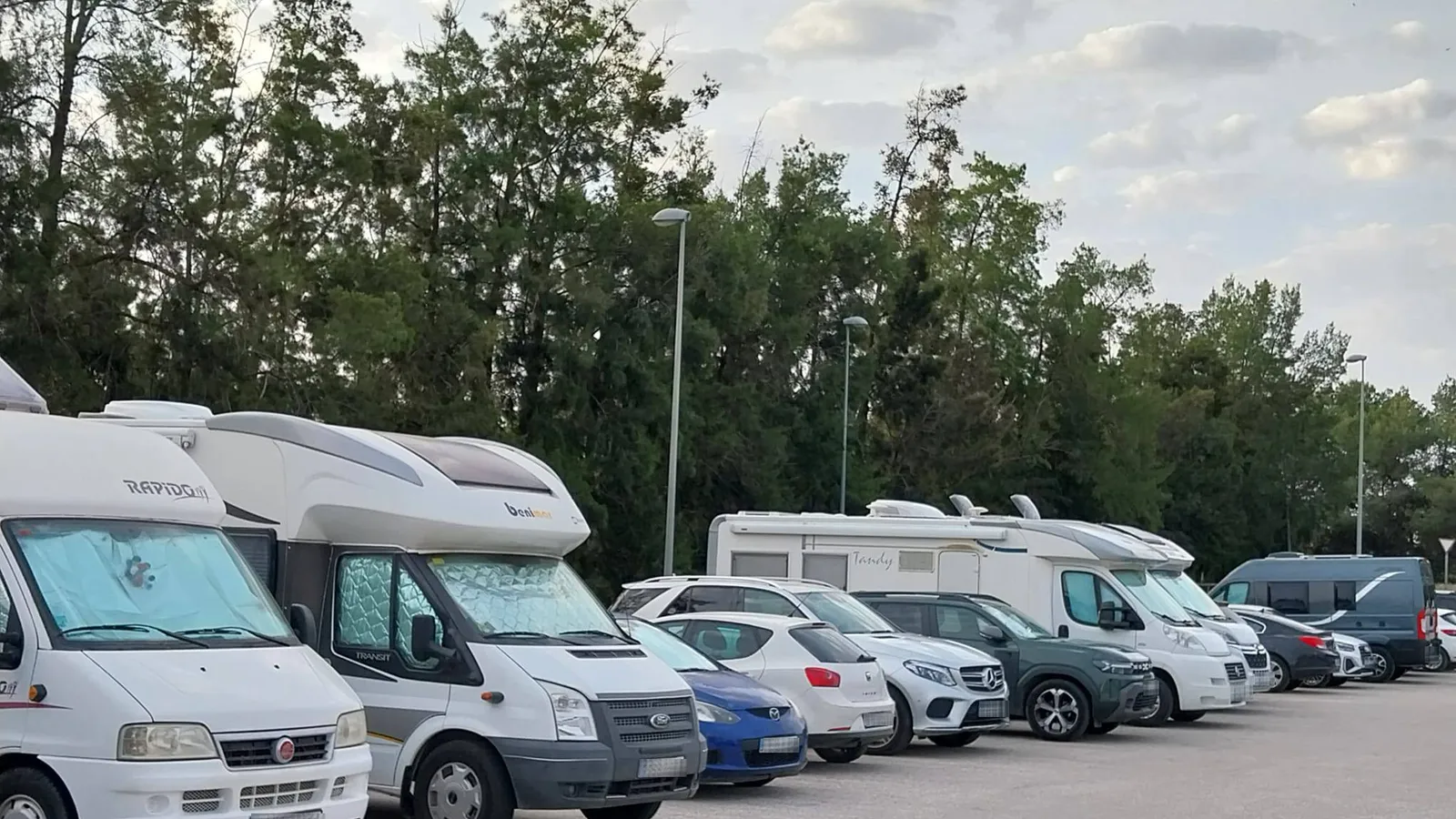

The staff car park at the Costa del Sol University Hospital (HUCS) has turned into a makeshift campsite for vans and caravans belonging to healthcare workers from other provinces who are forced to sleep in their vehicles due to the high cost of rent in the city of Marbella, many of whom also spend the night in their cars. The Independent Trade Union of Civil Servants (CSIF) is calling on the relevant authorities to “provide some form of accommodation or building” so that staff can spend the night.
The CSIF trade union has been responsible for sounding the alarm regarding the conditions in which these employees are living, a situation that “has been going on for several years but has worsened since 2024 and 2025 when we became part of the Andalusian Health Service (SAS)”, highlighted the trade union representative at the HUCS, Adrián Fernández.
Thecategories most affected are those at the lower end of the pay scale, such as “orderlies and Nursing Care Assistants (TCAE)”, usually people who commute to the Costa del Sol from other provinces such as Seville, Córdoba or Granada, who “have a home in their home town and have to keep up with the rent or mortgage”, and whose salaries do not exceed €1,500.
For many professionals, the Costa del Sol Hospital is seen as the gateway to the healthcare system, as “it has a low score because there is little demand for staff”, noted the union representative, emphasising that gaining access is like “the first step to getting in and accumulating points in the pool to move closer to their home towns”. “Nobody wants the Costa del Sol Hospital because it’s not easy to come and live here,” he noted.
The trade unionist estimated that there are around thirty workers sleeping in cars and caravans at the Costa del Sol Hospital, with “the main problem they face upon arrival being the cost of housing and finding a room, as the alternative is their van, car or caravan,” he added.
Problems with access to housing and transport
Fernández highlighted the high cost of housing and the transport issues in the area, which have so far led to “more than 20 resignations” since the private bus service paid for by workers commuting from Malaga city ceased, a situation that worsens in the summer. “When people arrive and do the maths, the most viable option is to turn down the contract,” he added.
In these people’s day-to-day lives, factors such as “temperature” or “comfort” play a role, as they “are eating in the canteen or in the staff room and showering in the workers’ changing rooms”. “They finish work and when they leave, they rest in a caravan, where the rest is not even comparable to what one might have in a home,” he lamented, which leads to “a much higher level of exhaustion than if they could sleep in a room under optimal conditions”.
As a solution, Fernández advocates that “the relevant authorities should provide some form of accommodation or building and fit it out for the workers so they can, at the very least, spend the night there”. Failing that, he suggested measures such as setting up a “shaded area” for people sleeping in their vehicles, given the high temperatures on the Costa del Sol.
In this regard, he recalled that the Andalusian Regional Government allowed healthcare workers to stay at the Marbella Leisure Residence during the Covid pandemic, a solution that “would have been the perfect alternative” as the complex is close to the hospital, but which “is no longer an option because the hotel has taken precedence”, he said, referring to the provisional award to the Fuerte Group of the leasehold of the plot for 75 years.
Living in a caravan or sleeping in a car
A group of workers spoken to by Málaga Hoy, who have chosen to remain anonymous, have described what it is like to live on four wheels. They all agree that they come to Marbella to earn points and most are clear that, when they can, they will move to a hospital closer to their home towns, as they come from other provinces in Andalusia.
One of them has been sleeping in her car since last February, after spending a year sleeping in a motorhome in the hospital staff car park, because “they say that supposedly those coming out at night might smash it up”.
“Living in the car is horrible; you suffer from the heat, fatigue and everything else. It’s rubbish, it’s dreadful, especially given the hypocrisy and bureaucracy,” she said of the conditions she has to endure to be able to work at the Costa del Sol Hospital. Thus, his routine is dictated by the weather, a lack of rest, and practically living on the streets. A healthcare worker’s van covered with sheets to block out the light. / M. H. “I don’t sleep at all here. Having to have breakfast at 7.30 am, I put the sheets up, get everything sorted, recline the seat and sleep. I roll down the window, all the noise comes in and the heat gets in. I’m awake by 12:00. I go out for lunch, have a nap in the car, roll down the window and move it to find some shade,” he said of his daily routine, adding that many healthcare workers in the same situation spend the night on “the third underground level” of the hospital car park.
And this despite having a paid job, not to mention that they are dedicated to caring for patients and sick people whom these professionals look after. “Renting is incredibly expensive; a room costs you 600 euros without electricity or water.” “I’m not going to worry myself over the 1,500 euros I earn; we’re here for the points, but at least you should be left with something,” he notes.
“I’d rather be a beggar than get into a car. You’re roasting by 3 pm and you have to keep moving it to another spot,” he lamented about his situation, adding that “I combine shifts so I can come here fewer days and get more rest” and be able to go home, as he comes from another province.
Lack of sleep has also caused him problems on the road: “I had a crash in the car the other day, and thank goodness I had the mudguard. We can’t rest here.”
“Renting a place here is impossible”
Another professional who has been sleeping in his van since July 2025 says he works on the Costa del Sol because that’s where “the rates are lowest”. “Renting ahome here is impossible, and the wages aren’t exactly great either, so you have to spend 70% of your pay on petrol, living costs and personal expenses.”
“I can’t afford to pay for anything; I quite like this, but I do it mainly out of necessity,” he notes regarding the alternative of living on four wheels, as he is paying off a mortgage in his home town. “That’s extremely expensive and you can’t live there; they ask for 500 or 600 euros for a room,” he added. The interior of a motorhome. / M. J. S. He says that day-to-day life is “tough”: “It’s hot; in summer I’ll have to find a spot in the shade or something, because it’s unbearable. And here I’m cooped up all day. I stack up shifts to free up as much time as possible. When I’m here, I’m working almost all day, and then I go home,” he explained regarding the organisation of his working days.
“I shower at the hospital, eat here or buy something at the supermarket next door; I don’t do much else. I’m only there to sleep and to be. “I often spend the whole day lying down, thinking about going for a walk… There isn’t much to do here either,” he remarked regarding life in the van. As for rest to carry out his work, he noted that “it’s not like being at home, but I try to rest as much as I can and come in as rested as possible”.
On the difficulties healthcare workers face when coming to Marbella, he pointed to “accommodation, the road, the caravans, everything”. He added that “the hospital shifts aren’t attractive to anyone coming from outside the area”, noting that most of the staff are from elsewhere. As for improvements that could be made to ease the living conditions of healthcare workers who sleep in their vehicles, he suggested that “some shade or something could be provided to make it more comfortable, especially for larger vehicles, as it’s unbearable here in summer when it’s 40 degrees”.
Breaks in a “comfortable place”
Another healthcare worker used to spend the night at the Albergue África in Marbella when he started working at the hospital, but decided to sell his caravan and buy amotorhome so that “at least I can take my breaks in my own comfortable space” and “be able to keep working here”, once he had secured a “temporary contract”, and he has been doing so since December.
“Renting is unsustainable for me; I haven’t even considered it,” he said, pointing out that in Marbella “it’s either extremely expensive or shared rooms”. “On the noticeboard in A&E there are adverts for a room for 800, 900 or 1,000 euros. That’s unfeasible. What do you do with your salary—leave it here?
It’s not worth it,” he said.
“It’s not the same as your own bed, your home or getting to your comfort zone, but you adapt to living there, mainly because there isn’t much security,” he commented on staying in the motorhome, noting that “we work double shifts as much as we can, two days, and as soon as the shift ends, I hit the road and head home.”
“Day-to-day life involves a 15-hour shift, getting back to the motorhome, having a shower, a quick dinner and going to bed. That’s it. And the next day, the same thing. You try not to have any downtime because you’re thinking that at home you have children, after-school activities and a thousand things going on, and here you’re just killing time doing nothing until it’s time for your shift,” he said.
To improve conditions for these people, she suggested that a “shaded” area and a “power socket” could be installed so they “can have the air conditioning on”, as the hospital provides “access to toilets and showers”.
“It’s the hospital that calls most often for work”
“The problem is the city of Marbella, because it’s the hospital that calls most often for work and the one that asks for the lowest score,” commented another of the workers, emphasising that “here you make yourself available because you know you’re going to work”.
“People don’t want to come in the summer because flats are so expensive,” she noted, whilst pointing out that “the problem is the road, which has become too narrow for so many people”, a situation that worsens during the high season.
“Those who have a motorhome make the most of it given the impossibility of finding a flat as an alternative”, as “the problem itself is Marbella, the road and the cost of rent”. “What is not right is that the Residencia de Tiempo Libre is empty and that they do not use it as accommodation for the workers”, she remarked.
For its part, the Andalusian Regional Government has merely stated that “the Costa del Sol University Hospital is a healthcare centre and housing issues in Marbella are not within its remit”, when asked whether it plans to take measures to improve the situation of workers sleeping in caravans or cars.

Latest news





Upcoming events
12
Nov
El Desembarco, la traición de Viriato at La Caja Blanca
12
Nov
HOMER El Mero Mero at Sala Trinchera Málaga
13
Nov
Marbella Startup Lab – Innovate & Collaborate
13
Nov
Candlelight: Coldplay & Imagine Dragons at Sala Fundación Unicaja María Cristina
13
Nov
Candlelight: Tribute to Ludovico Einaudi at Anantara Villa Padierna
Similar News

Marbella Launches ‘Summer Youth’ Programme with 2,500 Free Places
Marbella

Premium Tourism Drives Marbella’s Hotel Profitability to Record Levels as Overnight Stays Exceed 291,000
Marbella

‘Machos Alfa’ seeks extras in Marbella for filming of its sixth and final season
Marbella
