


Malaga is overwhelmed on a Good Friday amidst silence and solemnity
Full day on the street, with all the brotherhoods parading and a city engaged from the afternoon until the early morning with the utmost respect Good Friday in Málaga 2026, live
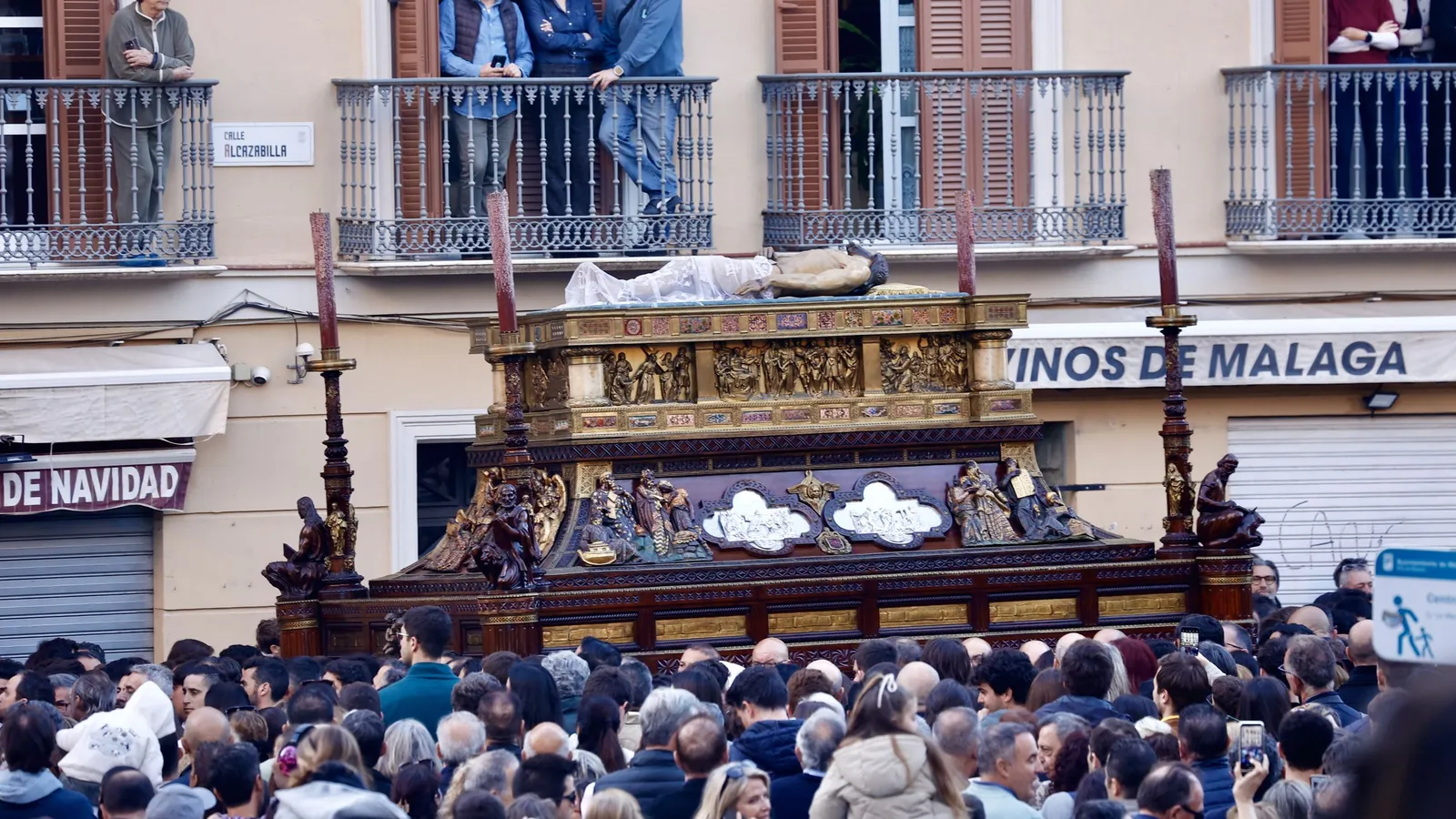

There is a time on Good Friday when everything stops without anyone ordering it: three in the afternoon. Málaga trembles then, at that precise moment, and splits in two under a sun that falls heavily on the Alameda, gilding the wooden chairs as if it wanted to fix the moment forever. The doors of the churches have not yet opened, yet everything is already done. It is the time when Christ dies, the time when the entire city seems to surrender at the foot of the cross, without fuss, without noise, with a kind of intangible modesty that only exists in mourning.
Afterwards, gradually, the pulse returns. The city's main artery begins to move back and forth. Not the everyday rhythm, but a slower one. The sidewalks fill with a patience that does not despair but is waiting per se. People take their place as if they had learned it by heart. And then yes, the doors begin to open to give way to a day of black tones, rosaries, and whispers.
Monte Calvario proceeds in its way of not breaking anything. Rather, it brings tradition with it. There is a sobriety in its advance that compels one to look inward, as if each step were an unanswered question. The sun still resists, but it is no longer the same. It becomes more oblique, more aware of what it is illuminating. Málaga keeps silent.
With Descendimiento, the afternoon becomes more fragile. The scene unfolds with a delicacy that almost hurts, as if any excess gesture could shatter it. There is a gathering that is not rehearsed, that is born solely under the beam. Gazes are fixed on what happens and what is not seen, on that invisible weight carried on the shoulders of the throne men.
Then comes Amor, and with it a different closeness, a way of being that does not contradict the pain but accompanies it in another way. With the heart in hand. This year, there is also a new beat: a new throne is inaugurated and in the air, one can perceive that mix of contained pride and recent emotion. Also, the heart of Mary Magdalene seems to beat differently, as if the novelty did not break the tradition but made it more alive. The Nazarenes move forward long, constant, like a current that does not stop. Among the crowd, small gestures, almost imperceptible, warm the scene. Málaga breathes incense and exhales sad sweetness.
The light begins to withdraw when Dolores de San Juan leaves San Juan. Everything becomes sharper. Shadows gain presence, lights sketch outlines that seem suspended in another time. There is a beauty that does not seek to console, but in one way or another, it consoles. The city becomes slower, as if it wanted to understand each detail before letting it pass on the throne before its eyes.
At some point in the Trinity, without fanfare, Soledad de San Pablo appears. Its name weighs, but does not crush. Because here, solitude is shared, held among many, among as many as can fit under a beam. There is a way of accompanying that does not need words, a way of being together in what is lacking. And that, in the midst of so many people, is perceived with a contradicting clarity in itself.
With Piedad, the gesture changes. It's no longer just about looking, but about embracing as Mary does with Jesus in her arms. The scene repeats itself on every corner with a naturalness that moves. Some lower their heads, some remain still, some cannot look away. And in all, in one way or another, that certainty that even pain has a place to rest.
Later in the night, Sepulcro lies in a city that already weeps to the sound of a requiem. Everything seems adjusted to its pace. There is no need to ask for silence: silence arrives on its own, as if the city understood that there are moments that admit nothing else. The lights seem more still, the time thicker. Málaga recognizes itself in that gravity between life and eternal life.
And when the night is deep, when fatigue appears on the edges but no one leaves entirely, Servitas closes with the essentials. Without adornments, without noise, without anything to distract, not even lights. The sound of steps, the wax that falls, the minimal murmur in the form of constant prayer at the passage of incarnate pain. Everything is reduced to the essential, and perhaps for that very reason, to the most true.
In the end, there is no clear line that separates the before from the after. The city dresses in mourning, something has been suspended in the air, something that began at three in the afternoon, when Málaga trembled under the sun of the Alameda and fell, entirely, at the feet of the Cross. And that does not completely go away. It remains. Beats. Stays. Although no one names it, not at least until Easter Sunday.

Latest news





Upcoming events
12
Nov
El Desembarco, la traición de Viriato at La Caja Blanca
12
Nov
HOMER El Mero Mero at Sala Trinchera Málaga
13
Nov
Marbella Startup Lab – Innovate & Collaborate
13
Nov
Candlelight: Coldplay & Imagine Dragons at Sala Fundación Unicaja María Cristina
13
Nov
Candlelight: Tribute to Ludovico Einaudi at Anantara Villa Padierna
Similar News
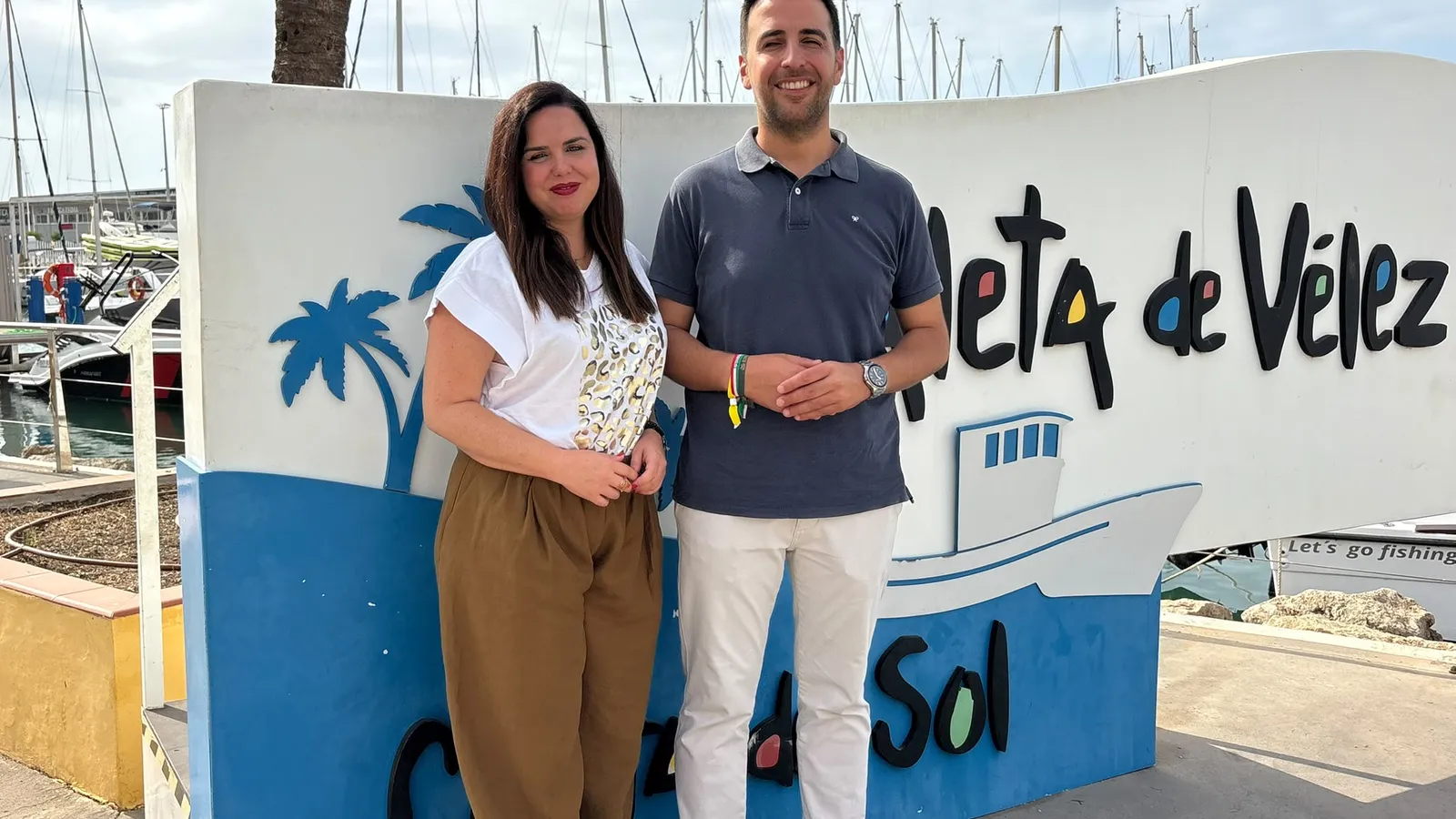
Classrooms move to the sea: hundreds of schoolchildren take to the port of Caleta de Vélez by catamaran
Vélez-Málaga
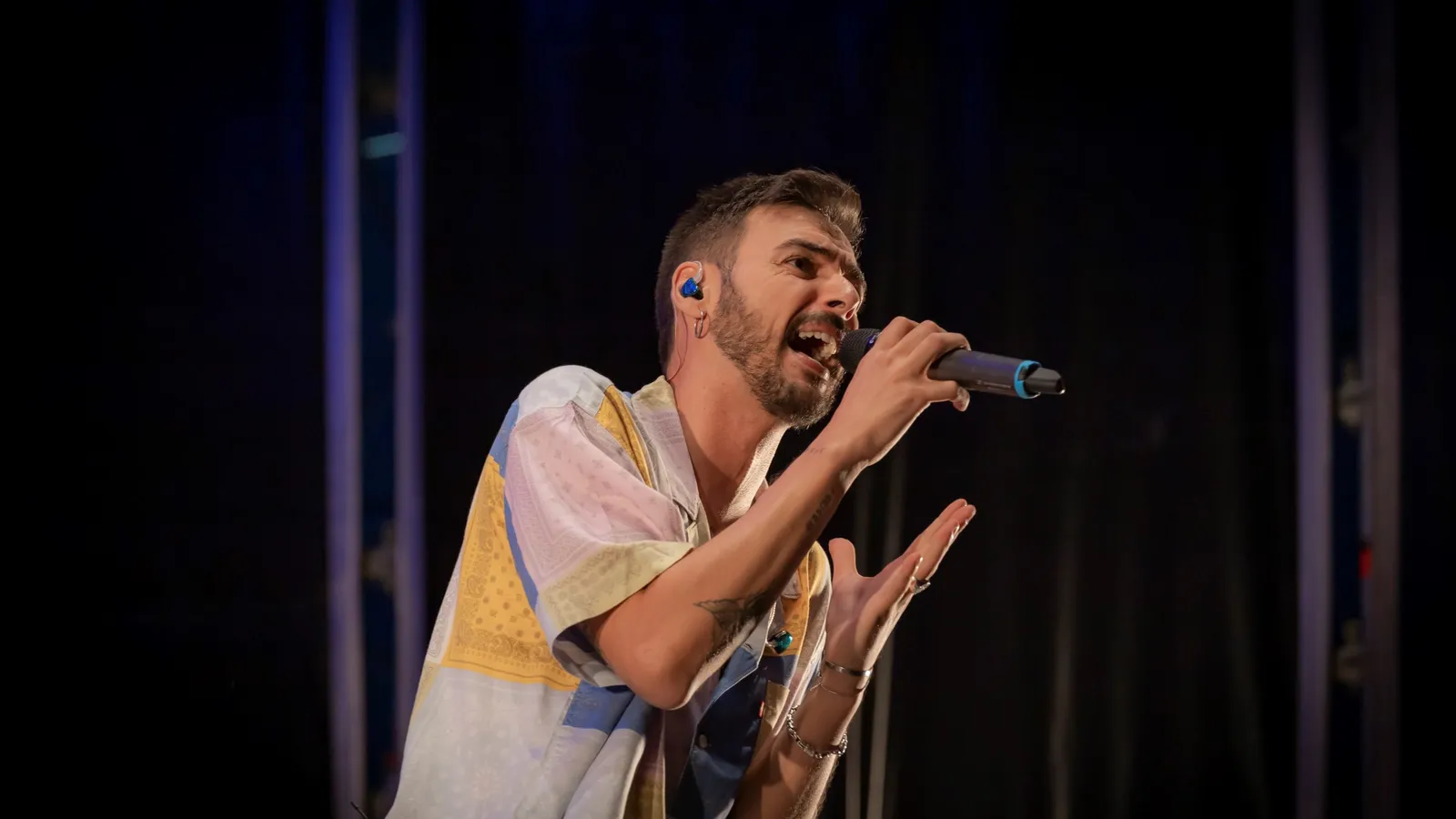
Raule, a tribute to Manuel Carrasco and Óliver Gil, headline the San Juan Night in Torre del Mar.
Vélez-Málaga

Vélez-Málaga organizes a free female self-defense workshop against gender violence
Vélez-Málaga
