


The shield that must be maintained
Five years after starting vaccination during the pandemic, the perceived risk has decreased. Experts remind us that immunization remains essential to protect vulnerable groups.
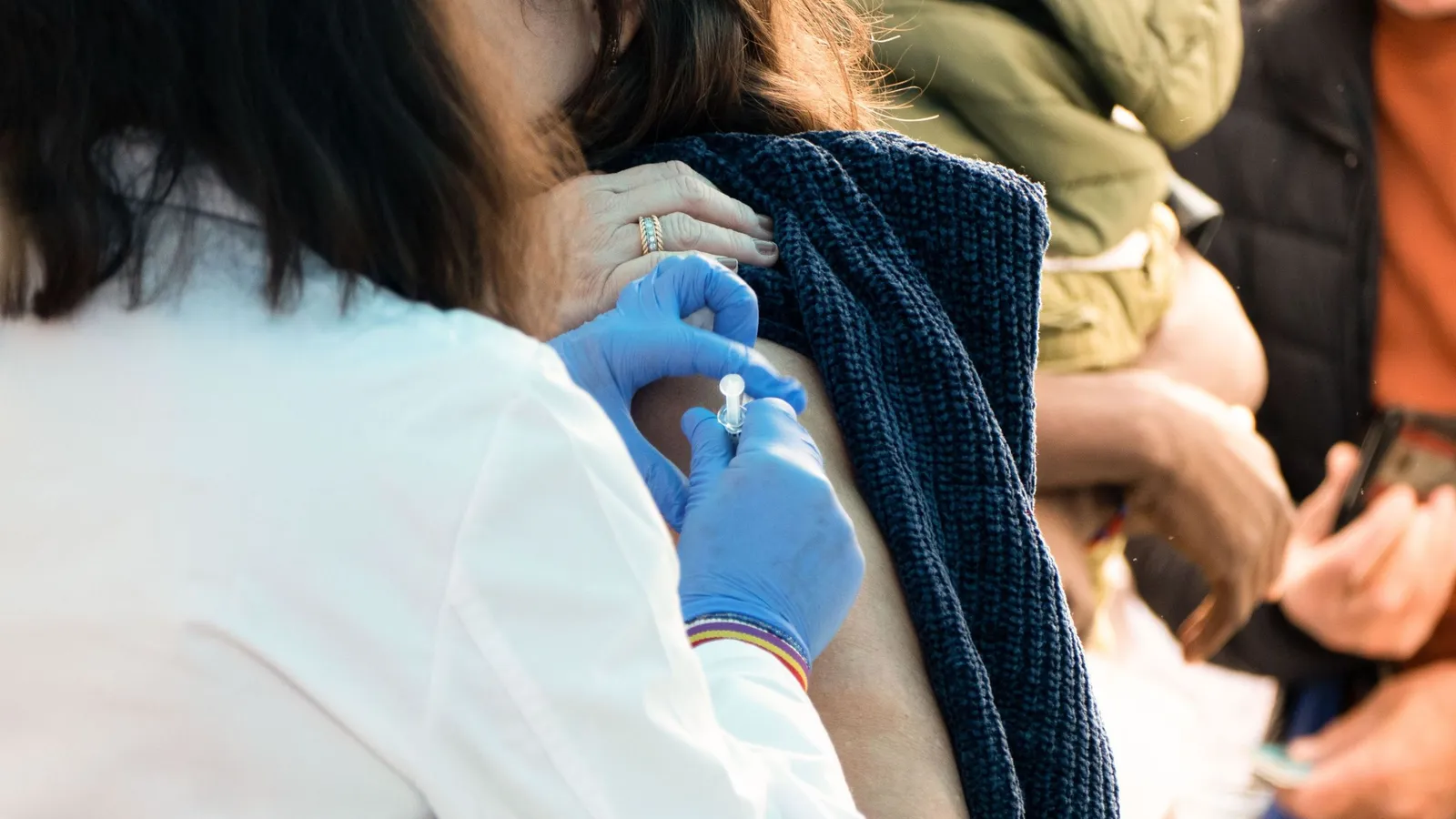

Five years after the first Covid-19 vaccines, the Ministry of Health has launched an information campaign and published a document to remind the public of the importance of continuing to get vaccinated, especially among at-risk groups. The initiative aims to reinforce the message that, although the social perception of danger has decreased, vaccination against Covid-19 remains a key tool to prevent hospitalizations and deaths.
The warning comes at a time when the Covid-19 pandemic no longer dominates the public agenda as in 2020, but the coronavirus continues to circulate. According to data from the Ministry of Health, during the 2023-2024 season, around 1.59 million cases, nearly 50,000 hospitalizations, and more than 4,000 deaths from Covid-19 were recorded in Spain.
According to Dr. Jaime Jesús Pérez Martín, president of the Spanish Association of Vaccinology, the decrease in risk perception is understandable when comparing the current situation to the first months of the pandemic. "I believe there has been a decrease in risk perception, but it corresponds to reality. In 2020 we had a completely overwhelmed health system and could barely cope with the worst health crisis those of us under 80 have ever experienced," explains Pérez.
In his view, the difference between that time and now is primarily due to vaccination. "There were many hospitalizations and many deaths, even among young and healthy people. Fortunately, this has changed thanks to the vaccination efforts that expanded in 2021 and 2022," he notes.
However, the expert reminds us that the risk of Covid-19 has not completely disappeared. "Now we operate under different parameters. People who should be particularly concerned about getting vaccinated are those for whom vaccination is indicated," he states.
The current recommendations focus on the most vulnerable groups, a line that coincides with the message from vaccination experts. These include elderly people, patients with chronic diseases or immunosuppression, and pregnant women. According to Pérez, these groups continue to be those at greatest risk of severe illness from Covid-19. "They are people with risk conditions, those who have immunosuppression or chronic diseases, people aged 70 and over, and pregnant women," he explains.
In the case of the latter, vaccination during pregnancy also has an indirect effect on the baby. "Children under one year old, especially those under six months old, have a relatively high hospitalization rate, along with people over 80 years old," he recalls.
In general terms, he adds, the profiles recommended for Covid-19 vaccination are quite similar, albeit slightly narrower, to those indicated for flu vaccination. Hence, one of the vaccination strategies adopted in recent campaigns is the simultaneous administration of flu and Covid-19 vaccines at the same appointment. According to the president of the Spanish Association of Vaccinology, this practice is now well-established. "Since fall 2021, it has been indicated that they can be administered at the same time," he explains.
Another aspect that has changed over the years is the prominence of coronavirus variants in public debate.
During the first months of the pandemic, names like Delta and Ómicron became part of everyday vocabulary. Today, however, this topic takes up less space in the scientific and media discussion. According to Pérez, this has an epidemiological explanation. "At first, it seemed that the virus was mutating very quickly, but what was happening was that it was infecting a huge number of people at the same time," he notes.
With the increase in population immunity, the situation has changed. "Now the population has immunity from vaccination or previous infections, the virus circulates less, and fewer relevant variants appear," explains the president of the AEV.
The expert also positively values the incorporation of new vaccine technologies in the fight against Covid-19, including a vaccine developed in Spain by the company Hipra, based on protein technology. "It is a great achievement of Spanish vaccinology," he asserts. In his opinion, having different vaccine platforms—such as RNA vaccines and protein vaccines—expands the available options. Additionally, he emphasizes their strategic importance. "It means having a vaccine developed entirely in the European Union, which can provide greater independence in future health crises."
"The situation is not the same as in 2020 and that is good news," Pérez summarizes. But he insists that vaccination against Covid-19 remains essential to prevent complications in higher-risk groups.

Latest news





Upcoming events
12
Nov
El Desembarco, la traición de Viriato at La Caja Blanca
12
Nov
HOMER El Mero Mero at Sala Trinchera Málaga
13
Nov
Marbella Startup Lab – Innovate & Collaborate
13
Nov
Candlelight: Coldplay & Imagine Dragons at Sala Fundación Unicaja María Cristina
13
Nov
Candlelight: Tribute to Ludovico Einaudi at Anantara Villa Padierna
Similar News

Marbella Launches ‘Summer Youth’ Programme with 2,500 Free Places
Marbella

Premium Tourism Drives Marbella’s Hotel Profitability to Record Levels as Overnight Stays Exceed 291,000
Marbella

‘Machos Alfa’ seeks extras in Marbella for filming of its sixth and final season
Marbella
