


The Clinical Hospital incorporates a robotic digital radiology room with artificial intelligence in Barbarela
The new technology reduces radiation, improves the accuracy of tests, and speeds up diagnostics in Malaga Pharmacologist Laura Redondo warns of the dangers of the 'paracetamol challenge' in minors
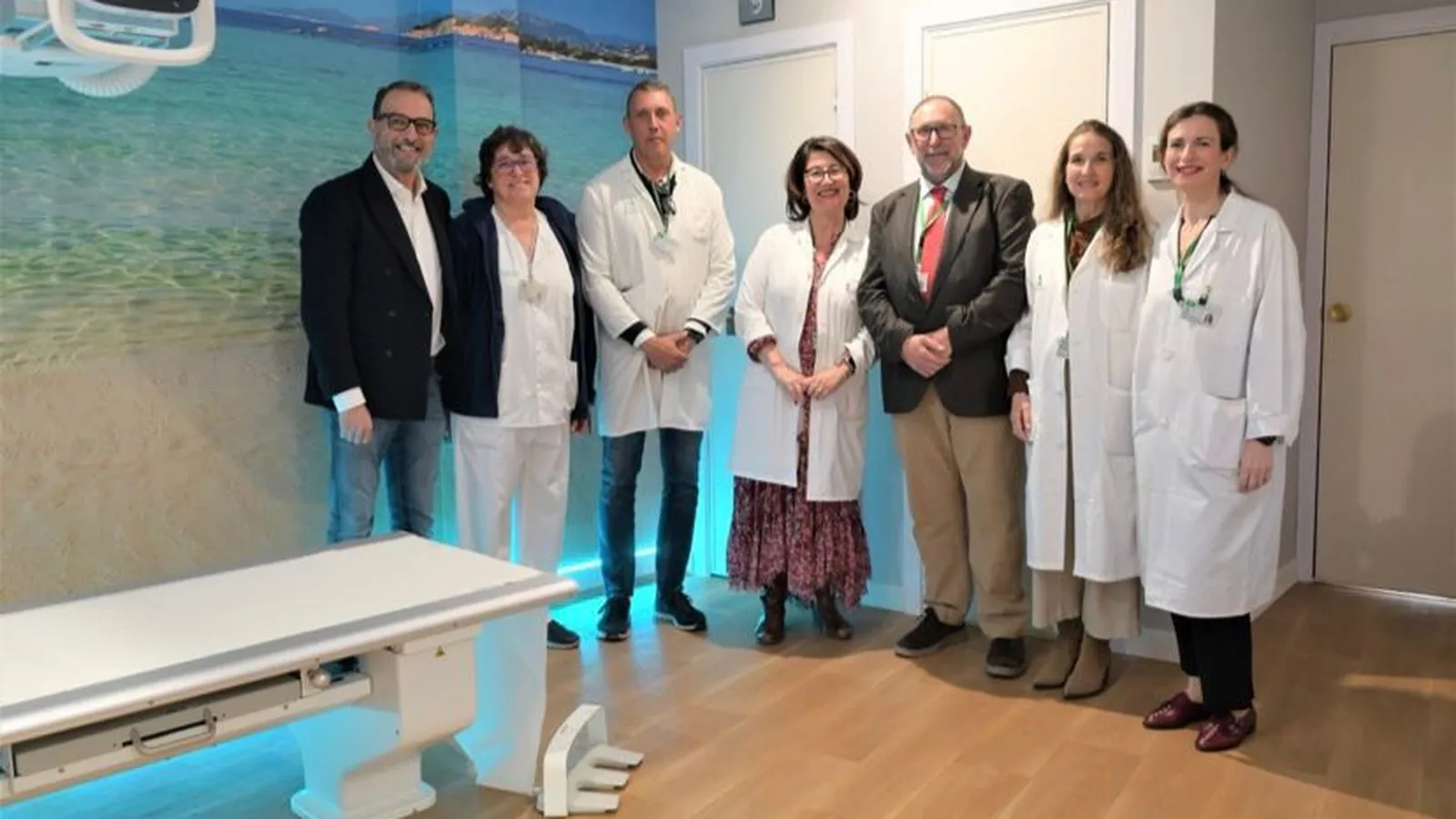

The Virgen de la Victoria University Hospital Complex in Málaga, part of the Andalusian Health Service (SAS) under the Ministry of Health, Presidency, and Emergencies of the Junta de Andalucía, has just inaugurated a new room for direct and robotic digital radiology with state-of-the-art Artificial Intelligence.
This new technological equipment, representing the forefront in diagnostic imaging, was visited this Wednesday by the regional health delegate in Málaga, Carlos Bautista, who was accompanied by the managing director of the complex, Jesús Fernández Galán, the deputy directors, Sebastián Soto and Victoria del Moral, and the head of the Radiodiagnosis service of the hospital, Mercedes Acebal.
Also present were the technical coordinator, Raúl Romo, and the supervisor of the unit, Gloria Millán, among other professionals of the team. The project involved a total investment of 247,127 euros, of which 208,120 euros were for the acquisition of the equipment and 39,007 euros for the adaptation of spaces, decoration, and installation.
This action is part of the modernization strategy of the Ministry of Health to bring high technology closer to specialty centers to optimize healthcare response. According to Carlos Bautista, the regional health delegate in Málaga, "the launch of this room represents a qualitative leap in radiodiagnosis by incorporating AI algorithms that ensure maximum clinical safety. Our philosophy is the care of the patient through technology, prioritizing humanization and precision."
The new room incorporates robotic technology with ceiling suspension, which allows for automatic positioning according to established protocols. Among its most disruptive technical features is an AI-assisted vision camera for 3D body analysis, which allows continuous real-time patient monitoring and recommends the exact radiation dose based on their size and thickness. This precision allows for a general reduction of radiation doses by more than 50%, achieving a 45% specific reduction in complex studies.
Furthermore, the advanced software allows, with a single shot, to obtain different visualizations, avoiding unnecessary repetitions and radiation impacts. The incorporation of this technology not only improves safety but also the patient experience and service efficiency through early detection tools for anomalies, such as pneumonia or nodules, by marking suspect areas in real time. The intelligent telemetry significantly speeds up image processing, reducing the time of certain studies by 84%. This speed, combined with the robotization and ergonomics of the equipment, shortens exam times by 34% compared to conventional systems, translating into greater comfort for the user.
Finally, precision is enhanced by an integrated motion sensor that prevents misfires when the patient moves, thus eliminating rejection rates and ensuring a precise diagnosis from the first take. Meanwhile, Jesús Fernández Galán, the managing director of the Virgen de la Victoria University Hospital Complex, stated that "with this new infrastructure, this specialty center improves its response to these high-demand studies within the framework of the hospital complex that continues to work on its commitment to healthcare innovation, offering citizens a safer, faster, and more humane environment for their radiological diagnoses."
Regarding healthcare activity, out of the total tests carried out by our service in all diagnostic modalities across the hospital area of the Radiodiagnosis specialty; 810,255 tests were performed in 2025, of which 473,252 were simple radiology. In this context, it should be noted that the San José Obrero specialty center conducts a higher volume of these types of simple radiology or conventional radiology studies, as it houses the specialty consultations that address musculoskeletal pathology (Rehabilitation, Orthopedics, and Rheumatology). Approximately, about 30 patients per shift benefit, reflecting the high healthcare impact and accessibility of this diagnostic service.

Latest news





Upcoming events
12
Nov
El Desembarco, la traición de Viriato at La Caja Blanca
12
Nov
HOMER El Mero Mero at Sala Trinchera Málaga
13
Nov
Marbella Startup Lab – Innovate & Collaborate
13
Nov
Candlelight: Coldplay & Imagine Dragons at Sala Fundación Unicaja María Cristina
13
Nov
Candlelight: Tribute to Ludovico Einaudi at Anantara Villa Padierna
Similar News

Marbella Launches ‘Summer Youth’ Programme with 2,500 Free Places
Marbella

Premium Tourism Drives Marbella’s Hotel Profitability to Record Levels as Overnight Stays Exceed 291,000
Marbella

‘Machos Alfa’ seeks extras in Marbella for filming of its sixth and final season
Marbella
