


The Journey of Coffee from Africa to Its Global Expansion
MAS Foundation and the Royal Academy of Medicine and Surgery of Seville Foundation hold an informative session focused on the origin of the coffee plant, its evolution, and the role of caffeine as a bioactive compound.


The "MAS Food and Health Chair", driven by the MAS Foundation and the Royal Academy of Medicine and Surgery of Seville Foundation (RAMSE), analyzed the origin of coffee and its global spread in an informative conference held in Seville. The session, titled Coffee: Origin and Spread of this Food, was delivered by Dr. Benito Valdés Castrillón, Professor of Botany and full member of the Royal Academy of Medicine and Surgery of Seville, and concluded with a coffee tasting.
During the opening, the president of the MAS Foundation, Vicente Martín González, emphasized the cultural and research dimensions of this drink: “Coffee, the protagonist of today's conference, is a good example of how a food can be history, culture, and also an object of scientific research.” In the same vein, he defended the role of the Chair as a vehicle for dissemination: “Our goal is clear: to promote healthy living habits through dissemination and research in food and nutrition.”
In his speech, Valdés explained that the coffee plant belongs to the genus Coffea, consisting of 103 species native to Africa, and detailed the biological origin of the most consumed coffee. According to his presentation, Coffea arabica arose from the hybridization of two African species (C. canephora and C. eugenioides), a cross that initially resulted in a sterile hybrid which, after a process of polyploidization, led to the arabica coffee plant. The speaker placed this process in the southern Sudan or northern Uganda, from where the species would have mainly spread to Ethiopia.
The conference also addressed historical aspects and nomenclature. Valdés noted that when Carl Linnaeus applied the scientific name Coffea arabica in 1753, he mistakenly indicated that it came from “Arabia Felix” (current Yemen), an idea that, he recalled, was maintained for centuries despite its African origin.
In the composition section, the expert explained that coffee is obtained from the seeds of the coffee plant, rich in caffeine, a pharmacologically active alkaloid derived from xanthine. He also mentioned other methylxanthines with similar effects, such as theobromine and theophylline. Valdés specified that caffeine is white and that the characteristic brown color of the bean appears during the roasting process, where compounds responsible for the aroma and flavor are generated. Additionally, he noted that caffeine obtained by decaffeination is used in the pharmaceutical, cosmetic, and energy drink industries.
The journey included the historical expansion of coffee from Ethiopia to Yemen and later to various territories: the Middle East in the 16th century, several European countries in the 17th century, and Spain in the 18th century. Valdés also detailed how the cultivation reached Asia through the Dutch and spread throughout America in the 18th century from plants originating from botanical gardens in Amsterdam and Paris.
The talk also reviewed the impact of rust in the 19th century, a disease that, according to the speaker, nearly wiped out Asian arabica crops and affected those in the Americas, favoring in many plantations the replacement by Coffea canephora (robusta), which is more resistant and has a higher caffeine content. Valdés concluded his presentation with a review of the global distribution of arabica, robusta, and Coffea liberica crops—the latter contributing minimally to global production—and with data on production, consumption, and trade in Spain.
A chair to disseminate food and health knowledge
The "MAS Food and Health Chair" was established in 2024 with a commitment from the MAS Foundation and RAMSE Foundation to promote informative activities about food, nutrition, and health. Its goal is to promote healthy habits, enhance knowledge at all ages, and raise awareness about prevention to reduce diseases such as obesity. The MAS Foundation, for its part, launched its Healthy Living area in 2013, focusing on the care of food as a way to improve health and prevent disease.

Latest news





Upcoming events
12
Nov
El Desembarco, la traición de Viriato at La Caja Blanca
12
Nov
HOMER El Mero Mero at Sala Trinchera Málaga
13
Nov
Marbella Startup Lab – Innovate & Collaborate
13
Nov
Candlelight: Coldplay & Imagine Dragons at Sala Fundación Unicaja María Cristina
13
Nov
Candlelight: Tribute to Ludovico Einaudi at Anantara Villa Padierna
Similar News

Marbella Launches ‘Summer Youth’ Programme with 2,500 Free Places
Marbella
Premium Tourism Drives Marbella’s Hotel Profitability to Record Levels as Overnight Stays Exceed 291,000
Marbella
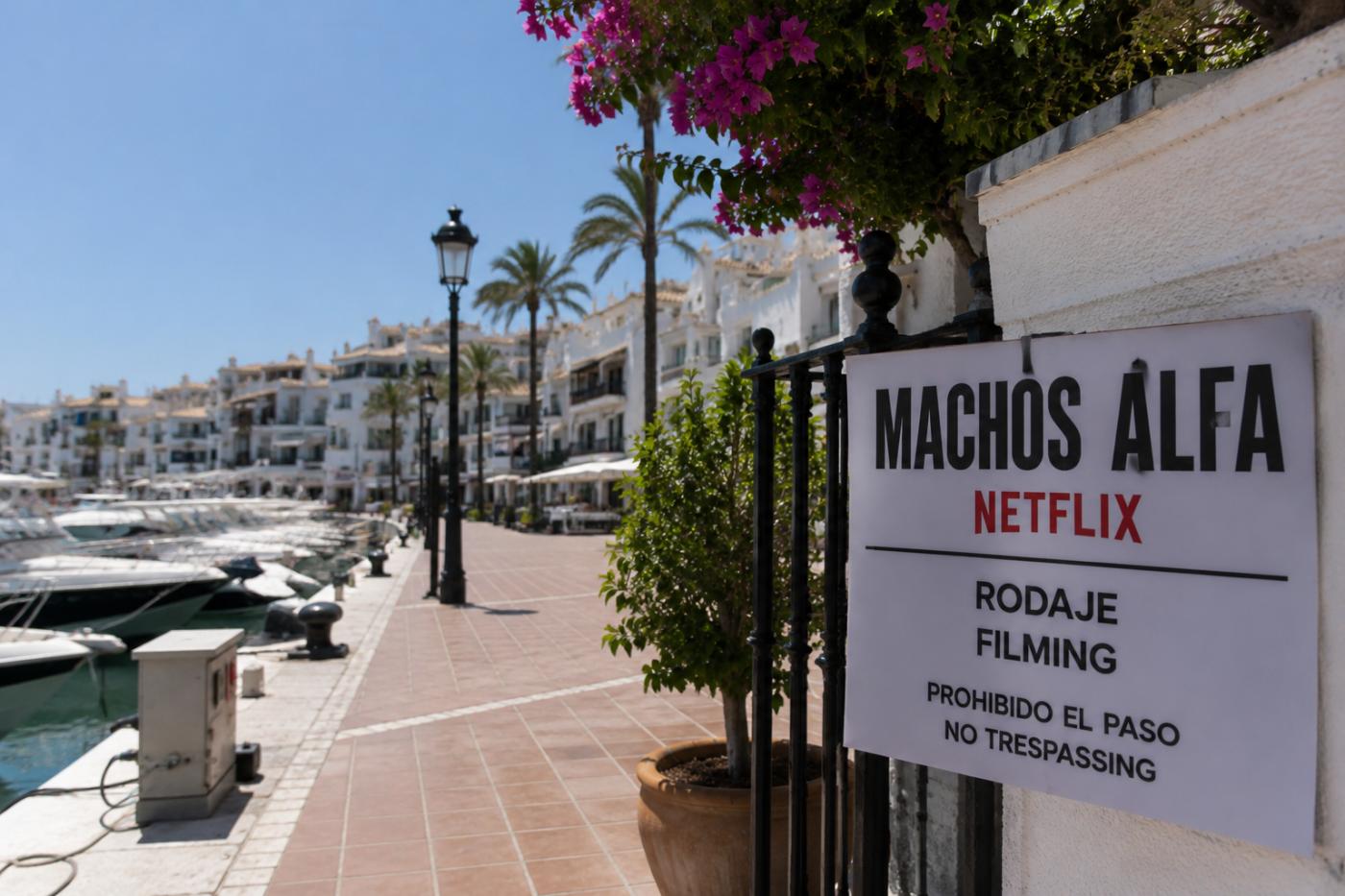
‘Machos Alfa’ seeks extras in Marbella for filming of its sixth and final season
Marbella
