


Pharmacologist Laura Redondo warns about the dangers of the 'paracetamol challenge' in minors
The Maternity Hospital of Málaga has already detected several cases ''The Paracetamol Challenge'', viral among minors, which the Regional Hospital of Málaga warns about


The paracetamol challenge, a competition among young people to see how many doses of this analgesic they can take until reaching their limit, can affect the liver and hepatic functionality, cause necrosis or even death, according to Laura Redondo, a professor of pharmacology at the University of Europe and a doctor in Biomedical and Health Sciences.
This challenge, which has gone viral among teenagers on social networks, aims to "be hospitalized as many days as possible" due to this excessive intake. In fact, this practice might have already led to the death of an 11-year-old child in the United States. In Spain, the Regional Hospital of Málaga has confirmed several admissions of minors under 14 years old for "severe intoxications" that could be related to this challenge.
Redondo has stated that the maximum daily and safe dose for a person depends on "the nature of the individual." In a healthy adult, weighing 60 kilograms and with all physiological and functional capacities adequate, the "safe maximum daily dose is 3 to 4 grams." However, she emphasized that "the dose that an adult can take is not the same as what a child or adolescent can take," which is between 2 to 3 grams per day.
In these cases, the maximum dose is lower because they have "dysfunctional hepatic and renal systems." This is due to the immaturity of these systems, "because they have not yet fully developed." Therefore, according to the pharmacologist, this results in the metabolization of drugs like paracetamol in young people not having the same capacity as in an adult. "This paracetamol is not metabolized, not removed from our bodies and therefore can have a toxic effect," she detailed.
For this reason, talking about "an exact number is not rigorous if we do not take into account the conditions of each person." The maximum dose of paracetamol for an adult is 60 milligrams per kilogram of weight per day, so "a person weighing 60 kilograms could ingest 3,600 milligrams of paracetamol per day."
Three phases after intoxication
Laura Redondo has also noted that paracetamol intoxication is defined by "three distinct stages by hours." In the first phase, within the first 12 to 24 hours after excessive intake, the individual suffers from nausea, vomiting, diarrhea, or sweating. It is important to know during this initial stage whether the patient has been poisoned voluntarily or accidentally because these symptoms are "very nonspecific."
"In this case, it would be necessary to take the individual to the hospital or medical center and perform a stomach wash and gastric aspiration because the enzymatic purification systems are not capable of metabolizing the analgesic in massive doses," she specified.
During the hepatic metabolism of paracetamol, "a toxic metabolite called NAPQI" is produced, which "destroys hepatocytes and causes hepatic dysfunction." At this point, the situation is still reversible because the antidote for this same intoxication can be administered. In the second stage, between the first 24 to 48 hours, there is a stabilization of the individual in which there might be a slight increase in hepatic enzymes. In the last stage, from 48 to 72 hours, these enzymes "skyrocket, indicating that there is hepatic damage."
In this scenario, necrosis or even the death of the individual can occur. Additionally, part of the liver may be affected, and the patient may lose 100 percent of hepatic functionality. Personally, Laura Redondo has suggested that "measures" should be taken in educational centers, although the transmission of this challenge usually occurs in other environments, mainly social, among the younger population.

Latest news





Upcoming events
12
Nov
El Desembarco, la traición de Viriato at La Caja Blanca
12
Nov
HOMER El Mero Mero at Sala Trinchera Málaga
13
Nov
Marbella Startup Lab – Innovate & Collaborate
13
Nov
Candlelight: Coldplay & Imagine Dragons at Sala Fundación Unicaja María Cristina
13
Nov
Candlelight: Tribute to Ludovico Einaudi at Anantara Villa Padierna
Similar News
Marbella Launches ‘Summer Youth’ Programme with 2,500 Free Places
Marbella

Premium Tourism Drives Marbella’s Hotel Profitability to Record Levels as Overnight Stays Exceed 291,000
Marbella
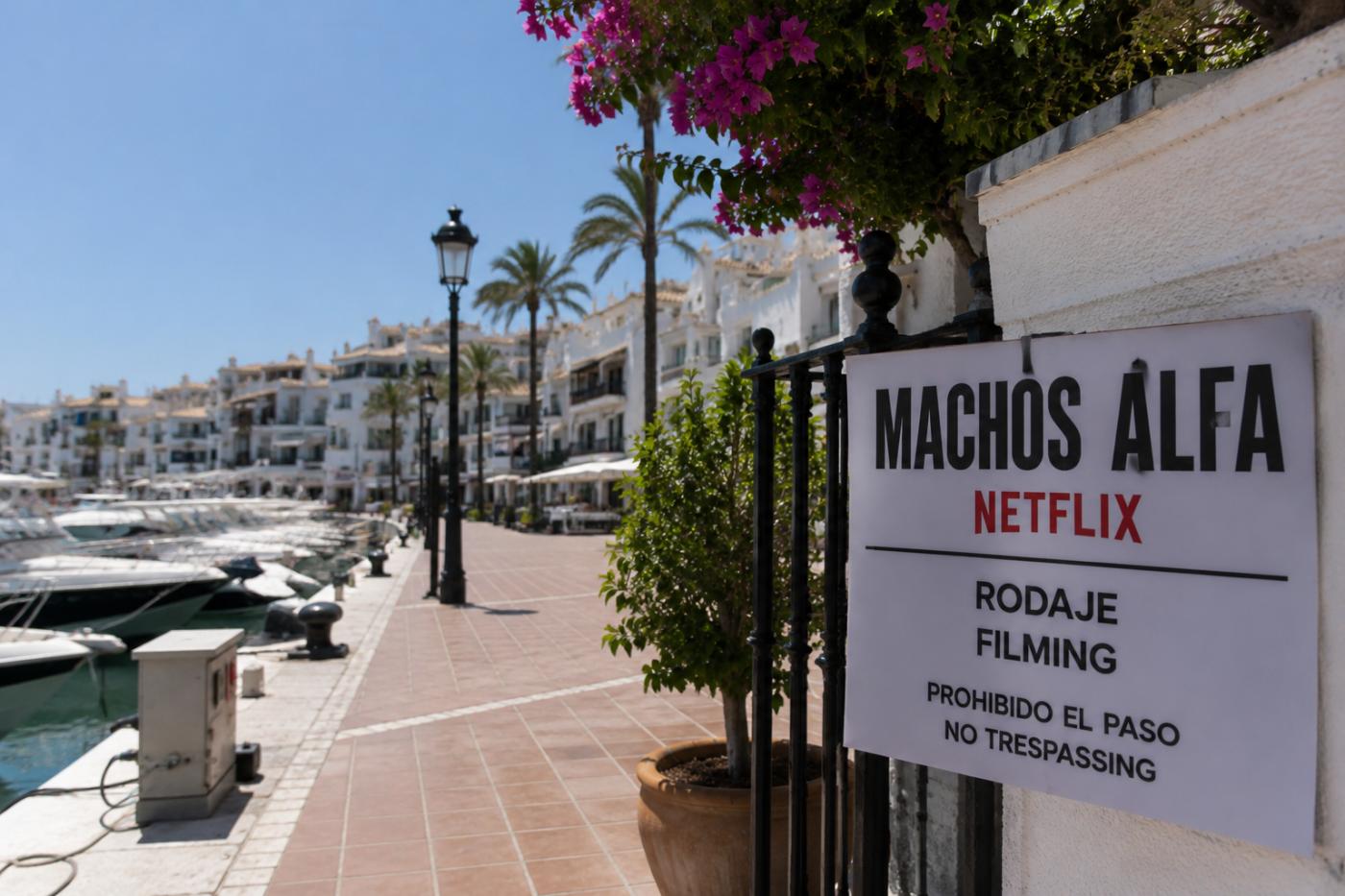
‘Machos Alfa’ seeks extras in Marbella for filming of its sixth and final season
Marbella
