


Dying while giving life, an overlooked global issue
Every day, around the world, 700 women die from childbirth. Lack of health facilities and humanitarian cuts worsen this silent crisis.
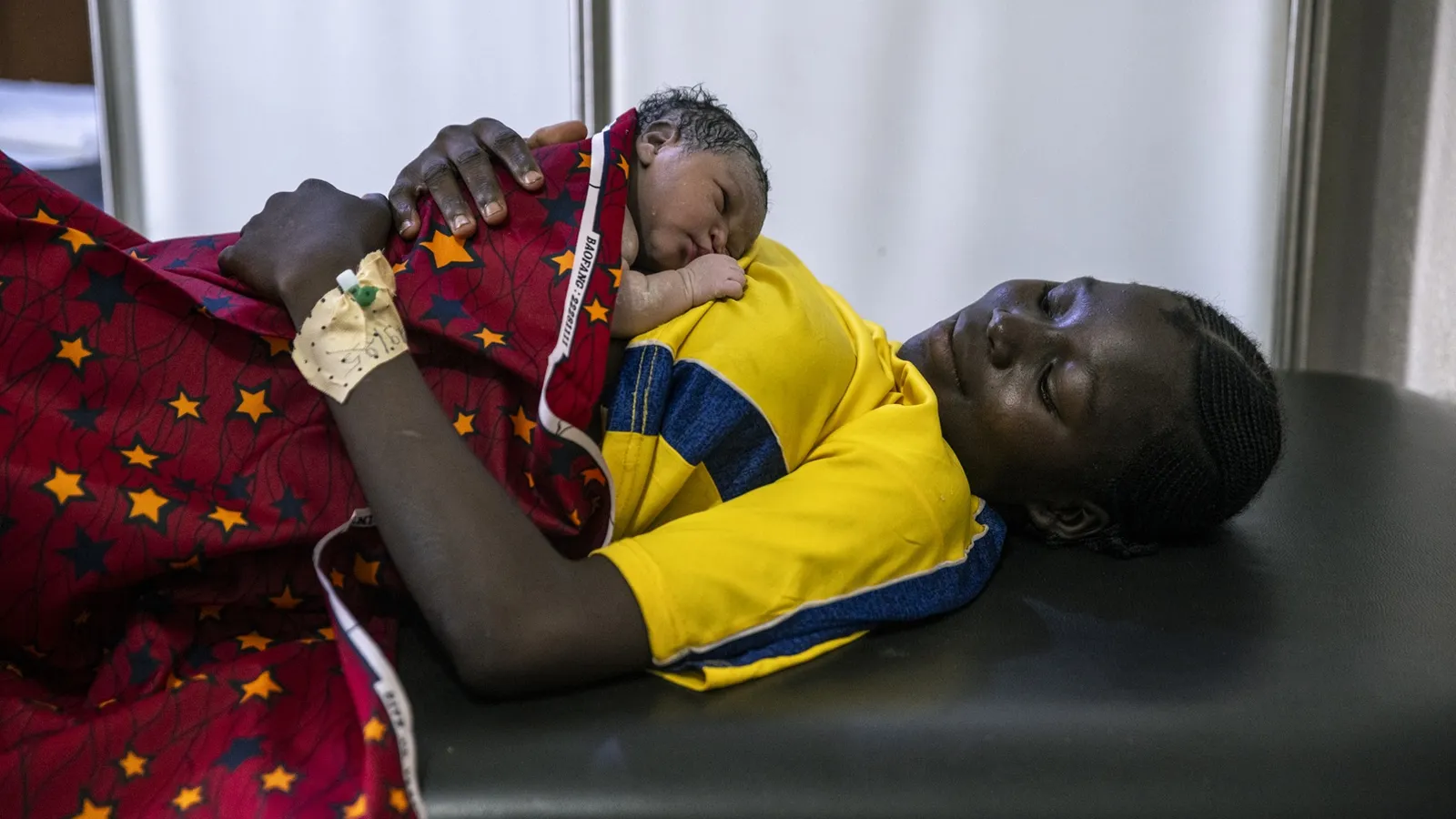

In 2023, around 260,000 women died worldwide from complications related to pregnancy and childbirth, according to United Nations data. These are more than 700 deaths per day, overwhelmingly concentrated in low and middle-income countries, where access to maternal health services remains limited, precarious, or non-existent. For Doctors Without Borders (MSF), these deaths are not inevitable: most could be prevented with timely and quality obstetric care.
Pregnant women are among the most vulnerable in contexts of armed conflict, forced displacement, extreme violence, or natural disasters. In countries like Nigeria, the Central African Republic, or Bangladesh, where MSF conducts a significant part of its work, the barriers to accessing life-saving medical care are alarmingly similar.
The main causes are due to hemorrhages and infectionsAccording to testimonies provided by Doctors Without Borders, Hermina has just given birth at the Batangafo hospital in northern Central African Republic. "I walked from five until nine in the morning. I had to come alone," she explains while holding her newborn. In this region, some women travel up to 100 kilometers to receive care during pregnancy or childbirth, a distance that, in emergency situations, can mean the difference between life and death.
In northern Nigeria, Murjanatu delayed seeking medical care because she could not afford the costs, even for the most basic prenatal visits. "If you don't have money, nobody takes care of you," she reports from the Shinkafi hospital, where she waits to be treated for severe anemia. In Bangladesh, Sabera, a Rohingya refugee in the Cox's Bazar camp, explains that sometimes the only way to get to the hospital is to sell household items or go into debt. "Some husbands allow their wives to go to the hospital, but others do not," she adds.
These stories reflect what health professionals call the "three delays" of maternal mortality: the delay in deciding to seek medical care, the delay in reaching a health center, and the delay in receiving appropriate treatment once there. The main causes of maternal death—postpartum hemorrhages and infections, hypertension during pregnancy, complications during childbirth, and unsafe abortions—are largely preventable, but these delays remain common.
In 2024, Doctors Without Borders teams assisted 369,000 births worldwide"The lack of health centers, the long distances, insecurity, cost, the absence of transportation, and the shortage of personnel and medicines make reaching timely care almost impossible for many women," explains Nadine Karenzi, medical manager at MSF in Batangafo. This is compounded by social and cultural factors that limit women's autonomy. "A woman may be bleeding or suffering a severe complication, but she is not allowed to go to the hospital without her husband's permission," states Patience Otse, midwife supervisor at MSF in Shinkafi.
Unsafe abortion remains one of the most invisible and stigmatized causes of maternal mortality. "We regularly treat women with severe and potentially fatal complications following abortions performed under unsanitary conditions," warns Raquel Vives, midwife and expert in sexual and reproductive health at MSF. "Restrictive laws, stigma, and lack of access to contraceptives push women to take extreme risks." When it does not cause death, unsafe abortion can lead to infertility, chronic pain, and lifelong consequences.
The situation threatens to worsen due to cuts in humanitarian funding. "When complications arise, speed is everything, but it's not always possible to anticipate them," emphasizes Vives. "Further reducing available resources will only increase the number of women and newborns who die from preventable causes."
In 2024, Doctors Without Borders teams assisted 369,000 births worldwide—more than 1,000 every day—a 9% increase from the previous year, and provided more than 63,000 safe abortions. In addition to direct care, the organization promotes maternal waiting homes, referral systems, emergency transport, and community work to reduce the "three delays".
Ultimately, maternal mortality reflects deep inequalities. The death of a mother has devastating consequences for her children and her community: babies whose mothers die are up to 46 times more likely to die in their first month of life. "Every woman who dies perpetuates the vulnerability of the next generation," concludes Vives. "Ensuring safe maternity is not just a technical issue, but a matter of rights and social justice."

Latest news





Upcoming events
12
Nov
El Desembarco, la traición de Viriato at La Caja Blanca
12
Nov
HOMER El Mero Mero at Sala Trinchera Málaga
13
Nov
Marbella Startup Lab – Innovate & Collaborate
13
Nov
Candlelight: Coldplay & Imagine Dragons at Sala Fundación Unicaja María Cristina
13
Nov
Candlelight: Tribute to Ludovico Einaudi at Anantara Villa Padierna
Similar News

Marbella Launches ‘Summer Youth’ Programme with 2,500 Free Places
Marbella

Premium Tourism Drives Marbella’s Hotel Profitability to Record Levels as Overnight Stays Exceed 291,000
Marbella

‘Machos Alfa’ seeks extras in Marbella for filming of its sixth and final season
Marbella
