


Mike Drury, the teacher who taught English to children of affluent families and immigrants in Marbella
Six teachers from colonial Africa founded one of the best British schools in the city.
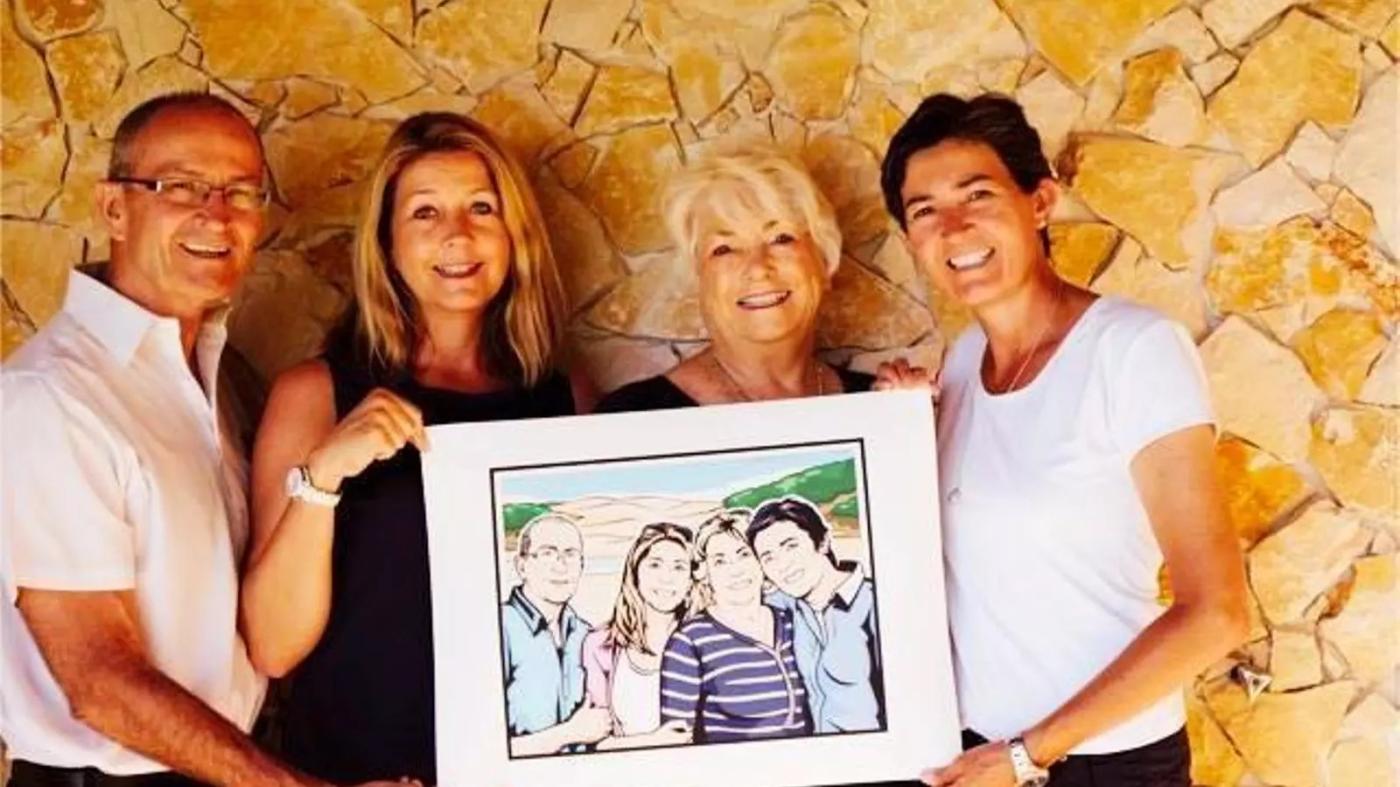

I worked in an oil refinery. The money I was paid every Saturday in a brown envelope was paid into the post office. With four months' salary I was able to buy a second-hand sports car and arrive at school - to work as a teacher - in an MGA 50, like a gentleman. I don't know whether I won my wife over because of me or because of my car,’ says Michael Mike Drury. He was born 80 years ago in the former British colony of Rhodesia, now Zimbabwe. He came to Marbella on a British passport before finally embracing Spanish nationality.

-We had no knowledge of the members of the nobility, we sometimes coincided with Gunilla, Luis Ortiz or Jaime de Mora, we saw them as normal characters. I remember that the Aloha golf course didn't have a fence separating it from the school and on one occasion a ball fell on our side and whoever was looking for it was Sean Connery. Formula One world champion James Hunt had a house in Marbella. He used to be seen running along the beach with his dog Oscar, who also kept him company while he played golf.
-The discotheque, which he owned near the current Pirulí, was named after his dog. Hunt gave his premises to the first English school to hold the end-of-year party there. As there were no supermarkets, we bought on credit at Pepa's grocery shop and every two weeks we paid off the debt. To call our parents in Rhodesia, we booked in advance. Three minutes cost about 1,500 pesetas. Sometimes I have tried to ask among the African hawkers on the seafront if there were any from Rhodesia. I didn't find any. I learned to speak Fanagolo, a simplified form of Zulu spoken in the mines, which was used by Europeans to communicate with the natives. I am grateful to have grown up in Rhodesia. My parents were teachers, not a rich family, but a family of educators, we had a cook, a gardener and a nanny. Many European women had domestic servants to help with the housework.
-We had no knowledge of the members of the nobility, we sometimes coincided with Gunilla, Luis Ortiz or Jaime de Mora, we saw them as normal characters. I remember that the Aloha golf course didn't have a fence separating it from the school and on one occasion a ball fell on our side and whoever was looking for it was Sean Connery. Formula One world champion James Hunt had a house in Marbella. He used to be seen running along the beach with his dog Oscar, who also kept him company while he played golf.
-We had no knowledge of the members of the nobility, we sometimes coincided with Gunilla, Luis Ortiz or Jaime de Mora, we saw them as normal characters. I remember that the Aloha golf course didn't have a fence separating it from the school and on one occasion a ball fell on our side and whoever was looking for it was Sean Connery. Formula One world champion James Hunt had a house in Marbella. He used to be seen running along the beach with his dog Oscar, who also kept him company while he played golf.
-The discotheque, which he owned near the current Pirulí, was named after his dog. Hunt gave his premises to the first English school to hold the end-of-year party there. As there were no supermarkets, we bought on credit at Pepa's grocery shop and every two weeks we paid off the debt. To call our parents in Rhodesia, we booked in advance. Three minutes cost about 1,500 pesetas. Sometimes I have tried to ask among the African hawkers on the seafront if there were any from Rhodesia. I didn't find any. I learned to speak Fanagolo, a simplified form of Zulu spoken in the mines, which was used by Europeans to communicate with the natives. I am grateful to have grown up in Rhodesia. My parents were teachers, not a rich family, but a family of educators, we had a cook, a gardener and a nanny. Many European women had domestic servants to help with the housework.
-The discotheque, which he owned near the current Pirulí, was named after his dog. Hunt gave his premises to the first English school to hold the end-of-year party there. As there were no supermarkets, we bought on credit at Pepa's grocery shop and every two weeks we paid off the debt. To call our parents in Rhodesia, we booked in advance. Three minutes cost about 1,500 pesetas. Sometimes I have tried to ask among the African hawkers on the seafront if there were any from Rhodesia. I didn't find any. I learned to speak Fanagolo, a simplified form of Zulu spoken in the mines, which was used by Europeans to communicate with the natives. I am grateful to have grown up in Rhodesia. My parents were teachers, not a rich family, but a family of educators, we had a cook, a gardener and a nanny. Many European women had domestic servants to help with the housework.
-We had no knowledge of the members of the nobility, we sometimes coincided with Gunilla, Luis Ortiz or Jaime de Mora, we saw them as normal characters. I remember that the Aloha golf course didn't have a fence separating it from the school and on one occasion a ball fell on our side and whoever was looking for it was Sean Connery. Formula One world champion James Hunt had a house in Marbella. He used to be seen running along the beach with his dog Oscar, who also kept him company while he played golf.
-The discotheque, which he owned near the current Pirulí, was named after his dog. Hunt gave his premises to the first English school to hold the end-of-year party there. As there were no supermarkets, we bought on credit at Pepa's grocery shop and every two weeks we paid off the debt. To call our parents in Rhodesia, we booked in advance. Three minutes cost about 1,500 pesetas. Sometimes I have tried to ask among the African hawkers on the seafront if there were any from Rhodesia. I didn't find any. I learned to speak Fanagolo, a simplified form of Zulu spoken in the mines, which was used by Europeans to communicate with the natives. I am grateful to have grown up in Rhodesia. My parents were teachers, not a rich family, but a family of educators, we had a cook, a gardener and a nanny. Many European women had domestic servants to help with the housework.
-On our first visit to Marbella with my wife, Angela, we had felt so comfortable and welcome that the following year we decided to return. In 1979 we emigrated to Spain, having been recruited as teachers at a British public school. The first words I repeated most often were: please, can you stamp my passport. Every three months we had to leave the country, via Ceuta, to renew our stay for another 90 days, until we got our papers in order. The Costa del Sol was a paradise of beach bars and bikinis.
When the Ministry of Education decided to withdraw the provisional permit from the British school in Marbella, the measure affected not only Mike and his wife, but also more than 100 Spanish schoolchildren. It was then that three pairs of Rhodesian teachers, Mike and Angela Drury; and their friends Andy and Sue Crabb; and Paul and Wendy Wright, became the six founders of Aloha School.
-It was a unique example of total collaboration between teachers, parents, banks and the city council. We presented the proposal to create a new school without even having the land. We found the support of Countess María Larisch, the architect Juan Antonio Torquemada and the director of the Bellamar school, Antonio Flores, who helped us pave the way. We then proposed to the parents that they buy shares in the future school, money that they would get back once their children finished school. They had to have confidence in a project that I was convinced would succeed. We called in teachers from London and my wife took care of the uniforms. Larisch supported the school project and provided us with an office. The architect Manuel Camisuli had an end-of-degree project to build an eight-module EGB school. We signed the deed in Fortuny's law office. It was a cooperative, an example of collaboration to which I dedicated several months of my life. We started the building work in April and in October we started classes. Only seven months passed from the presentation of the project to the Spanish parents until the opening of the school in 1982, with 240 pupils. That day I even had to direct traffic at the entrance.
I proposed no more than 25 students per class, but we had 35 or 40 due to the lack of teachers. So I divided the classrooms with partitions so that there were 25 per class. I stayed for two years and resigned to set up my own English academy. Still every year on speech day, when the prize-giving ceremony is held at the end of the course, they reserve a place for me in the front row. The current headmistress is a former student of my wife's and it is a pleasure to see how the school is maturing and adapting to change. It is considered one of the best in Spain, the school that opened the local society to the outside world. I remember Luis, the son of the doctor Emilio Pino, who studied with us and then went to live in Canada.
Mike taught English modules to hospitality students at the now defunct Bellamar hotel school. It was the first vocational training centre for tourism, offering courses to young people from all over Spain to meet the demands of the hotel industry.
-Sometimes the students were angry about having to train for a new job. After a month or two they were happy to be in Marbella, with a scholarship providing food and accommodation and more money than they had ever had before. Some of them I met years later, when they were already working in the hotels. The first years of the eighties were really nice, we used to go to the old cinema in Puerto Banús to see films in original version. The road was narrow, with no median, there were many accidents in the area of the Los Monteros hotel, some caused by English people turning left into oncoming traffic. A helicopter company was very successful in rescuing those who had accidents on the road.
Parties and theatre performances at the first school where Mike worked were held at the Don Pepe Hotel, which was run by the Count of Perlac.
-We had no knowledge of the members of the nobility, we sometimes coincided with Gunilla, Luis Ortiz or Jaime de Mora, we saw them as normal characters. I remember that the Aloha golf course didn't have a fence separating it from the school and on one occasion a ball fell on our side and whoever was looking for it was Sean Connery. Formula One world champion James Hunt had a house in Marbella. He used to be seen running along the beach with his dog Oscar, who also kept him company while he played golf.
-The discotheque, which he owned near the current Pirulí, was named after his dog. Hunt gave his premises to the first English school to hold the end-of-year party there. As there were no supermarkets, we bought on credit at Pepa's grocery shop and every two weeks we paid off the debt. To call our parents in Rhodesia, we booked in advance. Three minutes cost about 1,500 pesetas. Sometimes I have tried to ask among the African hawkers on the seafront if there were any from Rhodesia. I didn't find any. I learned to speak Fanagolo, a simplified form of Zulu spoken in the mines, which was used by Europeans to communicate with the natives. I am grateful to have grown up in Rhodesia. My parents were teachers, not a rich family, but a family of educators, we had a cook, a gardener and a nanny. Many European women had domestic servants to help with the housework.

Latest news





Upcoming events
12
Nov
El Desembarco, la traición de Viriato at La Caja Blanca
12
Nov
HOMER El Mero Mero at Sala Trinchera Málaga
13
Nov
Marbella Startup Lab – Innovate & Collaborate
13
Nov
Candlelight: Coldplay & Imagine Dragons at Sala Fundación Unicaja María Cristina
13
Nov
Candlelight: Tribute to Ludovico Einaudi at Anantara Villa Padierna
Similar News
Paco Guerrero: From Taking Care of Pigs to Serving in the Main Luxury Hotels
Marbella
Caroline Schell: Painter and Sculptor in an Actors' Clan in Marbella
Marbella
Pepe Imaz, Djokovic's Emotional Coach
Marbella
