


20 years of the Nativity Scene of the Brotherhood of San Isidro in Estepona as living cultural and religious heritage
This year it has opened in its own location on Papuecas Street.
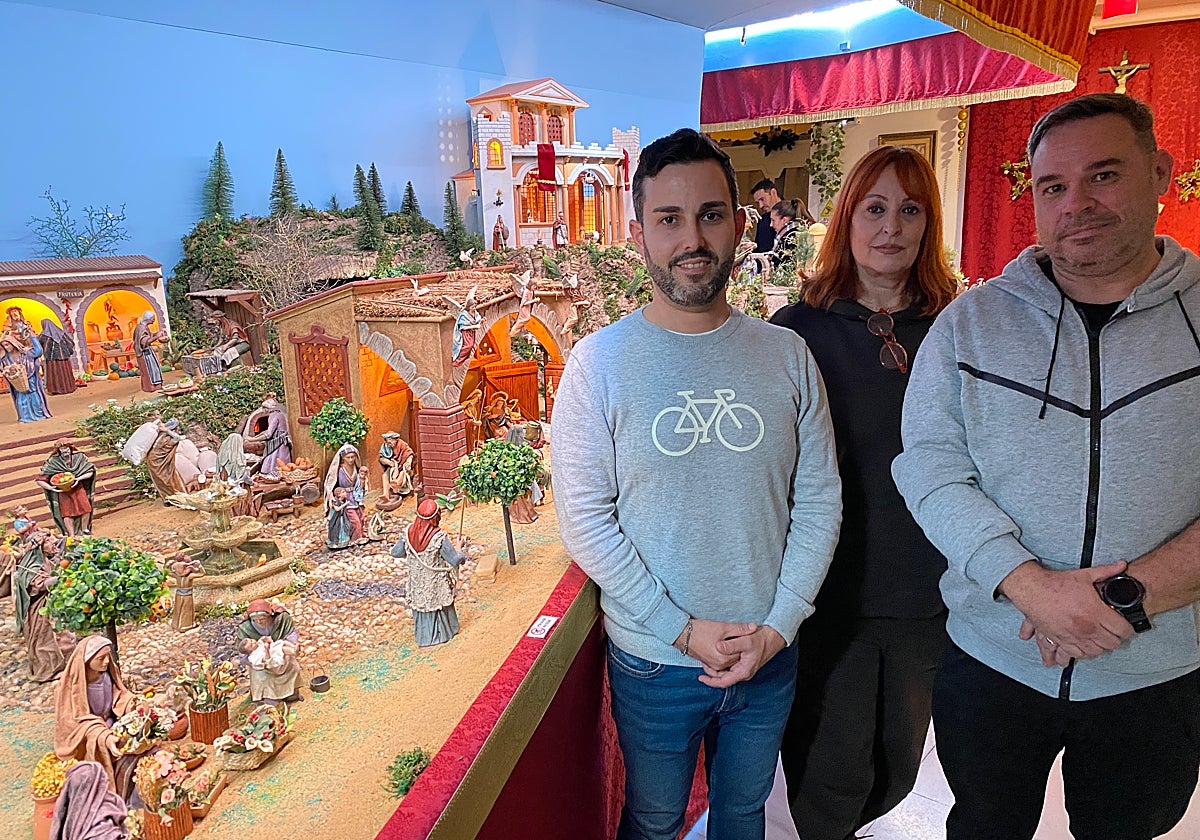

This year, the Belén (Nativity scene) of the Brotherhood of San Isidro Labrador in Estepona celebrates two decades of a consolidated trajectory as one of the city’s most unique cultural and religious Christmas offerings.
Since its inception in 2005, this work has grown in dimensions, content, and heritage value, becoming a complex artistic ensemble of great technical and human complexity, the result of the collective work of many brothers and sisters.
The artistic direction is led by Rafael Gómez, deputy senior brother, who has been overseeing the planning and overall conception of the setup since 2005. "On the empty stage, my mind already knows where each scene goes and where the light points will be," he explains.
Alongside him, a large team makes the final result possible, with special prominence this year for Juanmi Márquez and Antonio Zaplana in the lighting and sound sections, as well as Miguel Angel Chacón, Nina Gil, María José López, Eduardo Vázquez, Jesús Vázquez, Miguel Aragón, and Miguel Angel Rodríguez, among others.
Thus, this year significant technical innovations such as LED lighting and a fully computerized system that controls the movement of many of the figures are incorporated. Additionally, a team of computer scientists has developed a video using artificial intelligence in which the figures come to life with realistic movements, enhancing the visitor's experience.
Dissemination of Nativity Scene Tradition
The Belén has several clearly defined objectives. According to Gómez, "the first is to evangelize, to teach about the birth of Our Lord Jesus Christ through all the biblical passages." This educational task has been reinforced this Christmas with QR codes distributed throughout the passages, linking to a YouTube channel where the different episodes represented are explained one by one. This adds to a cultural purpose, linked to the Christmas tradition and the dissemination of belenismo as an artistic expression.
Over these 20 years, the Belén has moved through different locations: it started in a private venue, continued in municipal spaces such as the House of Culture at Plaza de las Flores, the Municipal Market, and back to the House of Culture, renamed as the House of Tejerinas, until settling this year at the social headquarters of the Brotherhood, located on Papuecas street, included in the procession route of May 15, the feast day of its patron.
Rafael Gómez explains to Diario Sur that "the building houses, on its ground floor, the Chapter and an exhibition space that currently occupies the Belén but will later host an exhibition of paraphernalia; the first floor is intended for administrative tasks and the second is projected as a living area for the brothers." After Christmas, the careful and meticulous dismantling of the Belén gives way to preparations for the pilgrimage and events in honor of San Isidro Labrador.
Estepona Heritage
The figures that make up this historic Belén are large-scale, made of baked clay and hand-painted, with a cost ranging from 100 to 300 euros, depending on their complexity and mobility. Over the years, the ensemble has been progressively expanded thanks to donations from visitors.
Initially, it only included the Nativity and the Magi, and for about five years now, it has encompassed all the biblical passages, from the Annunciation to the Flight into Egypt and the Massacre of the Innocents. "The buildings that are part of this Belén were made by the late brother Juan Sánchez, whose work in carved wood constitutes a great legacy of great historical and sentimental value for the brotherhood," acknowledges Gómez.
In addition to its biblical dimension, the Belén incorporates multiple references to Estepona and Andalusian identity. Represented are the Agricultural Cooperative, the Fishermen's Cooperative, or emblematic places such as Plaza de las Flores, conceived as the central axis of the ensemble, and elements of the landscape and daily life, such as the Malaga fisherman. The boats include the city's postal code and their names are those of San Isidro Labrador and Santa María de la Cabeza, his wife. "Plaza de las Flores separates Nazareth from Bethlehem and is where we wanted to reflect the movement and life of these cities," says Rafael Gómez.
Numerous artisanal details, such as fruits, baskets, flowers, and pots, have been handmade by Antonia Infante, a sister of the corporation. Even in the background, the symbolic presence of Sierra Bermeja is suggested, although this year with less volume due to space limitations.
Until January 6
In the Belén, San Isidro Labrador is also depicted working in the garden, as an identity nod to the Brotherhood. "All the figures are placed meaningfully, telling a story. We compare it to a Holy Week float: through the Belén, the story of Jesus Christ is understood," explains Rafael Gómez to Diario Sur.
"It took us a month and a half to set all this up, and the dismantling is no less laborious," he recounts. "Each figure is cleaned with a brush, stored in its box, and carefully wrapped; everything must be perfectly organized for next year."
Despite initial uncertainty due to the change of location, he acknowledges that public attendance has been steady. The Belén can be visited until January 6, and work is already underway on new ideas for future editions, reaffirming its status as an artistic, cultural, and community heritage of Estepona. "It's not just a Belén: the coexistence created among us is invaluable, and the work is not burdensome because you are with your own," he concludes.

Latest news





Upcoming events
12
Nov
El Desembarco, la traición de Viriato at La Caja Blanca
12
Nov
HOMER El Mero Mero at Sala Trinchera Málaga
13
Nov
Marbella Startup Lab – Innovate & Collaborate
13
Nov
Candlelight: Coldplay & Imagine Dragons at Sala Fundación Unicaja María Cristina
13
Nov
Candlelight: Tribute to Ludovico Einaudi at Anantara Villa Padierna
Similar News

Málaga Airport Makes History with More Than Three Million Passengers in One Month
Málaga

Port of Málaga looks beyond its docks to support future growth
Málaga

Guide to the Virgen del Carmen Processions in Málaga and the Province
Málaga
