


This is one of the lesser-known towns of Malaga, but its beauty captivates those who visit it.
Algatocín is one of the small towns in the Serranía de Ronda, where its villagers are known as 'gatos' and 'gatas' (cats). Two spectacular routes to take in a day through the Serranía de Ronda: nature, charming villages, and autumn landscapes.
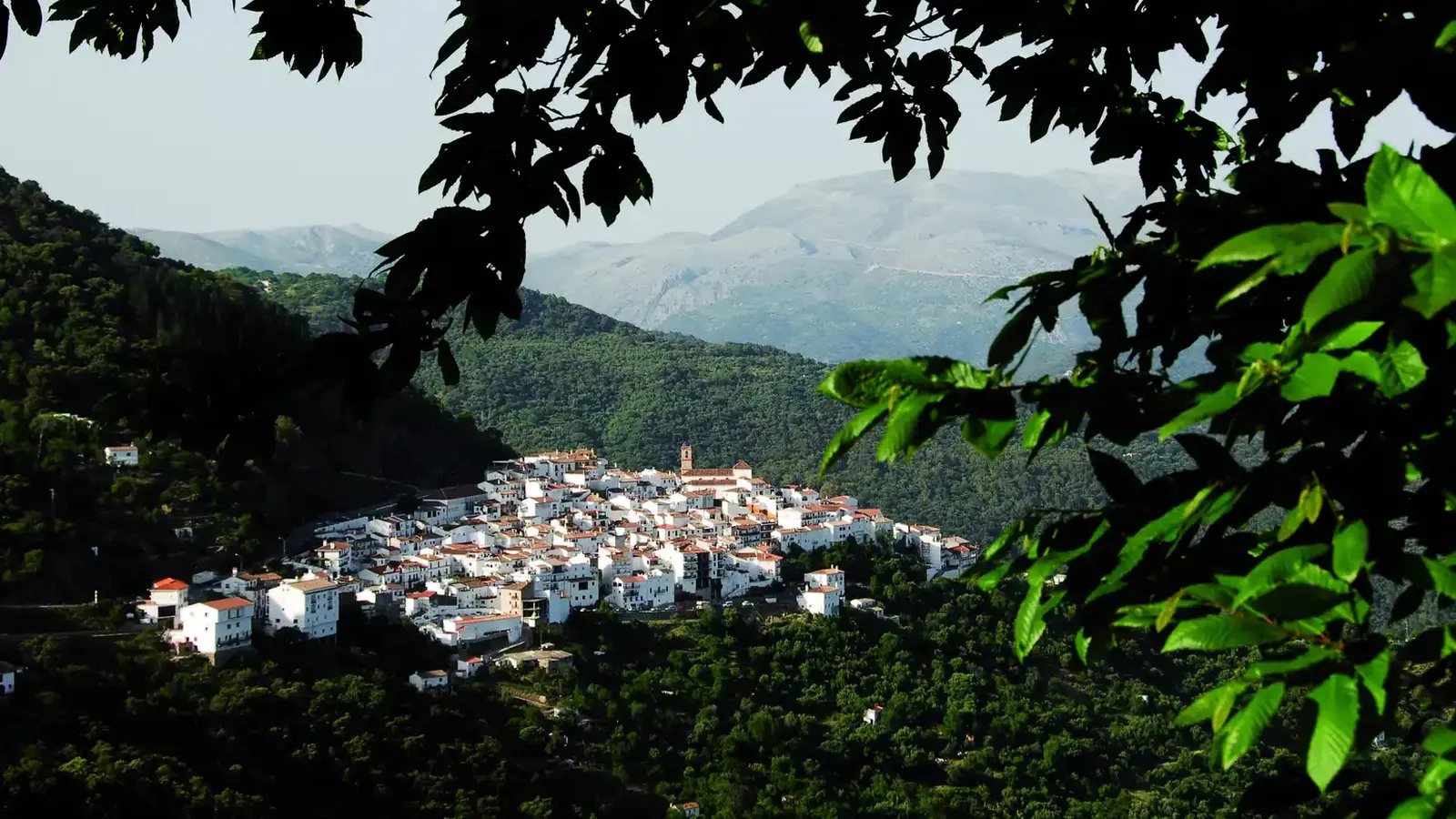

Algatocín appears on the map of the province of Málaga as one of those municipalities that preserve the intact essence of the inland mountains. Located in the heart of the Genal Valley, this town in the Serranía de Ronda combines landscape, traditional architecture, and a festive calendar that explains, better than any speech, the way of life of its residents. Far from the major tourist circuits, its charm lies precisely in that everyday normality marked by history, the natural environment, and inherited customs.
The municipal area of Algatocín stretches over the mountains that separate the Genal and Guadiaro rivers, in a location dominated by mountains covered with pines, chestnut trees, holm oaks, and cork oaks. The village is situated at 724 meters above sea level, perched on a hill known as El Fraile, whose silhouette resembles the figure of a monk and has become one of the most recognizable images of the municipality.
From this elevated position, the landscape opens up in different directions, showing the succession of mountain ranges that characterize this area of the province of Málaga. The natural surroundings are not only a visual framework but also an element that has historically conditioned the life of the village and its development, setting rhythms, activities, and traditions that remain present.
An urban center shaped by history
The urban layout of Algatocín responds to a past of clear Arab influence. The streets are narrow, steep, and winding, adapted to the slope of the terrain and designed to make the most of the available space. On both sides, the whitewashed houses form a homogeneous ensemble, interrupted by balconies decorated with geraniums and aromatic plants that add color to the predominant white.
Among these streets, buildings from the 18th century are preserved, such as manor houses with heraldic shields and porticoed facades that recall times of greater prosperity. The entire urban core is organized according to the orography, creating a compact and recognizable image that maintains the traditional character of the village.
The Church of Rosario and the surrounding viewpoints
One of the main heritage landmarks of Algatocín is the church of Our Lady of the Rosary. Built in the 16th century on the former palace of the Moorish princess Algatois, the temple summarizes much of the local history. Its bell tower, topped with a ceramic dome, stands out in the village's profile and has become one of its symbols.
A street in Algatocín with the Church of Our Lady of the Rosary in the background. / malaga.esInside, an 18th-century image of Saint Francis of Assisi stands out, part of the artistic heritage of the municipality. Next to this temple, the Calvary Hermitage occupies a prominent place for its location, from which broad views of the Genal Valley can be obtained. A kilometer from the urban center, the General's Viewpoint allows for a panoramic view that reaches nearby towns such as Alpandeire, Faraján, and Jubrique, reinforcing Algatocín's visual connection with its regional surroundings.
Popular festivals and unique traditions
Traditions occupy a central place in the life of Algatocín. In October, the festivals in honor of the Virgin of the Rosary are celebrated, with processions, dances, and parades that fill the streets of the municipality with activity. The Carnival, in February, and the Festival of the Candelaria are also part of the annual calendar, keeping alive celebrations of popular character.
Among the most unique customs is the celebration of The Mornings, which takes place during the week leading up to Christmas. In this tradition, residents walk through the village singing carols at six in the morning, an unusual scene that reinforces the community spirit. The night of Saint John, on June 24, is completed with the distribution of sangria by those named Juan or Juana, a symbolic gesture that adds a festive component to the day.
Mountain cuisine with Moorish roots
The traditional cuisine of Algatocín is closely linked to its natural environment and history. Among the most representative dishes are the chard omelette, stews made with wild herbs, and mountain pots, recipes that are part of the usual cookbook of the municipality.
These dishes are complemented by artisanally produced sausages and charcuterie, along with a pastry selection that retains clear Moorish influences. Flour porridge with honey, alfajores, and pestiños complete a gastronomic offering that reflects the rural character of the village and its link with the culinary traditions of the interior of Málaga.
A discreet municipality in the interior of Málaga
Algatocín is located 134 kilometers from Málaga capital and can be reached via the A-7 and A-369, while from Ronda the A-397 directly connects to the municipality. Its location, landscape, and the coherence of its urban center explain why this town in the Serranía de Ronda maintains a discreet profile, away from overcrowding, but with a solid identity that sums up much of the rural essence of the province of Málaga.

Latest news





Upcoming events
12
Nov
El Desembarco, la traición de Viriato at La Caja Blanca
12
Nov
HOMER El Mero Mero at Sala Trinchera Málaga
13
Nov
Marbella Startup Lab – Innovate & Collaborate
13
Nov
Candlelight: Coldplay & Imagine Dragons at Sala Fundación Unicaja María Cristina
13
Nov
Candlelight: Tribute to Ludovico Einaudi at Anantara Villa Padierna
Similar News

Málaga Airport Makes History with More Than Three Million Passengers in One Month
Málaga

Port of Málaga looks beyond its docks to support future growth
Málaga

Guide to the Virgen del Carmen Processions in Málaga and the Province
Málaga
