Costa del Sol News
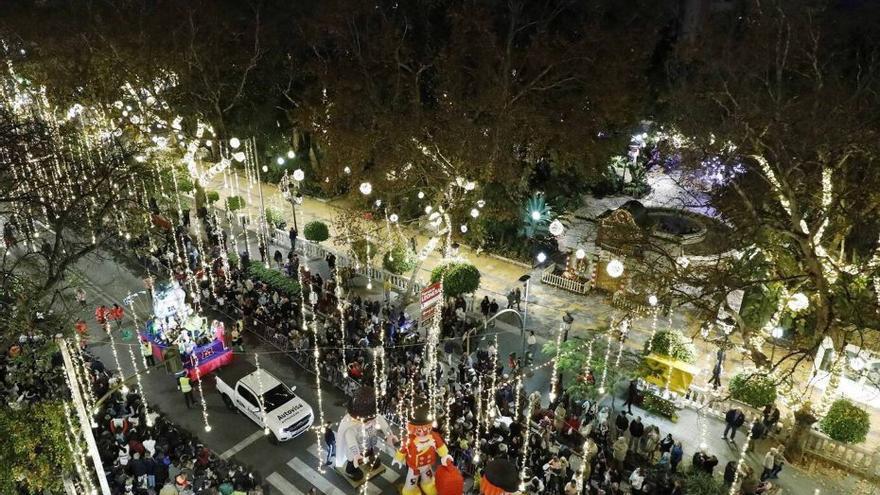
Christmas in Marbella was not always heralded by the colorful lighting of its streets, the opening celebrations, and the soundtracks performed by music stars. The characteristic sound marking the Christmas season was that of the pastoral music groups, such as those from Las Chapas, Río Real, El Ángel, or El Barbero. In the forties, fifties, and sixties, these were primarily family celebrations.
Carmina Mata Millán, an expert on Marbella's cuisine and author of the book ‘Cocina popular de Marbella de ayer y de hoy’ (Popular Cuisine of Marbella, Past and Present), states that Christmas was a time when homes in the city would shift from their usual consumption of fish throughout the year to a focus on meat: chicken, hen, rooster, turkey, and pork reserves from the slaughter typically carried out in November, starting with the feast of Saint Martin.
It was also the time for wine doughnuts, olive oil shortbread, borrachuelos, pestiños, and fritters. It was the season for nativity scenes in homes.
The religious significance of Christmas was at the heart of the celebration. An example of this can be seen in the 1950s, when, by a "special privilege of the Holy See," the parish church of Santa María de la Encarnación hosted a 'holy hour' and a 'midnight mass' to ring in the new year. It was a time for parishioners to receive communion for the first time in the new phase. The parish priest would take stock of the year that was ending.
The Epiphany celebration, every year, was held at the School of Naval Arrows. At the 1956 celebration, attended by Mayor Cantos Gallardo, the provincial delegate of the Youth Front, Francisco Valverde, and the regional inspector, Antonio Lizarza, the students were given a Christmas bonus of twenty-five pesetas. The school director and naval military aide, Salvador Baeza Cuevas, spoke at the event and three months later, after being promoted to navy lieutenant, he left Marbella.
The following year, alongside the events at the School of Naval Arrows, toys were distributed to the poor children of Las Chapas on Epiphany. Providing toys was a common practice by the City Council, and throughout the sixties, the Christmas campaigns of Radio Marbella, with the collaboration of radio enthusiasts, were a constant feature.
Epiphany was also a time for other types of events; for instance, in 1960, this date was chosen to award Dr. Antonio Maíz Viñals the gold badge of the Andalusian Football Federation, of which he was a delegate in Marbella.
There is evidence of the celebration of the Three Kings parade, thanks to private initiative. On December 16, 1959, the Government Commission learned that the Costabella travel agency (the first in the city) was organizing a "Three Kings parade and distribution of toys for the poor children of this city." They requested financial collaboration from the City Council. Once the councilors received a verbal report from the municipal funds controller about the allocation for these activities, they unanimously agreed to grant 2,000 pesetas, requiring that its use be justified.
The director and owner of the Costabella agency was Restituto de Chavarría Gandía, director of the trade union station or Syndical Information Service. Around Christmas, the station concluded its campaign in the program ‘La gran subasta’ (The Great Auction), to raise funds for the construction of social housing.
Throughout the sixties, the celebration of Three Kings parades was common, organized directly by the City Council. As an example, the parade held on the eve of Epiphany in 1968, under the "sponsorship of the Syndical Work of Education and Rest," can be recalled. This event was associated with providing toys to needy families.
The president of the Festivities Committee, Francisco Palma, told the media that that year's parade "would be more splendid than ever. No child in Marbella will be without toys this year. The Three Kings will reach everywhere, no matter how difficult the paths may be."
The living nativity scene was another event that became institutionalized on the Paseo de la Alameda. Later, the Maldonado Sisters would take over. Certainly, Christmas leaves different marks on each of us. Unique in the festive history of the city is that, by sharpening their ingenuity in the face of necessity, the Festivities Delegation overcame the limitations of what is a paradox: in Marbella the Three Kings both rode and, at the same time, remained static. Such are the quirks of impertinent viruses.