The Malaga Origin of the Creator of Mafalda:
"I have a problem with my roots because I never felt very Latin American," he confessed, while acknowledging his strong connection to Andalusian culture.
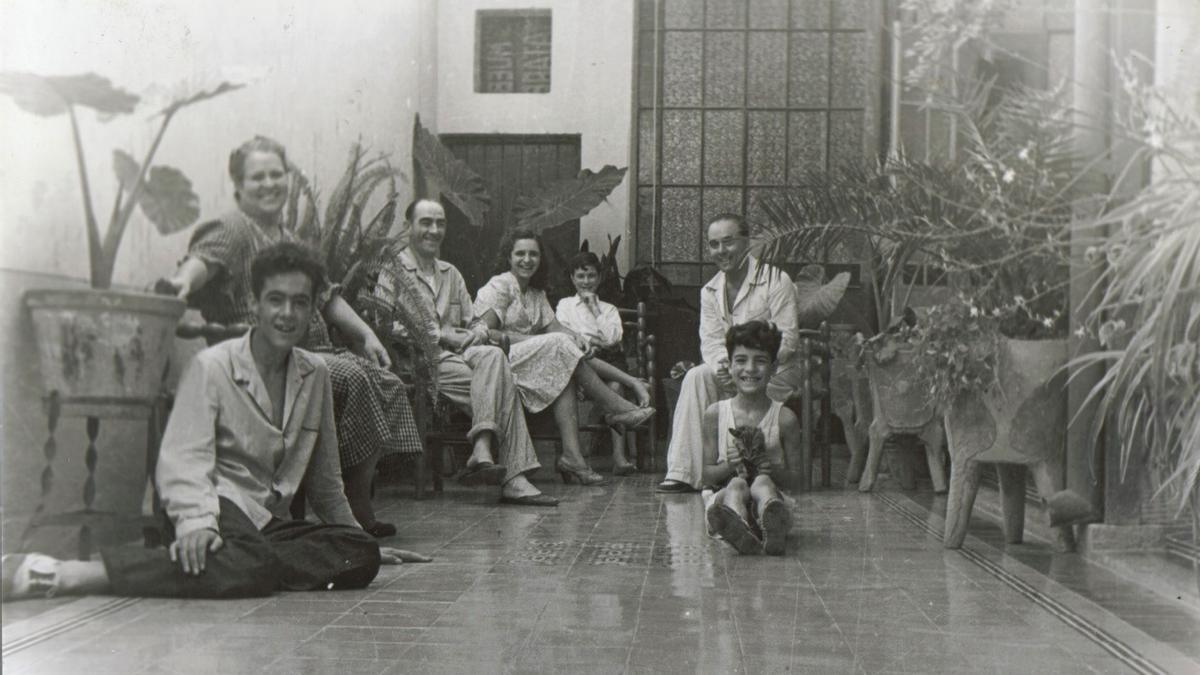

Joaquín Salvador Tejón, better known as Quino, was born in Mendoza, Argentina. At least that's what all the biographies about the cartoonist say. However, it might be inaccurate, and he himself might have altered the data a few years ago. In 2013, he attended a conference on the world of comics in Granada. It was there when he confirmed that he was born in Fuengirola in 1932 and at the age of four, he emigrated with his parents to Mendoza due to the Civil War that had just broken out in Spain.
The Andalusian Roots of Quino
"I have a problem with my roots because I never felt very Latin American," Quino confessed in an interview for "A Fondo." He had just flown to Fuengirola in search of answers about his origins. In his home, Andalusian was spoken, and he, in fact, spoke it until he was six years old. At school, he used "tú" and said "este tío," and his classmates would ask, "What uncle? Whose uncle?" He grew up surrounded by the culture of southern Spain, of the Costa del Sol. Flamenco moved him, just as much as Argentine music. He wanted to return to his land of origin, Fuengirola, and immerse himself in all that culture he had always admired and lived with thanks to his parents. But when the cartoonist arrived in Málaga and began to see signs in Swedish and Dutch and skyscrapers instead of the "small fishing village" he expected, it was "quite a disappointment." The only thing that remained the same was the castle where his mother played as a child.
Mafalda, the girl who wanted to change the world with irony / L. O.
It was his uncle, Joaquín Tejón, who pushed him to draw. Originally from Málaga, he also moved to Mendoza with his family where he continued his career as an artist creating 50 individual exhibitions and 90 group ones. His uncle always made drawings to tell stories to Quino and his siblings whenever he took care of them. That sparked his "interest in painting." He was four years old and drew with a blue pencil everywhere. His family always supported him from the moment he said he would "draw comic strips". Although the humorist acknowledged on several occasions that his mother complained about "cleaning up what the child drew."
The cartoonist always said that his ironic and dark humor and his way of seeing life is more similar to that of the Andalusians than to that of the Argentines. And he has always felt grateful and very fortunate for that connection with the south. And they say humor has no colors or races, but the similarity of Quino with Andalusia has always been undeniable. With an immeasurable love for Spain and its culture, the cartoonist spent much of his life within its borders, which he felt as refuge and home. There were numerous visits to Andalusia and to Málaga, and he used any excuse to mention with great pride that his origin came from Fuengirola. In fact, after having tried previously, in 1990 the cartoonist finally obtained Spanish nationality.
Quino. / Reuters
The Origin of the Global Phenomenon Mafalda
Mafalda was born from a commission by an advertising agency that never came to fruition. Years later, Quino picked up the sketches from the drawer and shaped this cheeky, ironic, and very intelligent girl who would become the center of an entire universe. Mafalda reflected a social critique of the world and of Argentina at that time. With themes such as climate emergency, discrimination, consumerism, or gender issues, it made, and continues to make, society question the world we live in. Mafalda was first seen on September 19, 1964 in a literary magazine called Leoplán. It became a global phenomenon that crossed borders and traveled to other countries on other continents. In 1981, it made its way to the big screen, although Quino was dissatisfied because the audience complained that it wasn't Mafalda's voice, so she became mute. After nearly two thousand strips, Quino said goodbye to Mafalda in 1972, although he returned to her on several occasions. After saying goodbye to his Mafalda, the cartoonist continued with his comics full of his characteristic humor, this time focusing on a more adult audience.

Latest news


Upcoming events
17
Sep
La Pequeña Cuba Gastro-Cultural Festival in San Pedro Alcántara 2026
18
Sep
World Wellness Weekend Marbella 2026
18
Sep
Candlelight: Queen vs. ABBA in Málaga
18
Sep
Candlelight: Coldplay and Imagine Dragons in Málaga
18
Sep
3 de Corazones – Pancho Céspedes, Enrique Ramil and José Luis Jaén in Málaga
Similar News
Four Coastal Hiking Routes in Málaga That Are Ideal for Summer
Fuengirola
Fuengirola Will Have 24-Hour Emergency Services: Where the New Center Will Be Located and What Is Known About the Project
Fuengirola
Summer Plans in Fuengirola: These are the activities offered by the municipality for the summer season
Fuengirola