


The Malaga Christmas is different: it starts with fire and ends with a lot of noise.
From the Night of the Rondeles in Casarabonela to the clamor of dragging cans in Archidona, through the Early Mornings in Algatocín or the Christmas Auction in Canillas de Albaida, there are customs as deeply rooted as they are original.

Christmas in Málaga is experienced in a unique way, marked by traditions that exist nowhere else and that attract those looking for a different and authentic Christmas each year. From the symbolic fire of the Night of the Rondeles in Casarabonela to the noisy children dragging cans in Archidona, and the early Mañanitas in Algatocín, the Christmas Auction in Canillas de Albaida, or the Major Festival of Verdiales, the towns of Málaga preserve rituals as deep-rooted as they are surprising. Among processions, pastorals, tastings, costumes, and folklore, the province unfolds a festive map that shows that here Christmas is not only celebrated with spectacular lighting but also lived with its own identity.
On the eve of Saint Lucia, that is, every December 12th, Casarabonela celebrates one of its most unique traditions, closely associated with Christmas in the province: the Night of the Rondeles. The Divine Shepherdess parades through the streets lit only by the fire from oil-soaked baskets lit by 'millers', an ancestral ritual that mixes gratitude for the olive harvest and elements of pagan origin. Indeed, the soundtrack is very Christmassy, as the route is accompanied by pastorals playing carols. The route culminates in Santiago Square, where locals and visitors share fritters, toasted bread with oil, and hot chocolate in an atmosphere that combines devotion, folklore, and traditional flavor. In recent years, in addition to this evening, there are other events in the days before and after in the village, such as gastronomic routes or guided tours.
In the Genal Valley, one of the earliest Christmas traditions is kept alive: the Mañanitas and the Aguinaldo Mass. The date can vary each year, but it is always a few days before Christmas Eve. This time it will take place between December 17th and 21st. At seven in the morning, in the village of Algatocín, the stewards wake up the village with bell ringing to start a rite that combines devotion, community, and a cold mountain air that does not diminish participation. After the mass at the Rosario Church, the villagers walk the streets singing carols to the sound of zambombas and tambourines before gathering for a popular breakfast with hot chocolate and homemade sweets, the perfect reward to start the day. This very Christmassy tradition, according to the village, has centuries of history, although the exact date of its beginning and the circumstances that led to it are not known for sure.
Torrox pays homage to its humblest gastronomy with the veteran Fiesta de las Migas, a celebration that recalls the day laborers who worked for decades in the fields. It is always said to be celebrated on the Sunday before Christmas (unless it falls on December 23rd). This time it will be next December 21st, that is, three days before Christmas Eve. The sound of the conch shell announces that the migas - made with semolina, garlic, nevadillo oil, and salt - are ready to be distributed at the Llano de la Almazara, along with the ensaladilla arriera and the local sweet wine. Music, verdiales, and a popular atmosphere complete a meeting that also invites a tour of the historic center of Torrox Pueblo.
Every December 25th, Canillas de Albaida turns its square into the stage for an auction as charitable as it is unique, which raises funds for the patron saint festivals. Residents donate items ranging from wine bottles and oil jugs to a suckling kid, in a tradition that began in 1884 to help those affected by the great earthquake. Before the auction, a pastoral goes through the streets asking for the Christmas bonus to the rhythm of guitars and tambourines, creating a close and festive atmosphere. Christmas is lived with equal intensity on the eve: at the Midnight Mass, the young women of the village dress the Baby Jesus while carols are sung, a deeply rooted rite that adds emotion to Christmas Eve.
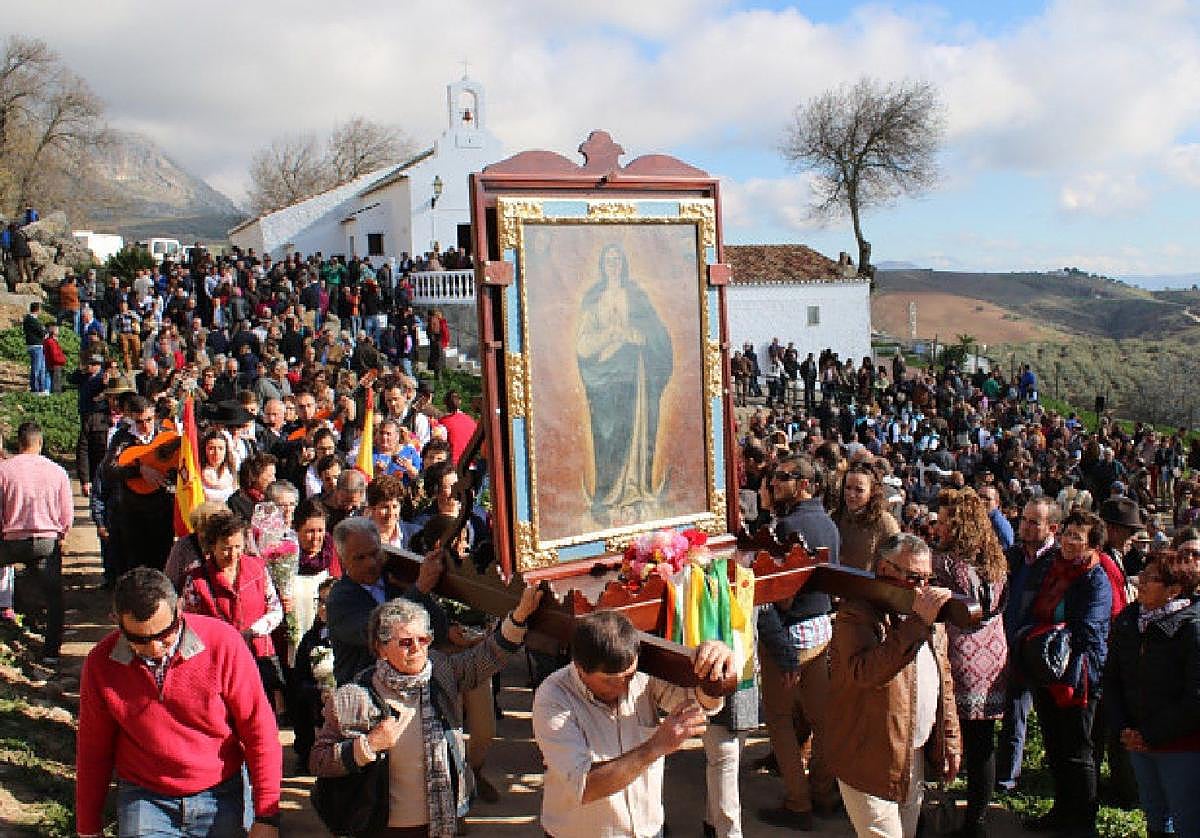
Every December 25th, at the foot of the Torcal, the small hermitage of Jeva hosts one of the most unique Christmas celebrations in the province. Residents of La Higuera, La Joya, Villanueva de la Concepción, and other centers gather from early on to experience a day that combines devotion and folklore. The Virgin of the Immaculate, venerated in a canvas, is paraded in procession after the mass, accompanied by groups of verdiales and pastorals that reach the hermitage by different paths. The festive atmosphere is completed with fritters, mantecados, and aniseed spirits, in a tradition revived in the late 80s and that today is an essential date in the Christmas calendar of the southern Torcal.
Every December 28th, Málaga celebrates the major folk event of the province, the Fiesta Mayor de Verdiales. It is a true living museum of a musical tradition that is unique in Spain. Studies suggest that verdiales precede flamenco fandango, and despite its age, this style continues to grow in followers. Guitars, lutes, violins, and tambourines provide the soundtrack to a contest in which groups from the three styles compete: Montes, Almogía, and Comares. The event turns Puerto de la Torre into a large popular stage where, along with the music, traditional gastronomy and muscatel wine from Los Montes and Axarquía are also enjoyed.
In the Serranía de Ronda, the year ends with the Aguardiente Contest, in the village of Jubrique. It is an event inherited from a distilling tradition that dates back to the 18th century. Although there are few stills left today, the spirit is still alive in the homes of the village, where homemade spirits are still made for self-consumption. This contest was born to claim that legacy, bringing together tastings, a craft market, and live demonstrations of distillation in copper. The festival, which this year is held on Saturday, December 27th, includes a tour through the urban area, music, activities for children, and a snack with fritters, chocolate, and spirits before the awards ceremony. A date that recalls the glorious past of Jubrique and the origin of El Tajo Distilleries, founded in 1895.
Coín ends the year with one of the most original celebrations in the province: a New Year's Eve experienced as a true carnival. For decades, locals and visitors have dressed up to welcome the new year with humor and much satire, inspired by current events just like in traditional carnivals. The party starts in Pescao Square, where the chimes are followed from the tower of San Juan, and continues in the Alameda, transformed into a large outdoor stage until dawn. The festive atmosphere, the variety of costumes, and the involvement of the town have established this event as one of the most unique New Year's Eves in Málaga.
In the Sierra Norte de Málaga region, each eve of the Epiphany celebrates one of the noisiest and most endearing Christmas traditions in Málaga: the dragging of cans in Archidona. From the morning, dozens of children walk from Paseo de la Victoria to the emblematic Plaza Ochavada dragging empty cans tied with ropes to attract the attention of the Magi. The custom was born in the post-war period, when toys were scarce, and was recovered in 2004, becoming a rite that today is maintained by several generations. In the square, the little ones are greeted by Melchior, Gaspar, and Balthazar before the parade, in a day that combines excitement, noise, and popular tradition.
The Bajo Genal experiences one of the most unique celebrations in the Serranía de Ronda on January 5th: the Sacramental Auto of the Magi of Benarrabá, a performance that mixes parade and living nativity scene. Residents of all ages are involved in this theatrical work, divided into five acts that recreate everything from the arrival of Mary and Joseph in Bethlehem to the adoration of the Child. The procession travels through different corners of the urban area guided by a star carried by the town's best donkey, while pages, little shepherds, and angels accompany the Magi mounted on mules. The culmination occurs in the church of the Incarnation, where the little ones receive their gifts on a magical and communal night.

Latest news





Upcoming events
12
Nov
El Desembarco, la traición de Viriato at La Caja Blanca
12
Nov
HOMER El Mero Mero at Sala Trinchera Málaga
13
Nov
Marbella Startup Lab – Innovate & Collaborate
13
Nov
Candlelight: Coldplay & Imagine Dragons at Sala Fundación Unicaja María Cristina
13
Nov
Candlelight: Tribute to Ludovico Einaudi at Anantara Villa Padierna
Similar News

Málaga Airport Makes History with More Than Three Million Passengers in One Month
Málaga

Port of Málaga looks beyond its docks to support future growth
Málaga

Guide to the Virgen del Carmen Processions in Málaga and the Province
Málaga
