


Fuengirola is the fifth largest city in Spain in terms of the number of bars per inhabitant.
The province of Málaga brings together the municipalities with the most hospitality venues in Andalusia: among them are also Torremolinos and Marbella.
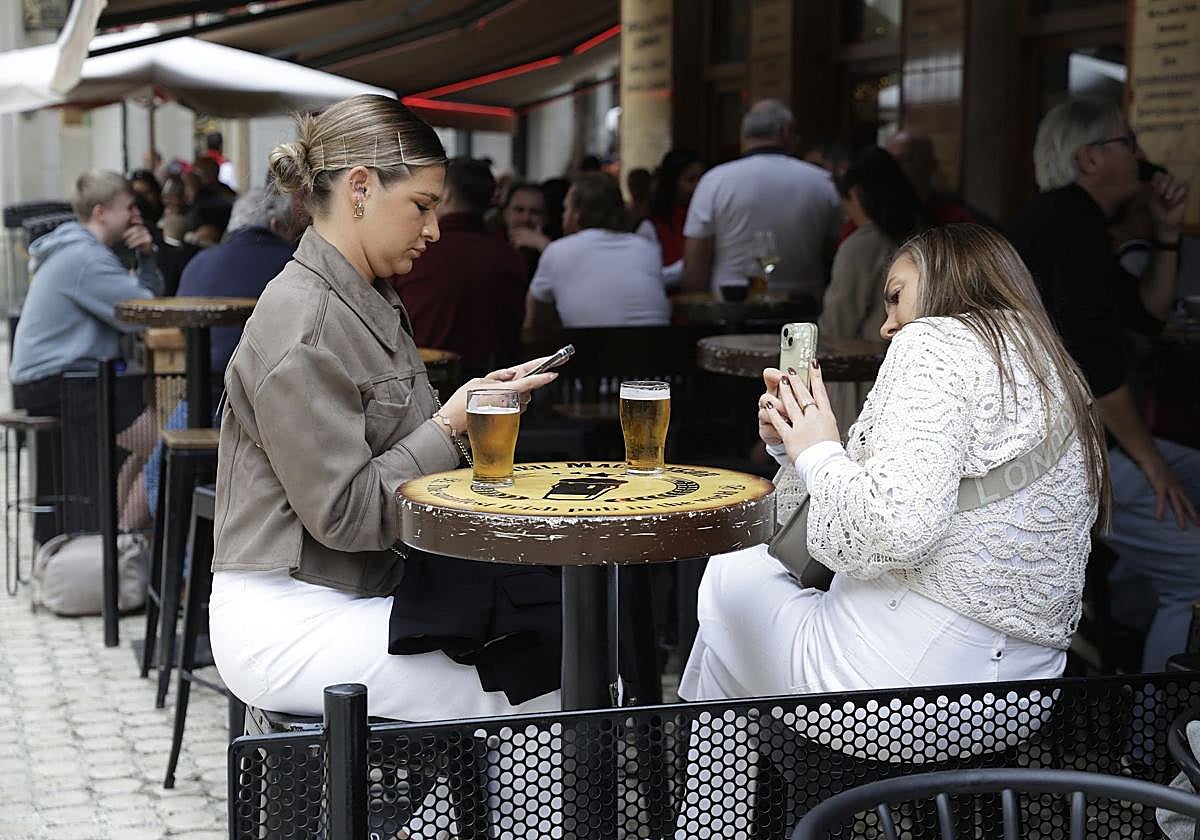

Spain has one bar for every 207 inhabitants, according to a report published by Accumin Intelligence, a data specialist company. However, this ratio pales in comparison to the figure for the town of Fuengirola in Malaga, which, with its 85,646 residents, has 981 bars, resulting in one bar for every 87.3 inhabitants. This makes it the fifth city in Spain among those with more than 50,000 inhabitants in terms of density of dining establishments, according to data released this Wednesday by Accumin. For the purposes of this analysis, a bar is considered any establishment where one can have a coffee or a beer, thus including everything from cafés and restaurants to ice cream parlors.
According to Accumin Intelligence's calculations, Fuengirola has - and this is another way to measure it - 11.5 bars per inhabitant, a figure that places this city behind only four municipalities with more than 50,000 inhabitants. Leading the list is Calvià, in the Balearic Islands, with one bar for every 63.6 residents; or 15.7 bars per thousand inhabitants. In second place is the city of Ibiza, also in the Balearic archipelago, which has one dining establishment for every 68 inhabitants or 14.7 per thousand inhabitants.
Also ahead of Fuengirola are San Bartolomé de Tirajana, in the Canary Islands, with one bar for every 69 inhabitants, or 14.5 hospitality venues per thousand inhabitants; as well as Benidorm, in the Valencian Community, which has one bar for every 75 inhabitants, while per thousand residents the number of bars in this town is 13.2.
Torremolinos and Marbella, also in the ranking
But among the municipalities with more than 50,000 inhabitants, Fuengirola is not the only one from Malaga that appears among the twenty with the highest density of dining establishments. Torremolinos, which has 70,920 residents, boasts 734 bars, that is, one for every 96.6 inhabitants or, another way to measure it, 10.3 dining establishments per thousand inhabitants.
Immediately after is Marbella, with 9.9 bars per thousand inhabitants or one bar per hundred inhabitants, since for its nearly 160,000 residents there are 1,577 hospitality venues.
Torremolinos and Marbella rank eighth and ninth in the ranking, behind Adeje, in the Canary Islands, and Toledo, the first provincial capital to appear in this ranking.
This also means that the municipalities with the most bars per inhabitant in Andalusia are found in Malaga. Only in fourteenth place in the list is another Andalusian city outside the Costa del Sol province: Granada, which for its 233,532 inhabitants has 1,694 bars, resulting in one bar per 118 inhabitants or 8.4 venues per thousand residents.
Among the large provincial capitals, the highest number of establishments serves large concentrations of people, which ultimately dilutes the density of commercial activity per population. Thus, Barcelona is the only major capital that appears in the ranking of twenty cities with more than 50,000 inhabitants with the highest density of bars. Specifically, it is in twentieth place, with 7.7 bars per thousand residents – or 129 inhabitants per venue –.
But among the Spanish capitals, in the twenty cities with the most bars, are also Toledo, as well as Cuenca, Granada, León, Ciudad Real, Segovia, Pamplona, and Albacete, although not the one from Malaga.
According to the analysis conducted by Gerardo Raido, marketing director of Accumin Intelligence, this ranking of the number of bars based on the population of each municipality "provides objective information revealing about our way of living, interacting, and growing; this map is a living reflection of the territory: where bars abound, there is dynamism, tourism, and community; where they are lacking, depopulation leaves its mark." Thus, Soria, Palencia, Ávila, and Burgos, all in Castile and León, are the provinces where a greater number of municipalities have no bars operating.

Latest news





Upcoming events
12
Nov
El Desembarco, la traición de Viriato at La Caja Blanca
12
Nov
HOMER El Mero Mero at Sala Trinchera Málaga
13
Nov
Marbella Startup Lab – Innovate & Collaborate
13
Nov
Candlelight: Coldplay & Imagine Dragons at Sala Fundación Unicaja María Cristina
13
Nov
Candlelight: Tribute to Ludovico Einaudi at Anantara Villa Padierna
Similar News

Málaga Airport Makes History with More Than Three Million Passengers in One Month
Málaga

Port of Málaga looks beyond its docks to support future growth
Málaga

Guide to the Virgen del Carmen Processions in Málaga and the Province
Málaga
