Salvador Rueda: The Poet Who Emerged from a Wine Press in Axarquía to Travel the World
The writer was born on December 3, 1857, in the village of Benaque (Macharaviaya) and became a precursor of modernism.
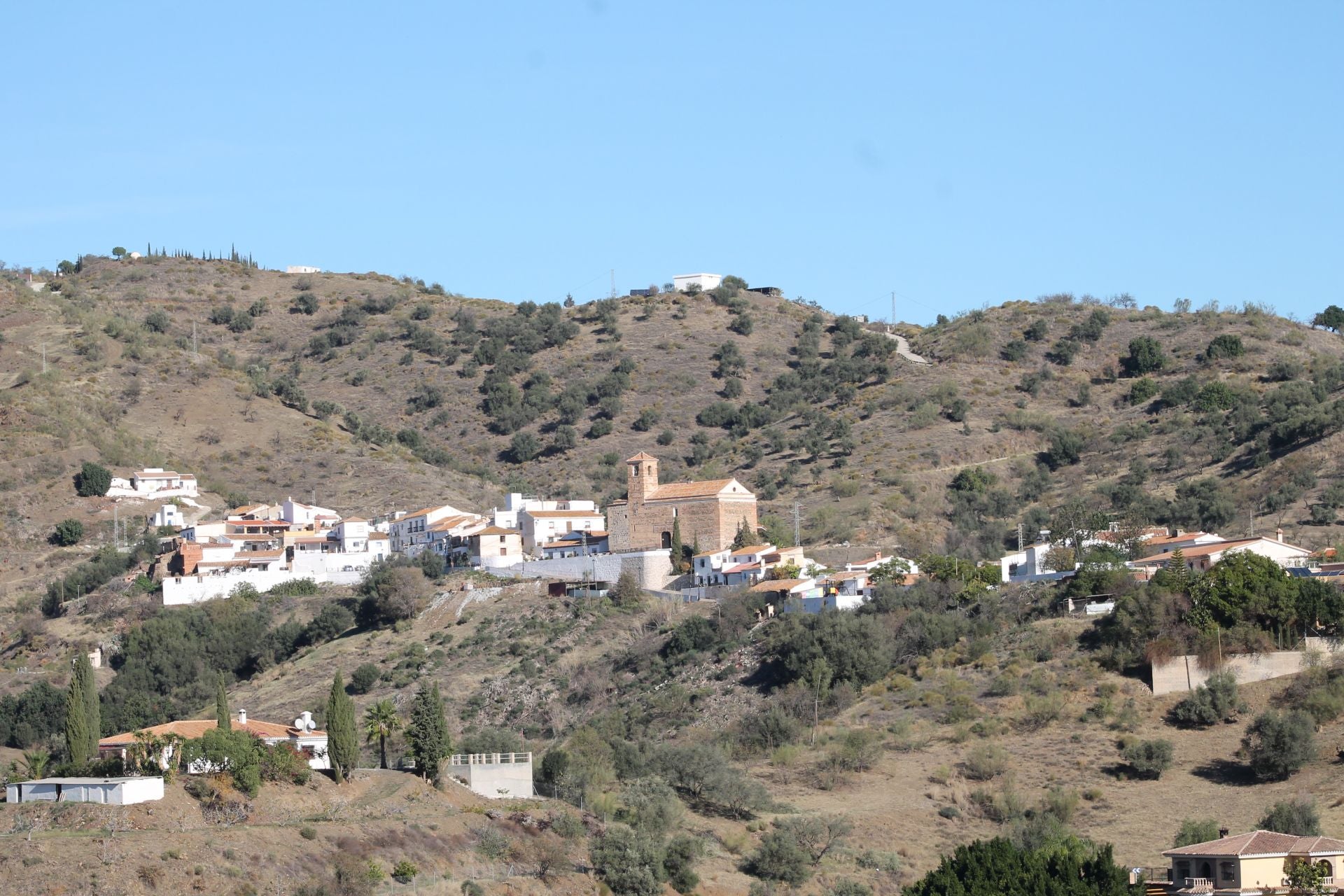

In a whitewashed house in the village of Benaque, surrounded by drying racks and gentle hills of the Axarquía, Salvador Rueda was born in December 1857, ... son of a peasant family who never imagined that this boy would end up opening the doors to poetic modernism. From this humble corner of Macharaviaya began the journey of an author who would take the name of Málaga far beyond what anyone could have foreseen.
His birthplace, now a museum, is a characteristic example of popular Axarquía housing: a single floor, whitewashed walls, tiled roof, and three openings in the facade (a central door and two small windows with bars). At the beginning of the 20th century, it received a commemorative plaque and, more recently, a relief with his bust promoted by the Royal Academy of Fine Arts of San Telmo. This architectural sobriety summarizes the social environment from which the future poet came.
Expand
Salvador Rueda's Birthplace J.A.From childhood, he became familiar with various field tasks and held multiple jobs: farmer, carpenter, baker, pyrotechnician, and acolyte. Although he considered himself self-taught, various sources indicate the influence of Father Robles, a naval chaplain who came from Benajarafe to teach him Latin and introduce him to Spanish classics. This irregular learning, mixed with his rural experience, explains the importance that nature and popular scenes would have in his later work.
At 19, Rueda moved to Málaga, where he began his literary activity in local newspapers. He soon caught the attention of Narciso Díaz de Escovar, who opened the doors of the newspaper El Mediodía for him. His first sonnets, initially signed with a pseudonym, began to give him some notoriety. In this early stage, his first references to local customs appear, a line that he would later develop in works such as 'El patio andaluz', 'El cielo alegre', 'Escenas y tipos andaluces', and 'Bajo la parra', where he portrays Andalusian customs, rural sociabilities, and traditional scenes.
In 1882, he decided to move to Madrid, where he lived his most prolific period. He published nine books and collaborated with nationally relevant media such as La Gaceta de Madrid and El Globo. He cultivated various genres—poetry, short prose, essay, theater, and novel—and his erotic novel 'La cópula' generated considerable controversy at the time. His work placed him among the first renovators of modernism, to the point of directly influencing writers like Juan Ramón Jiménez, and maintaining a complex relationship of admiration and rivalry with Rubén Darío.
His Great Journey
At the beginning of the 20th century, he undertook intense international activity. Between 1909 and 1917, he made six trips to America and the Philippines, visiting Cuba, Puerto Rico, Argentina, Brazil, Mexico, the United States, and the Philippines. His goal was to strengthen literary ties through the Spanish language. The most emblematic recognition came on August 4, 1910, when he was proclaimed "Poet of the Race" at the National Theater in Havana. During these trips, he promoted a vision of Spanish as a tool for common identity within the Hispanic world.
Salvador Rueda at his desk. Above these lines, a commemorative plaque referring to his birth date and a monument dedicated to the poet.After a period in Alicante, he definitively returned to Málaga in 1919. His last years were spent modestly in a house near the Alcazaba, where he lived until his death on April 1, 1933. His grave is in the San Miguel cemetery. In his lifetime, he received significant recognitions, such as the monument erected by public subscription in the Park of Málaga in 1931, an obelisk topped with an eagle that still today remembers his figure.
Among his productions, there is a strong link with the rural world and Andalusian traditions. 'Cantos de la vendimia'—a work included in the "Gastronomy and Literature" collection of the Virtual Library Miguel de Cervantes—reflects the importance of wine culture and agricultural tasks in his aesthetics. His costumbrist work, scattered across several prose titles, constitutes a literary testimony of everyday life in Andalusia of his time.
Day of his Birth
As a historical precision, it is worth noting that there are two dates cited for the birth of Salvador Rueda. The one documented, collected in the Virtual Library Miguel de Cervantes and in several academic biographies, is December 2, 1857. However, in the local tradition of the Axarquía, as well as in institutional events—including a pastoral contest held in his honor—the date of December 3 has become the reference day. This variation is not uncommon in figures born in the 19th century: it sometimes responds to differences between the exact date of birth and the date of registration in the civil or ecclesiastical registry, or to the later setting of a symbolic date for commemorations. Be that as it may, December 3 is today the most publicly accepted, although the documents point to December 2 as the original date.
Latest news

Upcoming events
17
Sep
La Pequeña Cuba Gastro-Cultural Festival in San Pedro Alcántara 2026
18
Sep
World Wellness Weekend Marbella 2026
18
Sep
Candlelight: Queen vs. ABBA in Málaga
18
Sep
Candlelight: Coldplay and Imagine Dragons in Málaga
18
Sep
3 de Corazones – Pancho Céspedes, Enrique Ramil and José Luis Jaén in Málaga
Similar News
The Cat Guardian: Nearly 14 Years of Rescues and 16,500 Neutered Cats
Málaga

María Barranco resurfaces after hitting rock bottom: "No one can sink me"
Málaga
Ana Duato: "Merche taught me to be a woman, a person, and an actress"
Málaga