The Cat Guardian: Nearly 14 Years of Rescues and 16,500 Neutered Cats
Javier Peromingo has spent the last 13 years of his life neutering feline colonies throughout the province with one fixed idea: to prevent animal suffering and improve coexistence in cities.
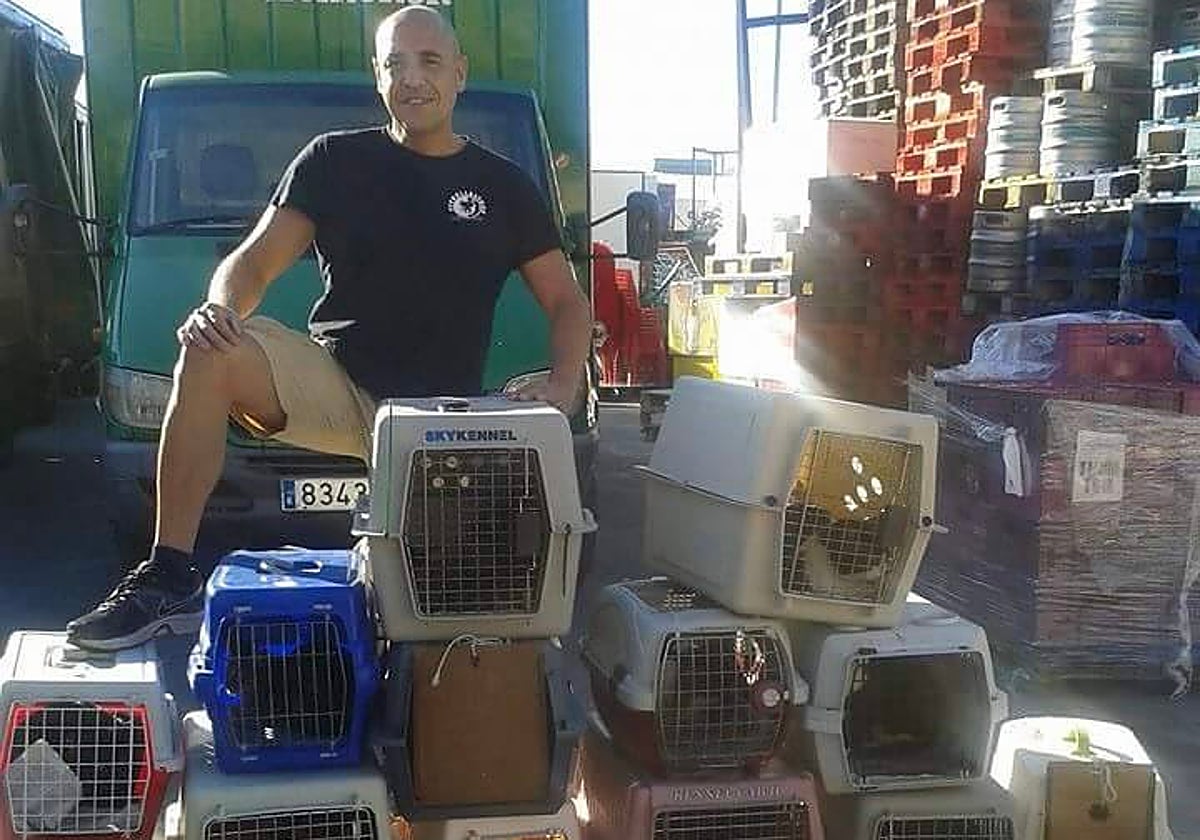

There are people who pass by and look the other way when they encounter an animal in distress on the street, and others who ... do not. Javier Peromingo Jiménez belongs to the latter group, born in Madrid and adopted by Marbella, who has been dedicated to the care and protection of animals for over 20 years, and specifically for the last 14 years, altruistically managing ethical colonies of street cats in Marbella.
Javier was a pioneer in a method that today is a benchmark: capturing entire colonies, not isolated animals. "It all started almost by chance over 13 years ago when I was passing by the Los Naranjos Urbanization in Marbella and I found a dying kitten. It was raining so I took it home, cared for it, saved it, and managed to give it up for adoption. That experience was a turning point," he tells Diario Sur. "I realized that I wanted to keep helping."
So he bought cages, learned to safely capture cats, and began a task that, over time, has become his day-to-day with a single goal: to neuter so that the colonies naturally extinguish without suffering.
"It's not just about feeding cats, but about preventing the birth of litters doomed to a harsh life on the streets," he explains. "Females are a priority in neutering because they can give birth to more than four offspring several times a year, though males are also key since they fight and tear each other apart during mating season. When they are neutered, they calm down and stop chasing the females."
He works closely with the Triple A shelter in Marbella, where he was president years ago, as well as with private veterinary clinics. "I prepare the cages, capture at night, or at dawn if there are no unforeseen events, and take all the cats to the vet." After the procedure, a day later they return to the streets with a different life expectancy.
Full Agenda
The numbers speak for themselves. Just in 2025, he has neutered around 950 cats. In a normal month, he can capture up to 1000, although there are times when the pace slows, especially when the females are already pregnant. "This is endless," he acknowledges.
Although his activity is centered in Marbella and its surroundings, over the years he has worked in more than 40 municipalities, from Gaucín, Monda, or Benahavís to Estepona, towns in the province of Cádiz or the Balearic Islands. His mobile's agenda is full, he has work scheduled for more than a month and constant calls. "I can't reach everything," he admits.
Travel expenses always come out of his pocket. Sometimes, neighbors or colony caretakers pay for the neutering; "most of the time I pay because my focus is on neutering as many cats as possible before I have to stop because the females begin to give birth, not thinking about who pays for the neutering but it's true that the help is appreciated."
Even so, he decided to open a group on Teaming where, for one euro a month, he receives help from almost 500 people and where two or three more collaborators join each day. "Those who contribute that euro I consider part of my team, they are my network of collaborators and they are all over the world," he comments gratefully.
Without Schedules
"I could lead another life, could be lying on the beach, going to good restaurants, dressed well... but I like to feel that I provide a service to society," he admits without drama.
Every day there's a new challenge. He tells us that he has left home at dawn to pick up run-over cats, has cared for devastated animals for weeks in his own home, has rescued cats on some of his trips like in Cuba or Greece and has had up to ten sick cats at home at the same time.
Today he lives with eight cats, all picked up from the street. The oldest is 12 years old, the youngest, four, and he acknowledges that he has learned to be practical. "I feel sorry for them, but I know I can't keep them all and that when I lock them in a cage to neuter them, I'm giving them a future they otherwise wouldn't have."
Helping the 'Invisible'
His work with the colonies has also allowed him to glimpse other 'invisible' realities of Marbella, as he defines them, and to help homeless people, men and women who lived in wastelands or under a bridge, in shacks or unhealthy lots. He tells Diario Sur some stories that ended well, others not so much. "I've taken people off the streets who then haven't thanked anything and have gone back to living there," he admits without bitterness.
"Animals are more grateful. This conclusion does not come from harshness but from experience. When a person ends up living on the street it can be bad luck, but often there are tough decisions behind it. I've seen it," he confesses.
Javier is especially critical of animal abandonment. "A person can leave their animal at a shelter and nothing happens. There should be financial penalties it's a sentient being. I've seen dogs die of grief after being abandoned at a shelter by their owners even giving them all the care and attention possible," and he admits that these harsh stories still accompany him.
After more than 16,500 cats neutered, Javier Peromingo continues loading cages, crossing towns, and rising early every day. Without a uniform, without a salary, and without applause. Simply "because someone has to do it, and it's my contribution to society. Running marathons doesn't contribute anything, this does. And I'm happy."

Latest news



Upcoming events
17
Sep
La Pequeña Cuba Gastro-Cultural Festival in San Pedro Alcántara 2026
18
Sep
World Wellness Weekend Marbella 2026
18
Sep
Candlelight: Queen vs. ABBA in Málaga
18
Sep
Candlelight: Coldplay and Imagine Dragons in Málaga
18
Sep
3 de Corazones – Pancho Céspedes, Enrique Ramil and José Luis Jaén in Málaga
Similar News

María Barranco resurfaces after hitting rock bottom: "No one can sink me"
Málaga
Ana Duato: "Merche taught me to be a woman, a person, and an actress"
Málaga
Salvador Rueda: The Poet Who Emerged from a Wine Press in Axarquía to Travel the World
Málaga