


Those who persevere succeed: people with disabilities can now use the bike lane in Málaga
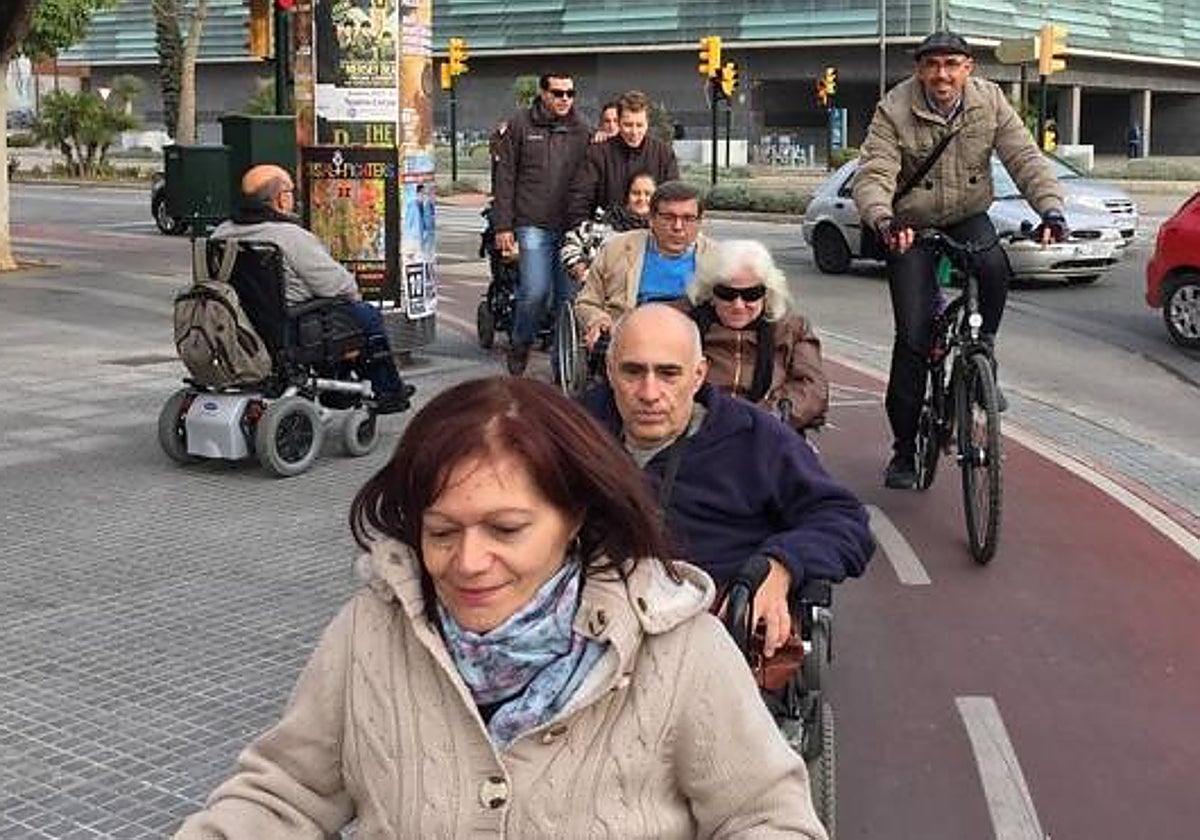

Today, the World Day for Persons with Disabilities is celebrated, and those living in Málaga city have reason to rejoice. The Development Group "Málaga Accesible," which boasts more than 80 associations fighting for the rights and improved quality of life of people with functional diversity, achieved what they thought would be a major victory in the city council meeting of April 2016.
It was one of the most emotional sessions remembered at the Málaga City Hall. A huge line of people in their wheelchairs trying to access a hall designed for those who walk in and climb stairs to sit in the audience. The annoyance of not being able to access was mitigated by the fact that the pressure from the group and the opposition to the then councilor Elvira Maeso, responsible for Mobility, led to the modification of an agreement to eliminate the dreaded "study" and make it crystal clear that the use of bike lanes was a right for people with disabilities in their wheelchairs, and it would become a reality within three months after being included in the Mobility Ordinance. However, as political will is vital, the dream faded among negative reports and a lack of commitment.
Ampliar
From left to right, Alfredo del Pablos, Gracia Acedo, and Paco Torres, during an intervention in a city council meeting to claim their rights. P. R. QPeople with disabilities, led by the president of the development group Málaga Accesible, Alfredo de Pablos, began a relentless campaign to defend the use of the bike lane. Most streets in Málaga are cobbled. Now, close your eyes, get in a wheelchair, and move around as your back and lumbar spine bounce while moving through the city, not to mention the absence of potholes and imperfections, a situation that parents who have pushed their children in strollers will perfectly recognize. An endless obstacle course.
However, the bike lanes are specifically constructed for the rolling of bike wheels, and also for the wheels of chairs used by people with disabilities, in such a way that their use will change their lives.
This Tuesday, the day before the celebration of their International Day, they were jumping for joy. Yes, they physically can't do it, but if one sets their mind to it, one can even fly with imagination. Joy was showing on their faces, those of fighters who only want to have the same rights as everyone else. Article 39.3 of the Mobility Ordinance has been reinterpreted, so that "pedestrian users of scooters, skates, and non-motorized skates" also includes "users of wheelchairs specifically designed for personal mobility, with or without electric assistance, provided they can sustain a speed higher than human walking pace, estimated between 4 and 6 km/h."
"This news recognizes our rights and is fundamental for us, in fact, it changes our lives," says Alfredo de Pablos.
"This resolves a situation of injustice and discrimination. Our joy is immense because thanks to the work of Trini Hernández (councilor for Mobility) and her director (José Cardador), added to our claim that, if bike lanes were to be opened to pedestrians with non-motorized skates, they should also be opened to us otherwise it would be discriminatory, has been crucial for us to achieve this right. A long story, nine years of struggle, but with a happy ending. This news recognizes our rights and for us, it is fundamental, indeed it changes our lives," states Alfredo de Pablos.

Latest news





Upcoming events
12
Nov
El Desembarco, la traición de Viriato at La Caja Blanca
12
Nov
HOMER El Mero Mero at Sala Trinchera Málaga
13
Nov
Marbella Startup Lab – Innovate & Collaborate
13
Nov
Candlelight: Coldplay & Imagine Dragons at Sala Fundación Unicaja María Cristina
13
Nov
Candlelight: Tribute to Ludovico Einaudi at Anantara Villa Padierna
Similar News

Málaga Airport Makes History with More Than Three Million Passengers in One Month
Málaga

Port of Málaga looks beyond its docks to support future growth
Málaga

Guide to the Virgen del Carmen Processions in Málaga and the Province
Málaga
