


Ana María Shua: "In reality, one does not fight against cancer: it was there and a bus ran over me"
Writer Ana María Shua recounts her cancer journey in her new collection of stories, 'The Broken Body', tales that address human fragility, hospitals, and caregivers.
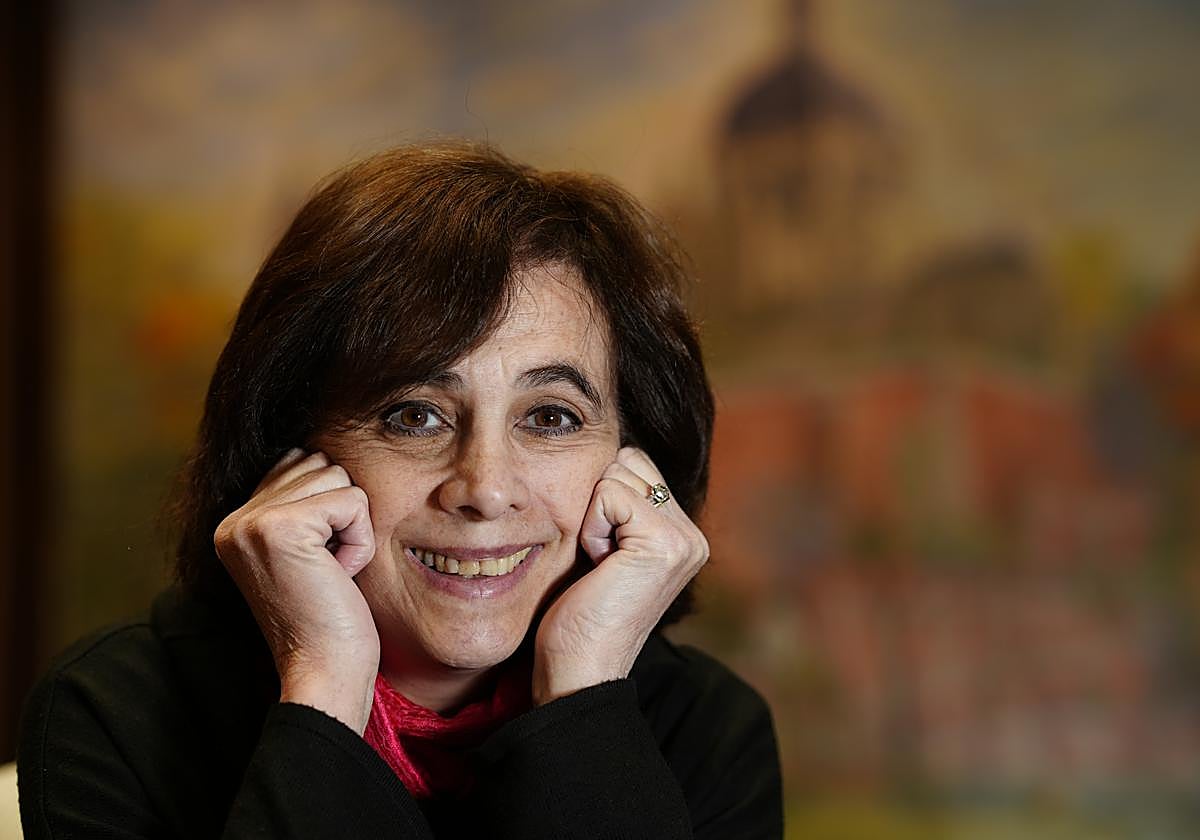

Ana María Shua (Buenos Aires, 1951) is a global institution in two literary forms that are usually underrecognized: the short story and the microstory. Her latest book, '... The Broken Body' (Pages of Foam), is what brings her on a tour in Spain, a selection of stories about illness, doctors, and caregivers, which contains at least two highly autobiographical tales. Reality is something chaotic and incomprehensible, but stories, she argues, are little cosmoses that help us make some sense of it.
"It's somewhat like a puzzle. You keep building, discovering some pieces, and the ones you place reveal the shape of those missing," Shua says about another art, that of choosing which stories and in what order they will be published. For example, the last story has been written a long time ago: "It's really old. It's a chronicle of my father's wake, who died in 1975. I never wanted to publish it because it felt too intimate." The writer has always resisted talking about close people in her texts: "You will never find my daughters, nor my husband. In this case, my mother had already died and my sister gave me her permission, but it is also intimate in terms of myself. I had many doubts and now the time has come to publish it."
At that wake, there is an unforgettable gesture performed by the character of the mother: rubbing the deceased's chest insistently, to keep it warm until the daughters arrive and can touch him one last time as a living body. Shua felt she had to write it: "It's what my mother did, I had never seen it done before. I couldn't let pass that situation so theatrical, so tremendous and so typical of my mother."
Expand
In every story in the book, somehow, illness, the body, the end of a carefree vital state to enter a different one appears: "It's that when we are young and healthy we do not have a body: we are our body. Then, from a certain age, we feel that we carry it, as if it were something separate from us. And it increasingly occupies more of our time. A friend used to say before meetings: 'Each one can talk about one illness and one grandchild, nothing more'."
From the beginning, illness has occupied many pages in the work of Ana María Shua. Her first novel, for example, was titled 'The Patient'. But perhaps the most important part of this new book is the first of the stories. It is even odd to call it a story. "It has something of a chronicle, yes. It happened to me, but many, many years ago, in 2001." She refers to a process of cancer with metastasis that required both radiotherapy and chemotherapy. At that time she wrote part of the text, which appears in italics, and now it has been completed. Her description of everything is very precise. "Chemotherapy is truly terrible, especially certain drugs in particular are very harsh. On the other hand, you do not feel the rays at the moment, but the effects remain for a lifetime. Radiation is tough. But well, thanks to both, which worked like a scalpel, I was cured and here I am." 25 years later.
Fighters, or not, of cancer
The social debate about whether to call it a personal fight was also considered by the writer: "In reality, one does not fight. I was just standing on the sidewalk and a bus ran over me. The patient is a very passive subject, their choices are very few. And yet, at some point, I felt like someone who had the possibility to fight, like in a Jack London story, in the middle of the ice with wolves chasing me." Shua had neurological effects that made the process a torment preventing her from seeing, hearing, tasting, smelling, and writing for a year. But everything returned: "One day I went out to the street and saw a fruit shop, and the colors of the fruits... it's inconceivably beautiful to start seeing the colors again, with their brightness and beauty."

Latest news





Upcoming events
12
Nov
El Desembarco, la traición de Viriato at La Caja Blanca
12
Nov
HOMER El Mero Mero at Sala Trinchera Málaga
13
Nov
Marbella Startup Lab – Innovate & Collaborate
13
Nov
Candlelight: Coldplay & Imagine Dragons at Sala Fundación Unicaja María Cristina
13
Nov
Candlelight: Tribute to Ludovico Einaudi at Anantara Villa Padierna
Similar News

Málaga Airport Makes History with More Than Three Million Passengers in One Month
Málaga

Port of Málaga looks beyond its docks to support future growth
Málaga

Guide to the Virgen del Carmen Processions in Málaga and the Province
Málaga
