


The incredible aqueduct in Malaga that few visit
It is a colossal hydraulic engineering work from the 18th century, declared a Site of Cultural Interest. It was a refuge during the Civil War and today is a magical place straight out of a fairy tale, the Deserted Sauceda of Malaga.
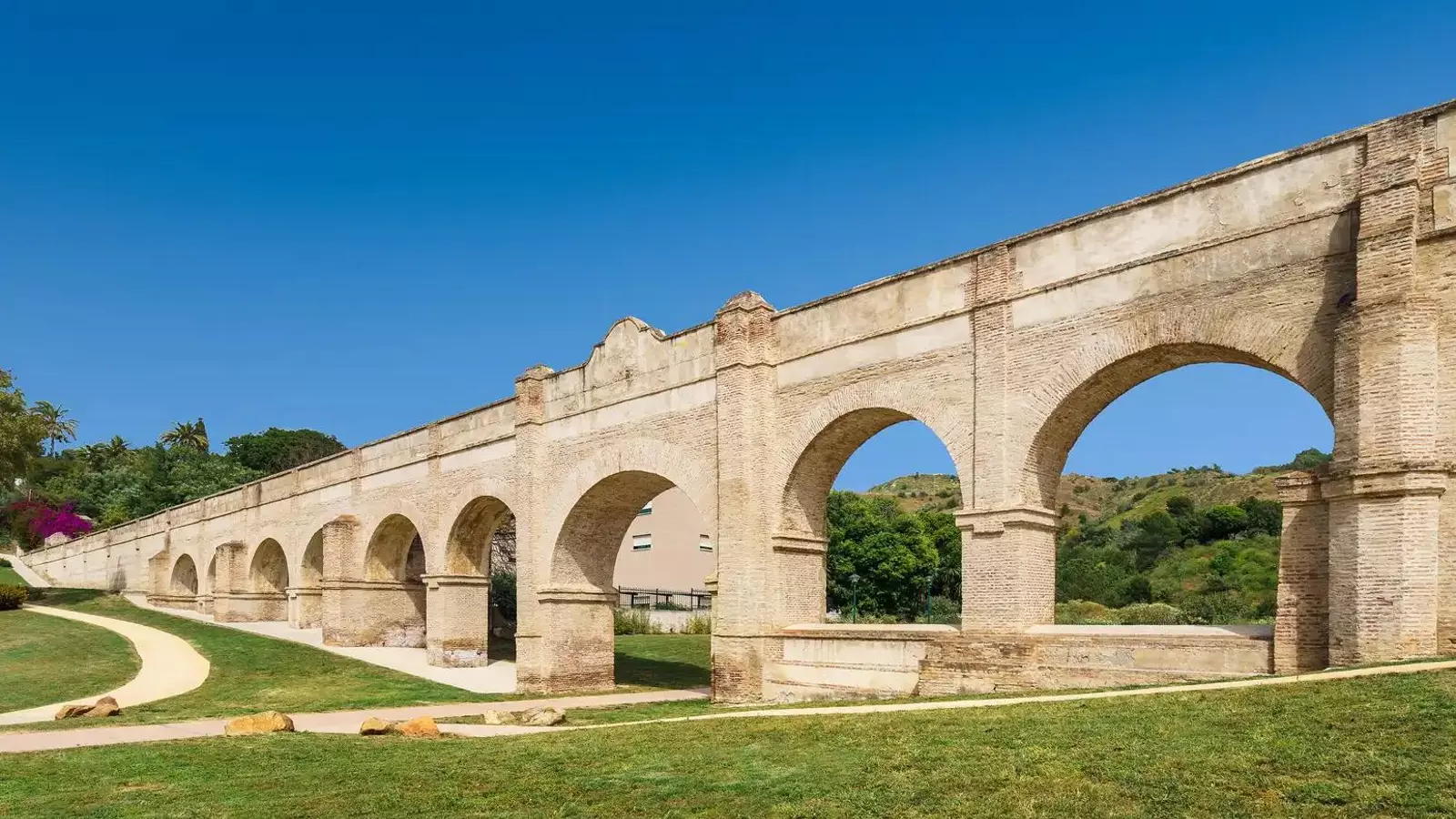

Málaga is a city with an impressive historical and architectural legacy, but among its many heritage jewels, there is one that, despite its historical importance, goes unnoticed by many: the San Telmo Aqueduct. This colossal 18th-century hydraulic engineering work, declared a Site of Cultural Interest, is one of the most notable infrastructures of its time in Spain. Located in the City Garden district, its main function was to improve the water supply in a Málaga that at the time was suffering from a growing shortage.
At the end of the 18th century, the city experienced a significant increase in population and commercial activity, which exacerbated the lack of drinking water. Faced with this situation, Bishop José Molina Lario y Navarro promoted the construction of the aqueduct, which was designed by the architect Martín de Aldehuela. The construction began in 1782 and finished in 1784, providing Málaga with a more efficient supply system.
Historical image of the San Telmo aqueduct section in the Humaina ravine. / Malaga.esThe aqueduct stretches over 11 kilometers, following a north-south route parallel to the current A-45. Its intake point is located under viaduct no.4 of this highway, at kilometer 138.5. From there, the channel descends windingly until it reaches the city, where it ended in a large distribution reservoir located on Refino Street. From this point, the water was channeled towards public fountains and city industries.
Although urbanization has erased some elements of this aqueduct, it is still possible to find remnants in different parts of the city. Among them, the main arcade on Refino Street stands out, as well as some of the historical fountains that were fed by this system, such as the Capuchinos fountain, the Olletas fountain, or the one on Los Cristos Street, all dated in 1790 and attributed to Aldehuela.
The Architecture of the San Telmo Aqueduct
The most iconic structure of the aqueduct is the bridge that crosses the Humaina stream, built in brick with a length of 75 meters, a height of 15 meters, and four arches of 7 meters in diameter. Its thickness varies between 2.5 meters at the top and 5.8 meters at the base. The pillars, square in plan, have bow-shaped cutwaters on one side and circular on the other, with a molding that marks the start of the arches.
Throughout its route, the aqueduct includes 33 bridges and 30 aqueducts, especially highlighting the bridge of the 13 eyes, which crosses the Quintana stream in Málaga with a length of 170 meters. It also incorporates features such as cleaning sewers, air vents for water pressure, mule tracks, and small reservoirs. Despite the passage of time, the aqueduct still transports water to the vicinity of the city, although its final stretch remains dry. Many of its structures have been well preserved, some of them recently restored.
Vertical hydraulic wheel of the second San Telmo mill. / Malaga.esAnother element associated with the San Telmo canal is the water mills. Initially, twelve were planned, though only six were built. Of these, the only ones preserved are the San Telmo mills, which were used to harness the water's force in flour production. Their architecture follows a quadrangular floor plan with an arched structure for water evacuation.

Latest news





Upcoming events
12
Nov
El Desembarco, la traición de Viriato at La Caja Blanca
12
Nov
HOMER El Mero Mero at Sala Trinchera Málaga
13
Nov
Marbella Startup Lab – Innovate & Collaborate
13
Nov
Candlelight: Coldplay & Imagine Dragons at Sala Fundación Unicaja María Cristina
13
Nov
Candlelight: Tribute to Ludovico Einaudi at Anantara Villa Padierna
Similar News

Málaga Airport Makes History with More Than Three Million Passengers in One Month
Málaga

Port of Málaga looks beyond its docks to support future growth
Málaga

Guide to the Virgen del Carmen Processions in Málaga and the Province
Málaga
