


The Louvre of the Future: Direct Access to the 'Mona Lisa' and Improvements to Serve Nine Million Visitors
The most visited museum in the world faces yet another renovation forced by over-tourism and lack of maintenance.


It was the sensation of the summer. It captivated tourists and locals alike, becoming a symbol of the Olympic Games and the main feature of Parisian sunsets. Due to its success, the French authorities have decided to reinstall the Olympic cauldron in the Tuileries Garden this summer, in front of the Louvre Museum.
The Olympic magic will once again light up Paris, but especially a Louvre Museum that is not at its best. For years, worker unions and its own director have denounced the poor condition of the building: floods, dampness, overtourism...
France's holy grail suffers, and it does so from within. Since its exterior remains an imposing architectural gem. A fortress that holds the country’s greatest treasures. The most famous, The Mona Lisa, is a major concern for the authorities. "Can one die from success?" journalists asked during a televised debate. "In the case of the Louvre, yes," one replied.
Following the alarm raised by its director, on January 28, Emmanuel Macron visited the museum to announce the "Louvre Renaissance Plan," focused on restoring and expanding the museum to enhance the visitor experience and protect its works.
Operation 'Save the Louvre'
"The Louvre only lives like this; growing, regenerating," the president declared in front of the press, with the eyes of the Mona Lisa fixed on his neck.
This remodeling presents a challenge aimed at improving the visitor experience, but especially at protecting one of the most important heritages of France and the world. For this purpose, a new "broad and effective" entrance will be built at the Perrault Colonnade, west of the museum, which will allow a rebalancing of how it is visited.
Moreover, Da Vinci's lady will be moved to another space that will save her from the current overtourism: "This new room will be accessible autonomously from the rest of the museum and equipped with its own entrance and conditions that will allow a different and more tranquil attendance. In addition to, an exhibition that will be worthy of what the Mona Lisa deserves," explained Macron.
These necessary changes for a museum that currently exceeds its capacity limit. The current entrance, through the famous glass pyramids designed by Ieoh Ming Pei, were built to accommodate four million people a year, and currently, it handles more than double; nine million visitors.
An excess of tourism that not only generates discomfort among visitors and saturation of services but also produces a greenhouse effect that translates into a dangerous increase in indoor temperatures.
The works for the "Renaissance of the Louvre" could take years, but the authorities insist they will be carried out in parallel, with the museum in operation. The works could amount to 500 million euros, and just the most urgent would cost about 100 million euros, according to the director of the center. Money that will be obtained mainly from tickets, sponsorships, and museum sponsorships.
Nothing new for one of the oldest buildings in the country, which has previously undergone significant changes as French society has also evolved.
Tourists viewing the Mona Lisa at the Louvre. / EP
From Royal Palace to Museum
The Louvre Museum has undergone multiple renovations throughout its history. The first was the one that helped the building transition from royal palace to museum. In fact, this is where its name comes from: leovar, which means fortified.
This major change occurred in 1682, when Louis XIV left the Louvre, which until then was the home of the monarch, to move to the Palace of Versailles along with his entire government. From that moment until 1789, the building became the seat of the government of the Ancien Régime, and it was not until a couple of years later, during the French Revolution, that it became a space to display the national art collections.
Although the true adaptation as a museum was under the direction of Napoleon Bonaparte in 1801. The leader expanded the building to include all the collections and looted works, but always maintaining its initial design.
After that major remodeling, baptized as "the new Louvre," almost 180 years had to pass before the museum experienced another significant change. This time, under the orders of President François Mitterrand, in 1981. It was during this reform that the famous Louvre pyramids were included, and a large part of the rooms were remodeled to improve the circulation of visitors and the exhibition of the works.
All the changes the museum has undergone have always been more out of necessity than aesthetics. Being the most visited museum in the world comes at a high cost, and now the authorities fear that this could lead it to die from success. Hence, Emmanuel Macron wants to lead a new reform.
"This project will allow moving, even more, the Louvre to the heart of the city. (...) A colossal project that will redirect visits to the museum, with a plan that will rethink the museum, its entrances, and the exhibitions," the president insisted. There is still no start date for this major facelift that could take years, but the authorities call for calm: the Louvre will keep its doors open during its remodeling.

Latest news





Upcoming events
12
Nov
El Desembarco, la traición de Viriato at La Caja Blanca
12
Nov
HOMER El Mero Mero at Sala Trinchera Málaga
13
Nov
Marbella Startup Lab – Innovate & Collaborate
13
Nov
Candlelight: Coldplay & Imagine Dragons at Sala Fundación Unicaja María Cristina
13
Nov
Candlelight: Tribute to Ludovico Einaudi at Anantara Villa Padierna
Similar News
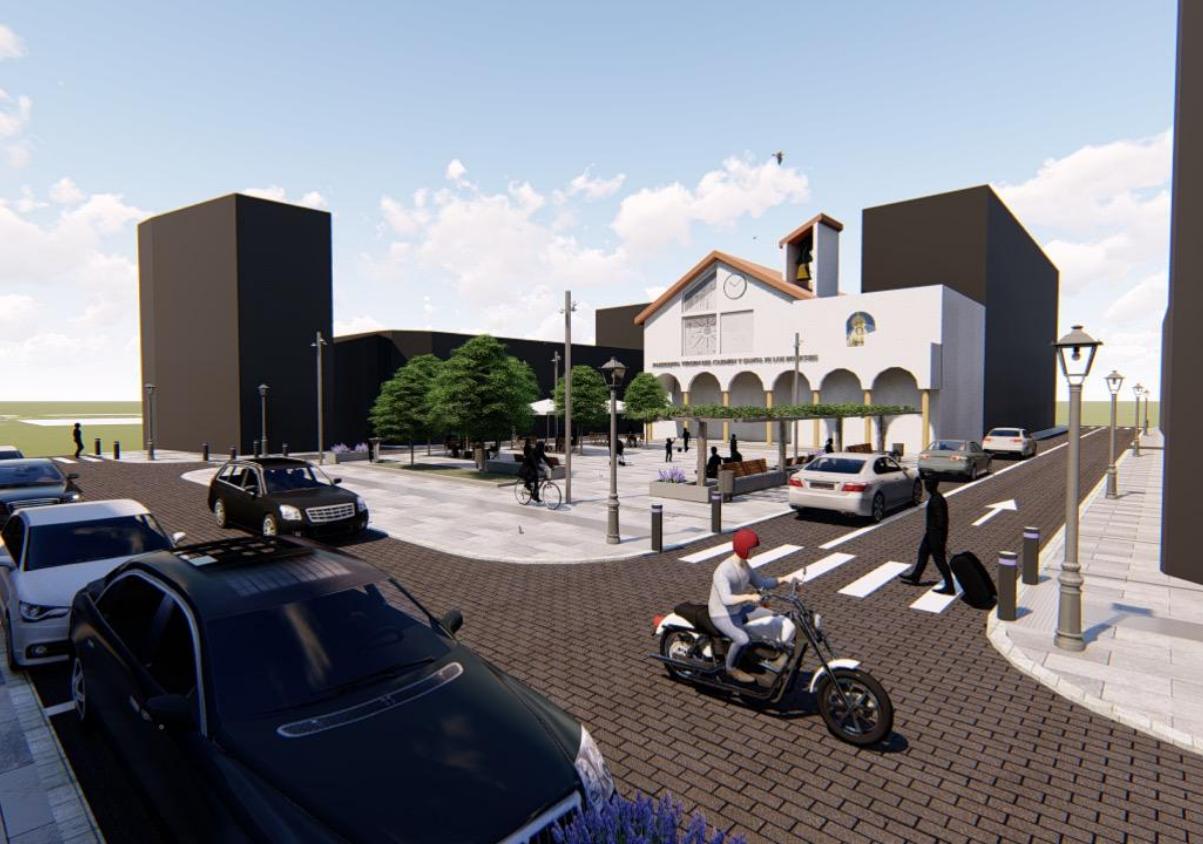
Los Boliches’ Plaza del Carmen is set for a major makeover: more accessible, more shade and no central fountain
Málaga


"Two Birds with One Stone": The Best Tribute to Joan Manuel Serrat and Joaquín Sabina Arrives in Málaga
Málaga
