


Josep M. Borràs: "The keys to preventing cancer are not smoking, eating less, and exercising"
The scientific coordinator of the National Health System's Cancer Strategy will be featured this Friday, November 21, starting at 7:00 PM, in another session of the 'Health is More' meetings, sponsored by the Unicaja Foundation and organized by SUR.
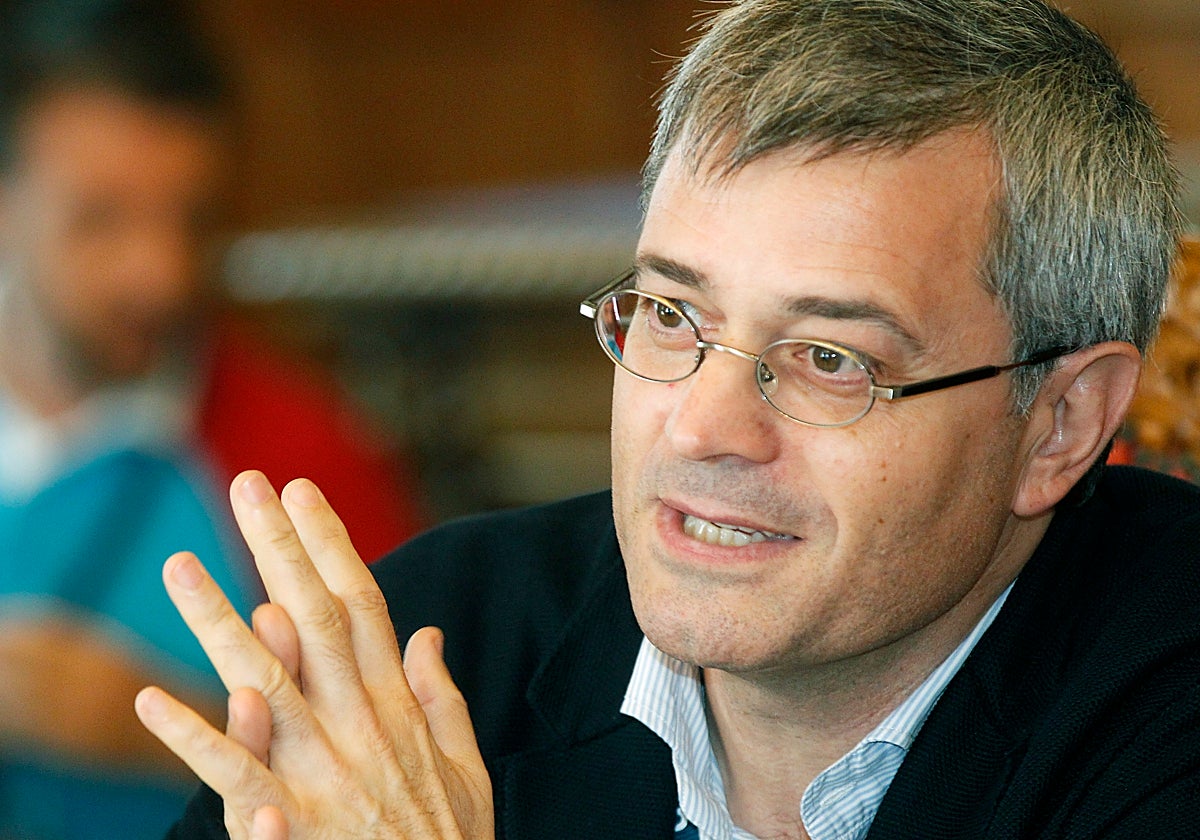

Josep M. Borràs is a specialist in Preventive Medicine and currently leads the Cancer Control Plan of the Generalitat de Catalunya and serves as the scientific coordinator of the Cancer Strategy of the National Health System of the Ministry of Health. A professor of Epidemiology and Public Health in the Department of Clinical Sciences at the University of Barcelona, Borràs will lead a new session of the 'Health is More' meetings this Friday, November 21, sponsored by the Unicaja Foundation and organized by SUR. It will take place at the Unicaja Auditorium (Acera de la Marina, 3, first floor, Málaga) at 7:00 PM, where he will give a talk titled 'Mission to cure cancer in 70% of patients by 2030: a European goal.'
–Are we close to curing 70% of cancer patients by 2030?
–I believe that in women, yes, in men we are a bit further away. Why? Because the most common tumors in men still have a very low survival rate, such as lung cancer, which is a paradigm. Esophageal cancer is also a tumor that is still much more common in men than in women in Spain. And these tumors have a lower survival rate. They are considered tumors with a poor prognosis because they have a survival rate lower than 30% at five years.
"Curing is a strong word in oncology, in the sense that there is always a probability of relapse, sooner or later"
–How many patients are being cured today? Because the progress in cure rates and survival has been significant in recent years, hasn't it?
–Yes, exactly. I mean, it's always hard to say 'cure.' It's a strong word in oncology, in the sense that there really is always a chance of relapse, sooner or later, but for example, in breast cancer, relapse can occur 18 or 20 years later. Therefore, we talk about curing when the patient is cancer-free at five years, but it doesn't necessarily mean that they can't relapse. I think it's important to clarify this sometimes, because it's assumed as if it were something like pneumonia, and unfortunately, it's not. That's one issue. Moreover, in Spain, about 60% of the 270,000 new cases diagnosed are surviving at five years.
–What means of prevention, organization, or treatment should be prioritized in Spain to approach this milestone?
–Prevention is easy. Don't smoke. If you smoke, quit smoking at any point in your life. And if you don't smoke, never start smoking. This is the most important thing. With this alone, we could reduce cancer mortality by 20% in our country. Then there are a series of recommendations contained in the European Code Against Cancer, such as eating healthily, which involves eating a variety, the famous Mediterranean diet, meaning vegetables, legumes, little red meat, and preferably fish, etc. But above all, eat less. Eat less and stay lean. And do moderate physical exercise, like climbing stairs, walking every day. This type of exercise. We don't need, let's say, to play tennis three times a week. But this type of exercise and maintaining a suitable weight for height and age are the classic preventive measures. Then, participate in early detection programs, like those for breast cancer, colon cancer, or cervical cancer. And finally, there are measures to improve the quality of care: such as experience, training, facilitating quick access in the event of a suspected cancer symptom to diagnostic means, etc.
–Early detection is key, isn't it?
–In many types of cancer, yes. Certainly in breast cancer, colon cancer, and cervical cancer it is key. There are other cancers that we are now discussing whether early detection can or cannot be applied, such as lung and prostate cancer. But to me, the important thing about early detection when we talk about breast, colon, or cervical cancer is that it be population-based. That is, that all women and men of a certain age receive the invitation and that they participate. The problem we often have is participation, because, especially in colon and rectum, really participation is below 50% in many autonomous communities. And that is perhaps an issue associated with not having enough knowledge of the benefits of early detection in colon and rectum cancer. Perhaps it's because it's a tumor that doesn't have the same public visibility as breast cancer, etc. In breast cancer, we are moving around 60-70% participation which starts to be acceptable, lower than in Northern European countries, but acceptable because we also have to take into account that there is 10%, 15%, or 20% of the population undergoing these early detection tests in private care.
"In Spain, about 60% of the 270,000 new cases diagnosed are surviving at five years"
–What therapies and treatments will have the most impact in the next decade?
–In the next decade, I believe that all strategies that improve therapeutic precision, both in surgery, with robotic surgery, and in radiotherapy, with proton therapy and adaptive therapy, and any therapy that allows, let's say, to focus the radiation even more. As with precision oncology in oncology, which allows giving therapy to patients who have a positive biomarker, thereby focusing the treatment on patients who can benefit the most from it. Within medical oncology, I believe that immunotherapy is a treatment that is improving the prognosis of perhaps a relatively modest percentage of patients still, but in those it does have an effect. Really the effect is notable because they are tumors with a poor prognosis, such as lung cancer. I think we still have to see a greater journey in immunotherapy.

Latest news





Upcoming events
12
Nov
El Desembarco, la traición de Viriato at La Caja Blanca
12
Nov
HOMER El Mero Mero at Sala Trinchera Málaga
13
Nov
Marbella Startup Lab – Innovate & Collaborate
13
Nov
Candlelight: Coldplay & Imagine Dragons at Sala Fundación Unicaja María Cristina
13
Nov
Candlelight: Tribute to Ludovico Einaudi at Anantara Villa Padierna
Similar News
The Cat Guardian: Nearly 14 Years of Rescues and 16,500 Neutered Cats
Málaga

María Barranco resurfaces after hitting rock bottom: "No one can sink me"
Málaga
Ana Duato: "Merche taught me to be a woman, a person, and an actress"
Málaga
