


British individuals and those who lived in the United Kingdom between 1980 and 1996 can now donate blood in Malaga.
Until last July, there was an indefinite exclusion of these groups as their stay in that country coincided with the mad cow disease outbreak.
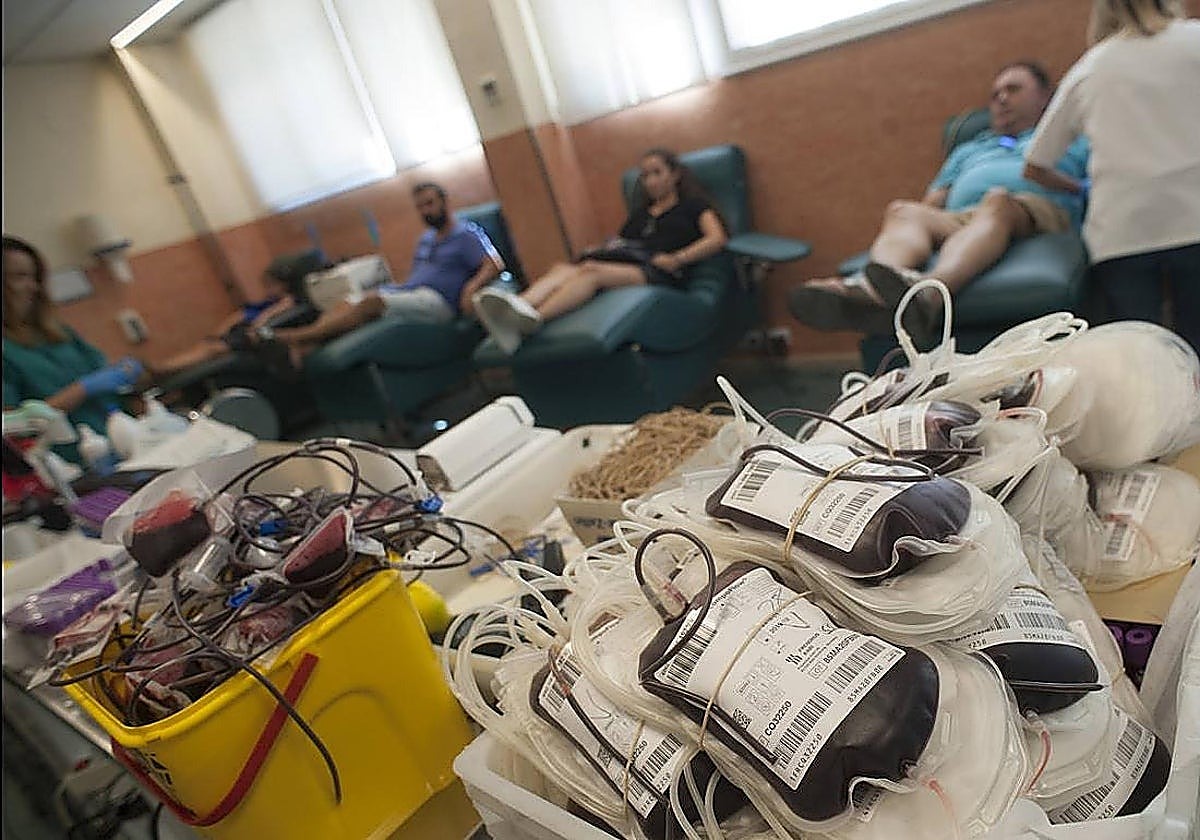

The blame was on Bovine Spongiform Encephalopathy (BSE), known as "mad cow disease," whose human variant is variant Creutzfeldt-Jakob disease (vCJD). This disease wreaked havoc in the United Kingdom between 1980 and 1996, which is why in Spain, since 2001, those who lived in that country during the reference period for more than a year or those who had received blood transfusions or blood products in England since 1980 were not allowed to donate blood. However, the Ministry of Health lifted this exclusion on July 18, and gradually, each territory has decided how to manage the absence of this prohibition. In Málaga, there was a meeting last Thursday to analyze the situation and, as confirmed to SUR by the director of the Transfusion, Tissues, and Cells Center (CTTC) of Málaga, Gracia María García, "any donor who resided in the United Kingdom during that time is now being accepted" without the need for special screenings.
This situation will greatly benefit the blood reserves of the province, which needs between 200 and 250 bags a day depending on whether it is summer or winter, figures that sometimes are not reached despite the efforts of professionals to carry out donation campaigns and awareness. It is worth remembering that in the province of Málaga, more than 53,000 British nationals live, 60% of whom are over 55 years old, so many of them lived in the United Kingdom between 1980 and 1996. "We have a large English population, we will be the most benefited from this measure, especially when we hold collections both on the West and East Costa del Sol," explains the director of the CTTC. This number must also include people of any nationality who lived during that period in the British Isles and who now reside in the province of Málaga.
Donor Selection
In the guides for donor selection, those who had resided more than 12 cumulative months in the country during the aforementioned dates were indefinitely excluded due to the risk of the disease variant, as well as those who had received blood transfusions or blood products in the United Kingdom since 1980 from 2001. These exclusions were also recorded in the protocols of the National Health System and in documents from different regional transfusion centers, and could be verified in the donor selection questionnaires, where candidates were mandatorily asked about these issues, as well as in medical questionnaires and protocols of each center.
Scientific advances allow relaxing the rules for donating blood with very low transmission risk
Interestingly, there is no official communication from the Ministry of Health making the decision public, which was made on July 18 and was endorsed by the Scientific Committee for Transfusion Safety, although some regional centers did disseminate this decision. Thus, the Blood and Tissue Bank of the Balearic Islands (Bstib) sent a statement on July 21 stating that the measure has been possible thanks to scientific advances and "the high standards of current control and traceability," which have allowed the risk of transmission to be considered "extremely low," reports Europa Press.
Long Incubation Periods
During the aforementioned period, there was the interval of greatest exposure to meat products contaminated with prions from classic BSE, although its human variant, vCJD, presents long incubation periods—sometimes decades. For this reason, Spain opted to maintain this preventive prohibition for more than twenty years.
The disease is a prion-based neurodegenerative disorder, very rare but severe. Symptoms usually appear progressively: sensory alterations, tingling, pricking, pain in limbs, difficulty concentrating, and mild memory loss, as well as sleep problems. In an intermediate stage, coordination disorders such as stumbling while walking or falls, involuntary movements like tremors, and cognitive worsening (confusion, disorientation), speech and vision alterations occur, while in the advanced phase, severe dementia, total loss of mobility, severe difficulty speaking and swallowing, and progressive loss of consciousness occur. The disease, in any case, is very rare and there have been no cases in Europe for years.

Latest news





Upcoming events
12
Nov
El Desembarco, la traición de Viriato at La Caja Blanca
12
Nov
HOMER El Mero Mero at Sala Trinchera Málaga
13
Nov
Marbella Startup Lab – Innovate & Collaborate
13
Nov
Candlelight: Coldplay & Imagine Dragons at Sala Fundación Unicaja María Cristina
13
Nov
Candlelight: Tribute to Ludovico Einaudi at Anantara Villa Padierna
Similar News

Málaga Airport Makes History with More Than Three Million Passengers in One Month
Málaga

Port of Málaga looks beyond its docks to support future growth
Málaga

Guide to the Virgen del Carmen Processions in Málaga and the Province
Málaga
