Registered on the UNESCO Intangible Cultural Heritage List since 2013, the Mediterranean diet is an essential part of our culture that also has beneficial health effects. However, its protective power does not lie in the
Fish, fruits, and vegetables are an essential part of the Mediterranean diet.
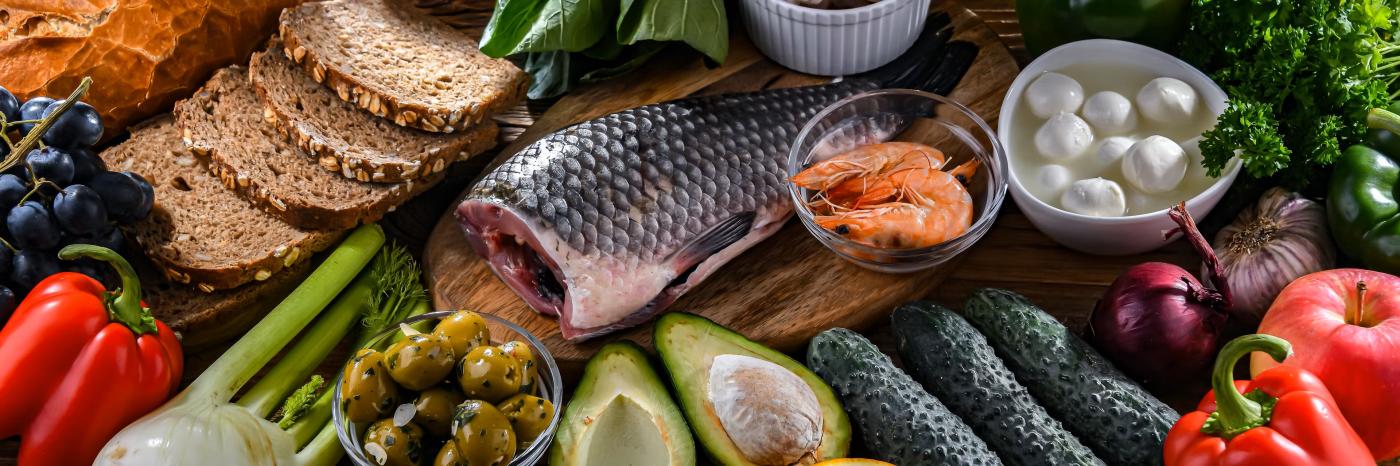

Registered on the UNESCO Intangible Cultural Heritage of Humanity List since 2013, the Mediterranean diet is an essential part of our culture that also produces beneficial health effects. However, its protective power does not lie in current eating habits or manufactured products in the Mediterranean region. In fact, it comes from the classic dietary pattern whose effects have been validated by dozens of scientific studies involving thousands of people.
So, what can we call the Mediterranean diet?
According to UNESCO's definition, "it comprises a set of knowledge, practical skills, rituals, traditions, and symbols related to agricultural crops and harvests, fishing, and animal husbandry, as well as the ways of preserving, processing, cooking, sharing, and consuming food." Therefore, it also constitutes a social pattern.
Nevertheless, the fundamental component of this cultural heritage is, as its name suggests, the diet itself. To know how Mediterranean our diet is, we need to consider 14 points. The higher the score, the more it resembles it.
Firstly, the recommended foods that add points are:
Olive oil.
Vegetables.
Fruits.
Legumes.
Fish and seafood.
Nuts.
White meat (chicken, turkey, rabbit).
The traditional sofrito to accompany main dishes.
And the products to avoid, which distance us from the Mediterranean diet, are:
Red and processed meats.
Butter, margarine, or cream.
Carbonated drinks, whether sugared or not.
Commercial pastries.
Proven health benefits
The first study on the Mediterranean diet was published in 1970, but it took more than 20 years to regain interest. Since then, it has been the focus of intense nutritional research.
One of the main studies is Spanish, involving more than 90 researchers. This is the PREDIMED study, designed to evaluate the effects of this dietary pattern on older people at high risk of cardiovascular disease. The conclusions were unequivocal: the incidence of cardiovascular events was clearly lower in the Mediterranean diet groups.
Now, after decades of research, the results are clear: the Mediterranean diet is a strong ally for our health. Following it reduces the risk of mortality and suffering from three of the most common diseases of our time: cardiovascular diseases, cancer, and type 2 diabetes. Additionally, it also protects against cognitive decline, dementia, and Alzheimer's.
Non-Mediterranean Menus
Despite all this evidence, the reality is that our current diet is little or nothing like the Mediterranean diet. Moreover, we often mistakenly believe that widely consumed foods, such as pork, ham, or cheese, are part of it.
If we look at the 14 points mentioned in the PREDIMED study, one of them is: "Do you primarily consume chicken, turkey, or rabbit meat instead of beef, pork, burgers, or sausages?" To earn a point, the answer must be yes. Also, one of the additional recommendations is not to take more than one serving of cured ham or red meat per week.
The main reason for this restriction is that both cured ham and any other processed meat are processed meats, and these increase the likelihood of suffering from colorectal cancer, the second most deadly cancer in the world. Another reason is its high salt content, which increases the risk of cardiovascular and kidney diseases.
Additionally, in terms of health, pork is classified as red meat, an additional risk for contracting the aforementioned colorectal cancer. Moreover, consuming a lot of red and processed meat also increases the chances of dying from cardiovascular problems.
As for cheeses, low-fat ones have no strict limits in the Mediterranean diet, while cured or fatty ones (the majority) are restricted to a maximum of one serving per week. This is due to their high salt content and because they are predominantly saturated fats, two considerable health risks.
Wine yes or no?
One of the most controversial aspects of the Mediterranean diet is wine. Although it scores positively in the PREDIMED study, its consumption is not encouraged, but rather the amount is limited to those who are already regular consumers.
Wine, particularly red wine, enjoys a good reputation due to the presence of polyphenols from grapes. Indeed, the PREDIMED study observed that consuming more polyphenols can reduce the risk of mortality. However, these natural compounds are also found in widely consumed foods, such as virgin olive oil, nuts, fruits, and vegetables.
Moreover, wine is still an alcoholic beverage and the conclusion of the World Health Organization in this regard is that drinking alcohol can cause more than 200 health problems. In fact, this institution considers that there is no level that does not pose a risk, however low it may be.
Read more: "I don't drink much, I drink the usual"
The positive thing is that we are always in time to improve our health. No matter the age at which we do it: any moment is good to bring our diet closer to the 14 points of the Mediterranean diet. Each step we take towards greater compliance with this dietary pattern, no matter how small, represents a benefit in the prevention of diseases.
nutrition
Mediterranean diet
healthy eating
Rafael Sarralde
General Director

Latest news





Upcoming events
12
Nov
El Desembarco, la traición de Viriato at La Caja Blanca
12
Nov
HOMER El Mero Mero at Sala Trinchera Málaga
13
Nov
Marbella Startup Lab – Innovate & Collaborate
13
Nov
Candlelight: Coldplay & Imagine Dragons at Sala Fundación Unicaja María Cristina
13
Nov
Candlelight: Tribute to Ludovico Einaudi at Anantara Villa Padierna