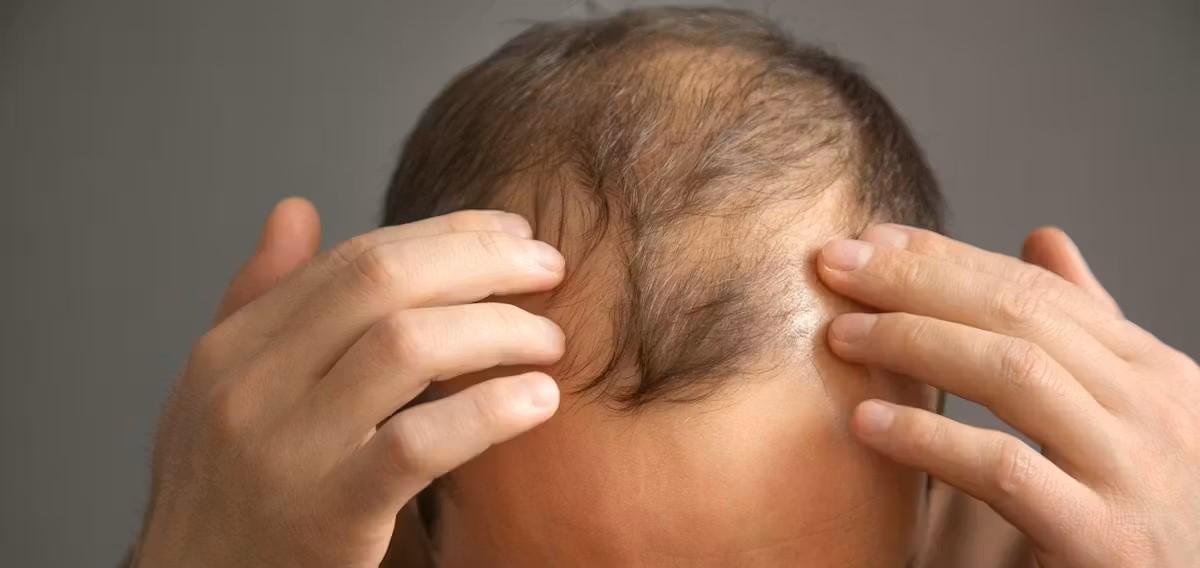

This morning, a young man in his early thirties looked in the mirror and noticed, for the first time, that his hairline had receded slightly. It is not something that happened overnight, but today he realized it could be the beginning of androgenetic alopecia, or common baldness.
People are experiencing it at increasingly younger ages: in Spain, for example, nearly 30% of men begin to notice it from the age of 30, and its prevalence increases by about 10% with each decade. Women are not exempt: around 40% experience some degree of hair loss by the age of 50.
Many see baldness as merely an aesthetic issue, but behind it there may be deeper problems, such as low self-esteem, insecurity, and also a greater risk of skin cancer due to the early loss of the protective barrier that hair provides against the sun.
Limited options
Until now, the options have been limited. Pharmacological therapies, such as minoxidil or finasteride, can slow hair loss, but they are lifelong treatments and may have side effects. Hair transplants offer an effective solution, but only if there is sufficient donor area available.
For decades, researchers have therefore been exploring alternative, efficient, and long-lasting solutions. What if, in a few years, we could actually reverse baldness?
A team of researchers from Hospital Clínico San Carlos in Madrid, which I led, may be close to answering that question. In mice, we have demonstrated that a stem cell treatment can reactivate hair follicles that have become “dormant” due to alopecia, achieving 100% effectiveness in males and up to 90% in females.
Join us and support evidence-based information.
Subscribe to the newsletter
The key: combining stem cells with an energizing molecule
Within the team, we knew that stem cells have a limited survival time. At the same time, our experience in hair transplantation reminded us of a key factor: follicles require a vascular network to settle and thrive. Without enough time, the process fails.
Therefore, it seemed necessary to combine stem cells with an energizing molecule, allowing these cells to survive long enough to “awaken” the dormant follicles.
The experiment was structured into several experimental groups, along with a control group. One group received only mesenchymal stem cells derived from adipose tissue—cells obtained from the body’s own fat that can transform into tissues such as bone, cartilage, muscle… or hair.
A second group of mice received only adenosine triphosphate (ATP)—the energizing molecule—while a third group received a combination of both therapies. The treatment groups were further subdivided depending on the type of ATP and the dose of stem cells (high, medium, or low).
To evaluate the response to the treatment, researchers used photographic observation models, digital hair growth analysis, and finally histological tissue examinations to confirm that the visible changes corresponded with follicular regeneration at the microscopic level.
The results left little doubt: among the male mice treated with low doses of stem cells and ATP, half fully recovered their hair, while the other half showed intense hair growth—an overall 100% success rate.
The female mice also responded strongly. With medium doses, 50% achieved complete hair regrowth, while another 40% experienced very significant recovery. In total, nine out of ten females responded significantly to the treatment.
Ending baldness in the coming years
The findings are promising, but translating these results into clinical practice will take time. Among other steps, human clinical trials are still required. Researchers estimate that, in the best-case scenario, at least five years will pass before the therapy becomes available.
Meanwhile, science has taken a step that only a decade ago seemed impossible. If baldness has historically been accepted—albeit reluctantly—as an inevitable fate, today it is beginning to appear as a problem with a potential solution.
Perhaps, in a few years, that young man looking in the mirror will not have to resign himself to watching his hairline recede, because hair regeneration will no longer belong to the realm of science fiction, but to regenerative medicine.
Keywords:
-
Baldness
-
Alopecia
-
Stem cells
-
Regenerative medicine

Latest news





Upcoming events
17
Sep
La Pequeña Cuba Gastro-Cultural Festival in San Pedro Alcántara 2026
18
Sep
World Wellness Weekend Marbella 2026
18
Sep
Candlelight: Queen vs. ABBA in Málaga
18
Sep
Candlelight: Coldplay and Imagine Dragons in Málaga
18
Sep
3 de Corazones – Pancho Céspedes, Enrique Ramil and José Luis Jaén in Málaga