


Malaga airport tests the route for future passenger drones for the first time
The test has been conducted with a helicopter, as there are not yet certified eVTOL air taxis, and it is the last step to establish the air protocols.
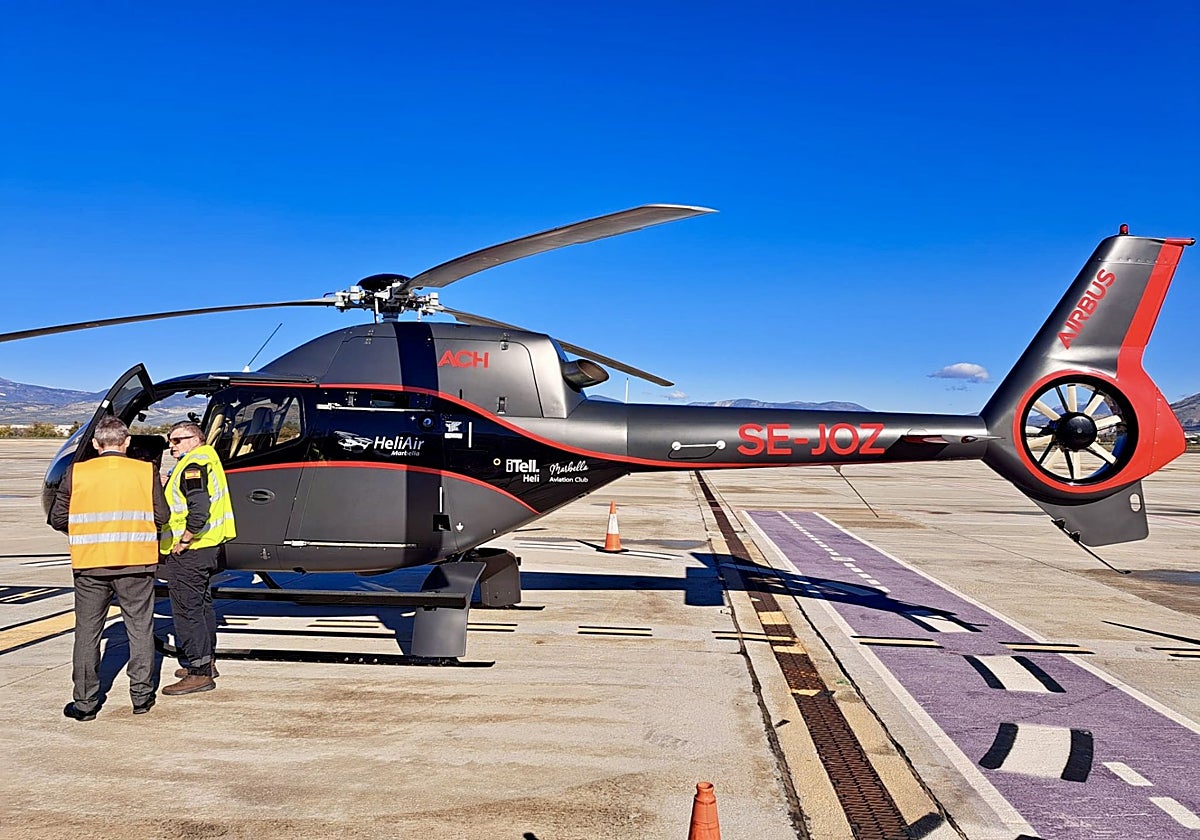

To the untrained eye, it appears to be nothing more than a flight of a conventional helicopter. However, the flight that took place today at Malaga-Costa del Sol Airport is much more significant than that. This is the closest thing currently available to the future passenger drones or air taxis, known in the aviation world as eVTOL (electric vertical takeoff and landing aircraft). At present, there is no approved model yet in Spain for flying, which is why this method was chosen to conduct the first trial of the air corridor or "air route" that one of these will follow when they become available.
Expand
David González, head of the Malaga tower, during the trial. SURIt was conducted as part of the 'OperA' advanced air mobility project, which SUR has been reporting on for months. Notably, this newspaper recently attended the first tests in Madrid, still in simulator, which have led to what was experienced today.
The air taxi takes off between Malaga and Granada and opens the door to a direct connection with Marbella in just 20 minutes
This first 'air taxi' debuted with two journeys using the air corridor or "air route" that will allow travel, initially, between Malaga and Granada; although the connection most desired by users, and therefore by operators, will soon also be available, linking the airport with Marbella in just 20 minutes.
Malaga-Granada, air connection
As jointly reported by Aena and Enaire, the helicopter this morning connected Malaga-Costa del Sol Airport and Federico García Lorca Granada-Jaén Airport "to validate the operation mode with which the air taxis (initially piloted), and the cargo drones (unpiloted) would fly. For this, the heads of the Malaga control tower and other Enaire departments in Madrid have designed an air corridor, as well as the associated procedures for future flights, within the European project 'OperA' (Operate Anywhere).
Related news
Malaga airport already tests the first drone flights for passengers in simulator
With this demonstration, the goal is to approve the operation mode for these types of flights, which will be part of the airspace in the near future. Thus, the tests seek to verify that the routes designed by Enaire and the operational procedures allow these aircraft, whether piloted, remote, or autonomous, to fly in controlled and uncontrolled airspace, and to coexist without interfering with the usual activity of airports and conventional aircraft, ensuring the highest level of operational safety for all users of the air system.
This initiative, funded by the European 'Horizon Europe', aims to demonstrate that these aircraft can coexist with conventional aviation with the highest level of operational safety in real environments, according to these sources. The advanced air mobility project is supported by the SESAR 3 company and has funding of 9.52 million euros, of which the EU contributes about 5.97 million.
"It represents a decisive step towards the safe and efficient integration of electric vertical takeoff and landing aircraft (eVTOL) in all types of airspace, contributing to the creation of a more sustainable and connected European digital sky," state both institutions. The consortium leading the 'OperA' project is led by the multinational technology company Honeywell and includes participation from Aena, Enaire, Crida, Eurocontrol, and manufacturers such as Pipistrel and Vertical Aerospace, among others.

Latest news





Upcoming events
12
Nov
El Desembarco, la traición de Viriato at La Caja Blanca
12
Nov
HOMER El Mero Mero at Sala Trinchera Málaga
13
Nov
Marbella Startup Lab – Innovate & Collaborate
13
Nov
Candlelight: Coldplay & Imagine Dragons at Sala Fundación Unicaja María Cristina
13
Nov
Candlelight: Tribute to Ludovico Einaudi at Anantara Villa Padierna
Similar News

Málaga Airport Makes History with More Than Three Million Passengers in One Month
Málaga

Port of Málaga looks beyond its docks to support future growth
Málaga

Guide to the Virgen del Carmen Processions in Málaga and the Province
Málaga
