


This Moorish village in Málaga is the birthplace of the verdiales, an unparalleled natural viewpoint, and the living history of the province.
A strategic enclave where the Middle Ages left its mark among castles and defensive towers. The legacy of the verdiales that continues to shape the cultural identity of the Guadalhorce Valley. Monuments, temples, and sanctuaries that tell centuries of history.
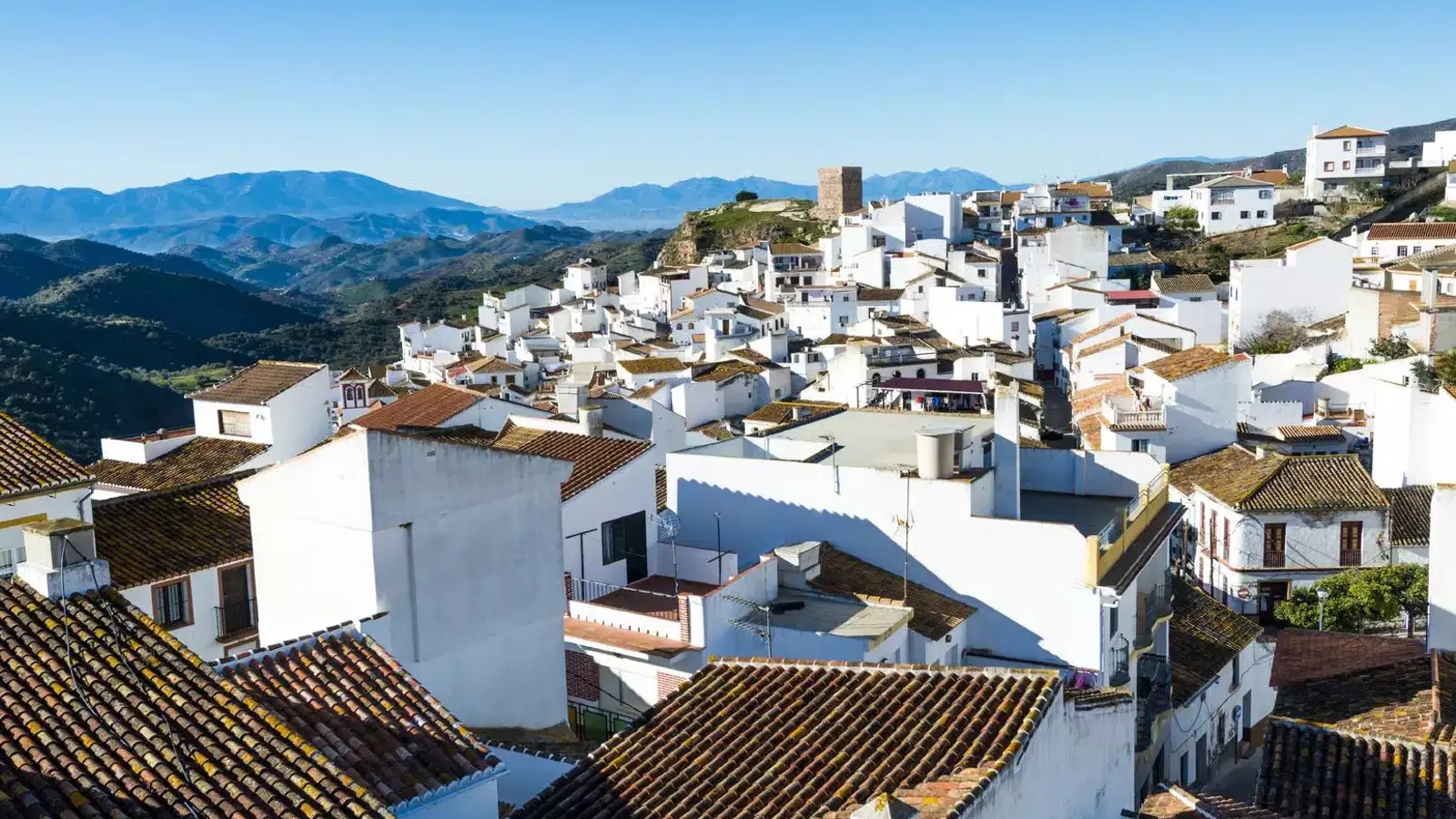

Located in the Valle del Guadalhorce region, the municipality of Almogía stands as a territory where nature, heritage, and tradition converge. Its privileged location made it a strategic point for Arabs and Christians during the Middle Ages, playing a key role in the history of the province. This mix of cultures is still visible in its urban layout, its defensive remains, and the symbols that have been left as traces of its past, including the castle of Huns-Xan-Biter and the Torre de la Vela, remnants of a time when these lands were the stage for disputes, alliances, and reconquests.
Almogía is also the birthplace of one of the most recognized styles of verdiales in the province of Málaga, an ancestral folklore declared an essential part of the intangible heritage of Málaga. Its festive tradition continues to be a reference for the entire region.
The municipality preserves a set of monuments that narrate its evolution through the centuries. The church of Nuestra Señora de la Asunción, built in the 16th century and restored after the 19th-century earthquake, stands out as one of the most representative constructions. Next to it, the chapel of Santo Cristo, also refurbished after that earthquake, houses a striking painting of a Crucified Christ that is part of the local devotional heritage.
In the upper part of the urban area, the remains of the Castle of Almogía appear, the historical origin of the settlement. At its feet, the population began to develop while the fortress maintained its military function, first under Christian and later Arab rule. With the arrival of the Catholic Monarchs, the fortress was almost completely destroyed, preserving only the Torre de la Vela, which still stands as a reminder of its strategic importance.
A few kilometers away, between Almogía, Álora, and Cártama, lies the ermita de las Tres Cruces, a sanctuary of great symbolic value. It is the setting where one of the most prominent verdiales festivals of the region is held each year, a traditional gathering that concentrates the oldest musical legacy of these lands.
As an open-air ethnographic exhibition stands the Lavadero de la Noria, consisting of thirty clay basins with washing stones dating back to the 19th century. This space recalls the daily life of the population and the tasks that marked the daily rhythm of the municipality.
The cultural richness is completed with archaeological remains from multiple civilizations. Phoenicians, Romans, Visigoths, and Arabs left their mark in the area, especially visible in the cave paintings of the Venta del Fraile, evidence of prehistoric settlement in the surroundings.
A history that dates back to prehistoric times
The cave paintings of the Venta del Fraile confirm that humans inhabited this area since prehistoric times. Subsequently, these lands became a passageway between the coast and the inland settlements, as evidenced by the remains of a Roman road and various structures found in cortijos like Gálvez, Chirino, or Los Moras.
During the Arab domination, Almogía gained importance for its role in the rebellion of Omar Ben Hafsun against the Umayyad dynasty. The castle of Hins-Xan Biter then played a crucial role as a defensive point of Bobastro. After the Reconquista, its inhabitants became vassals of Castile, although they later joined the Moorish revolt that affected several mountainous areas of the province. The population was repopulated with Christians from Antequera and Teba to prevent its abandonment.
The 16th century marked the construction of the parish church, while the chapel of Santo Cristo was built in the 17th century. Both had to be refurbished after the 19th-century earthquake, which severely affected these historical buildings.
The name of Almogía has Arabic roots, although its exact meaning continues to be a subject of debate among scholars. For some, it derives from the lineage of the Mexíes, while others interpret it as "beautiful" or "lovely," adjectives that, in any case, continue to accurately describe this unique enclave in the province of Málaga.
A unique landscape among mountains, peaks, and trails
The municipal area of Almogía is flanked by the Sierra del Torcal and the Hoya de Málaga, a natural environment where the peak of Santi Petri rises, reaching 794 meters in height. Added to this is the garganta de los Retamares, two enclaves that stand out for their panoramic views and the diversity of hiking trails that cross them. Olive and almond trees accompany the journey through these landscapes, characteristic of the traditional agricultural landscape of the area.
Festivals that keep alive the verdialero and peasant legacy
Almogía preserves some of the most deeply-rooted celebrations of the province. The Fiesta de los Verdiales de las Tres Cruces, declared a Festival of National Tourist Interest of Andalusia and of Provincial Touristic Singularity, is celebrated every first Sunday of May at the hermitage of the same name. There, verdiales bands from the region gather to perform, compete, and dance this style of ancestral origin throughout the day.
The festive calendar also includes agricultural celebrations linked to the products of the territory. In September, the Day of the Almond takes place, a tribute to one of the most characteristic fruits since the Arab era. In August, the Fiesta de la Trilla is celebrated, with a communal meal that revives traditional recipes like gazpacho, olla, and pringá.
During Holy Week, the locality intensely experiences the rivalry between the two brotherhoods, known as the verdes and the moraos. Both process on different days until they come together on Easter Sunday to carry the Resurrected Christ.
Flavors that define a unique identity
The cuisine of Almogía is characterized by the use of local products and, especially, by the presence of almonds in numerous recipes. Dishes such as chanfaina, ajoblanco, or porras blancas reflect this tradition, while the puchero remains one of the most representative soups. In pastry, borrachuelos, typical sweets, continue to be an essential part of family and festive celebrations.

Latest news





Upcoming events
12
Nov
El Desembarco, la traición de Viriato at La Caja Blanca
12
Nov
HOMER El Mero Mero at Sala Trinchera Málaga
13
Nov
Marbella Startup Lab – Innovate & Collaborate
13
Nov
Candlelight: Coldplay & Imagine Dragons at Sala Fundación Unicaja María Cristina
13
Nov
Candlelight: Tribute to Ludovico Einaudi at Anantara Villa Padierna
Similar News

Málaga Airport Makes History with More Than Three Million Passengers in One Month
Málaga

Port of Málaga looks beyond its docks to support future growth
Málaga

Guide to the Virgen del Carmen Processions in Málaga and the Province
Málaga
