


The Posthumous Treasure of Joan Didion: Therapy to Understand an Alcoholic Daughter
The alcoholism of her daughter marked several years of Joan Didion's private life. Everything is in some notes that appeared after her death.
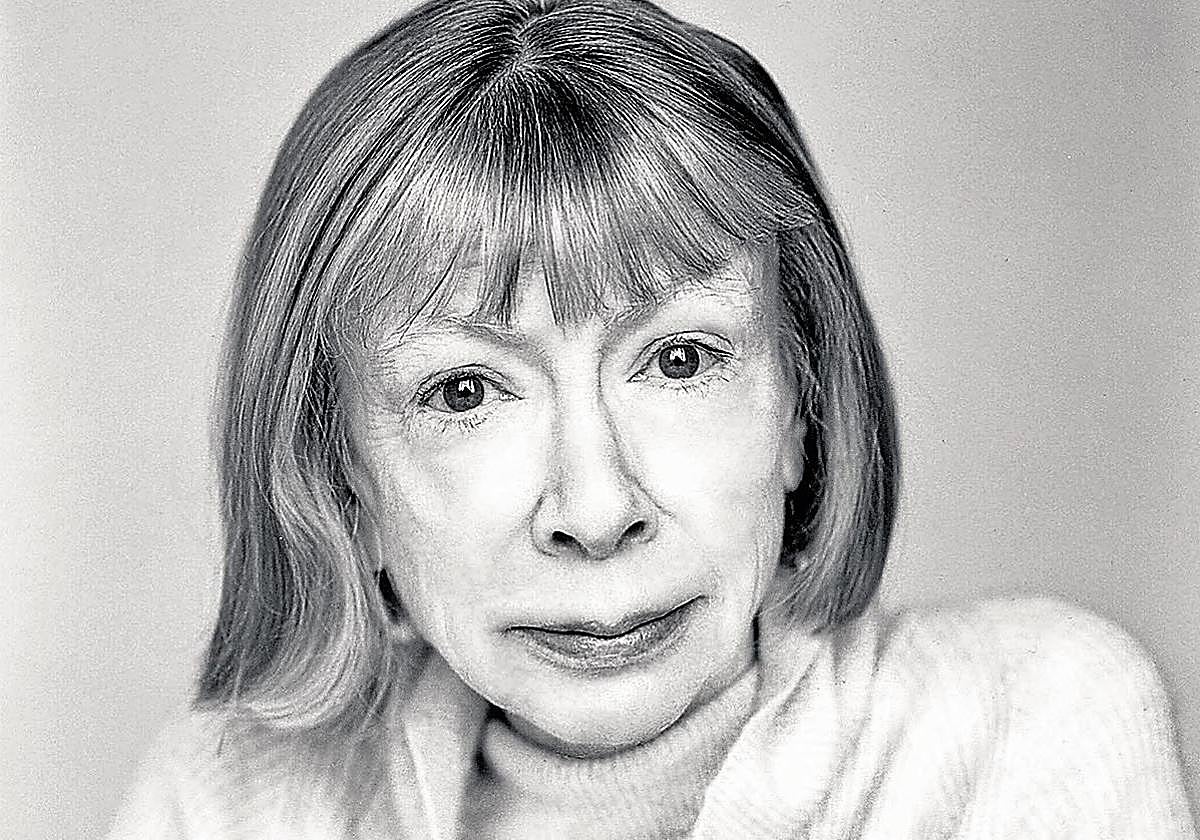

"I sat down and immediately started to cry." It was October 11, 2000, and journalist and writer Joan Didion (Sacramento, California, 1934 - New York, 2021) was beginning another session with her therapist. It was one of the bad weeks, during the worst years of her daughter Quintana's alcoholism. Although Didion continued to visit Dr. Roger McKinnon for another decade, for some reason, she decided to only document the sessions between late 1999 and early 2002.
All this material, these precise memories, noted professionally after each meeting, were not intended to become a book, but that's what it has become: 'Notes for John' (Random House) is an atypical read, a window into the intimacy of a family going through a significant crisis. And it fell from the sky to the publishers: after Joan Didion's death in 2021, all these pages written a quarter-century ago were found in her Manhattan office. There was a small stir over the decision to publish something Didion never mentioned, having opposed a similar case with other writers while alive. But the fact is, it has been published.
It's important to know the context. On one hand, Didion lived with her lifelong husband, John Gregory Dunne. Both were writers, integrated into the social life of the New York intellectual scene and very close in a relationship of mutual admiration and support. On the other, their adopted daughter Quintana, from 1966, was at a very low point in her life, struggling with alcoholism and depression, and facing great uncertainty in her life and career. This book occurs before the tragedies that made Didion so internationally known, and perhaps that's why it's even more interesting. When the doctor tells her, "There is something in you that makes you think you don't deserve good things" or "You grew up, for whatever reason, expecting the worst to happen," he didn't yet know how right he was.
After each session Didion wrote, but these were not disorganized notes: each piece is a literary work in itself, with strong narrative tension, twists, cliffhangers, and a very clear second person, her husband (hence the 'for John' in the title). She recounts her progress with the psychiatrist to him, and that's important: "Quintana feels that when she deals with you and your husband she is dealing with a single person, who defend each other against her." Didion confirms this to that reader John: "That's how we lived, you and I were always together."
They are two parents facing a very painful situation: "I said that all this was being very difficult for you and me: in the middle of any work conversation one or the other ended up talking about Quintana." Week by week it worsens or improves, while they try to "take her emotional temperature with each phone call." Didion realizes that her daughter feels a lot of pressure from her, and sees herself as a hopeless patient. The writer reflects: "I thought the medical model of Alcoholics Anonymous was a big mistake, as it gave an excuse to drink by insisting that the 'disease' was beyond you, out of your control."
McKinnon will explore a lot about Quintana, but even more about Didion, his real patient. For example, her childhood, with a father absent during World War II who later had a devastating depression. The therapist links the pain of the grandfather with that of the daughter, especially when Didion suffers thinking that Quintana might try to commit suicide. It's interesting to see McKinnon's opinions change: almost all the time he recommends that they trust and give her space ("Continue on that empathetic level. Don't make the mistake of telling her what to do"), but when the daughter is really bad, he bluntly says: "It's extremely dangerous. You have to play all your cards, play the guilt card, tell her you'll never have a good day again if something happens to her."
Thinking about the legacy
There is intense reflection on alcoholism, motherhood, work ("an extremely effective anxiolytic"), depression, and success. Even the inheritances: "There is always something more than money, they force us to think about ceasing to exist [...] to wonder if you have truly lived."
Didion, after years of success in fiction and narrative journalism (the documentary 'Joan Didion: The center will not hold', available on Netflix, is recommended to know her life), suffered these ups and downs of her daughter just before the sudden death of John. Two years later, Quintana herself died. The books 'The Year of Magical Thinking' (2005) and 'Blue Nights' (2011) are the result of reflection on both losses and gave her renewed worldwide recognition. Didion survived almost two more decades. Here we read about the woman who was about to endure all that horror.

Latest news





Upcoming events
12
Nov
El Desembarco, la traición de Viriato at La Caja Blanca
12
Nov
HOMER El Mero Mero at Sala Trinchera Málaga
13
Nov
Marbella Startup Lab – Innovate & Collaborate
13
Nov
Candlelight: Coldplay & Imagine Dragons at Sala Fundación Unicaja María Cristina
13
Nov
Candlelight: Tribute to Ludovico Einaudi at Anantara Villa Padierna
Similar News

The Cat Guardian: Nearly 14 Years of Rescues and 16,500 Neutered Cats
Málaga
María Barranco resurfaces after hitting rock bottom: "No one can sink me"
Málaga
Ana Duato: "Merche taught me to be a woman, a person, and an actress"
Málaga
