Costa del Sol News
The international projection that the Costa del Sol began to experience from the 1950s, primarily around Málaga, Torremolinos, and Marbella, led to an almost urgent demand for the creation of essential infrastructure to satisfactorily serve the tourists who were increasing in number and diversity of origin year by year. Everything indicated that the time would come when this influx would become massive. There was a need for road access very different from what existed at the time; a guarantee of water supply; healthcare services; and the growth of Málaga Airport, which would undoubtedly soon become the essential gateway for visitors. Naturally, there was a push to develop a hotel industry that would quickly reach excellence.
Collaboration between public and private initiatives was necessary to achieve this goal. Political authorities and tourism entrepreneurs clearly understood the need to open foreign markets, and for this, it was vital to "sell the product" abroad.
It was not uncommon for expeditions to go abroad to take note of what was being done in Europe in terms of tourism and, at the same time, to promote the offerings of the Costa del Sol. For example, in the history of tourism in the area, there was a "flying embassy" tasked with promoting the many virtues of the Málaga coast, which Don Ramiro Campos Turmo wanted to name (unsuccessfully) Costabella.
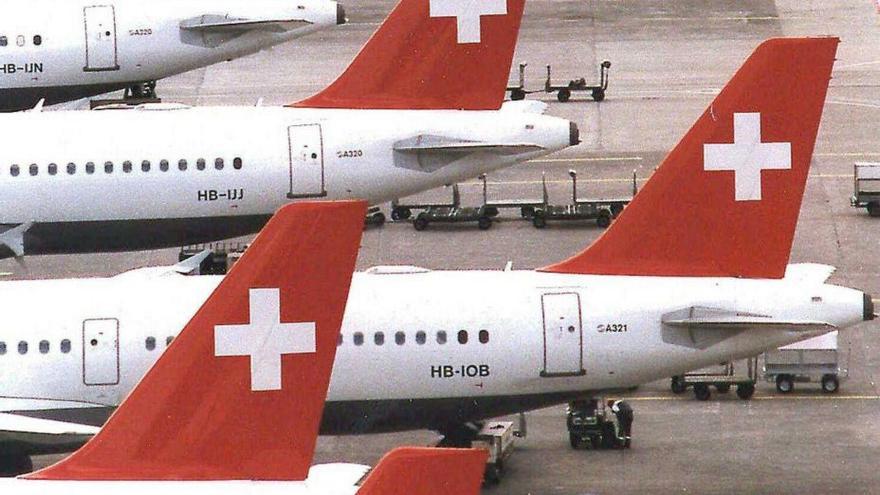
In this context, during November 1967, a Swiss expedition visited the Costa del Sol to inaugurate the Zurich-Geneva-Málaga airline route. They arrived on the inaugural Geneva-Málaga flight of the company 'Swisser', which was the national airline of Switzerland from its founding in 1931 until its bankruptcy in 2002. Interestingly, the Swiss returned on an 'Iberia' aircraft.
On the morning of the departure day, they visited the 'Parque de interés turístico Andalucía la Nueva', an initiative by the entrepreneur José Banús Masdeu, and had lunch at the Golf Course hotel.
By Thursday, November 9, they had already visited Marbella, being welcomed and entertained by official authorities and representatives of private initiatives. They began the tour with a visit to 'Los Monteros', created by banker Ignacio Coca. First, they visited the golf course, where they were received by the honorary president of the Coca group and de facto public relations, the Marquis of Nájera, Don Ángel Fernández de Liencres.
After enjoying some appetizers, they moved to the Los Monteros hotel, toured the facilities, and shared a lunch offered by the company. After lunch, they moved to the Don Pepe hotel, another of the hospitality 'giants' of the time.
At nine-thirty at night, the Marbella City Council offered them a dinner presided over by the mayor, Francisco Cantos Gallardo, along with the president of the Swiss National Office of Tourism, Gabriel Despland, at the Hotel Skol. In addition to Marbella authorities, the Iberia airline delegate in Málaga, Santiago Aragoneses, attended.
The Swiss received as a gift a copy of the Tourist and Historical Guide of Marbella, which had been written, with a prologue by Ana de Pombo, by the doctor Antonio Maíz Viñals. The night ended with a performance by the flamenco group of Ana María Moya, a Málaga artist who ran the famous flamenco tablao of her name, in the plaza del Santo Cristo de la Veracruz, opposite the hotel and restaurant 'La Fonda'.
On Friday night, they were treated to another dinner, this time at the Don Pepe hotel. They were also given some mementos of Marbella. During this visit, the absence of the parish priest Bocanegra Pérez was noted; the explanation is that it coincided with a serious surgical intervention in Málaga.
It was not long before the "return visit" took place, so that a Malaga delegation (which included the mayor Cantos) stayed in Switzerland from November 14 to 19. The return of that embassy occurred on a 'Swisser' aircraft from the first airline that connected Málaga with Switzerland.
They visited and toured Geneva, Lausanne, Locarno, Ronco, Orselina, and Ascona. Zurich and its museums were also of interest to the delegation. They returned very satisfied with the reception in the Swiss country.
The creation of new airline routes arriving and departing from Málaga was made possible because the airport, whose history dates back to 1919, had begun a significant expansion with the arrival of the 1960s and with a new boost in the 1970s. The roads and the railway required an exercise in patience.