


Why is Málaga's Larios Street named that way?
The story of the most famous name in downtown Málaga and the family that changed the cityThe origin of the grand Malaga avenue that transformed the old town in the 19th centuryThe family that financed the most elegant street in Málaga and named it
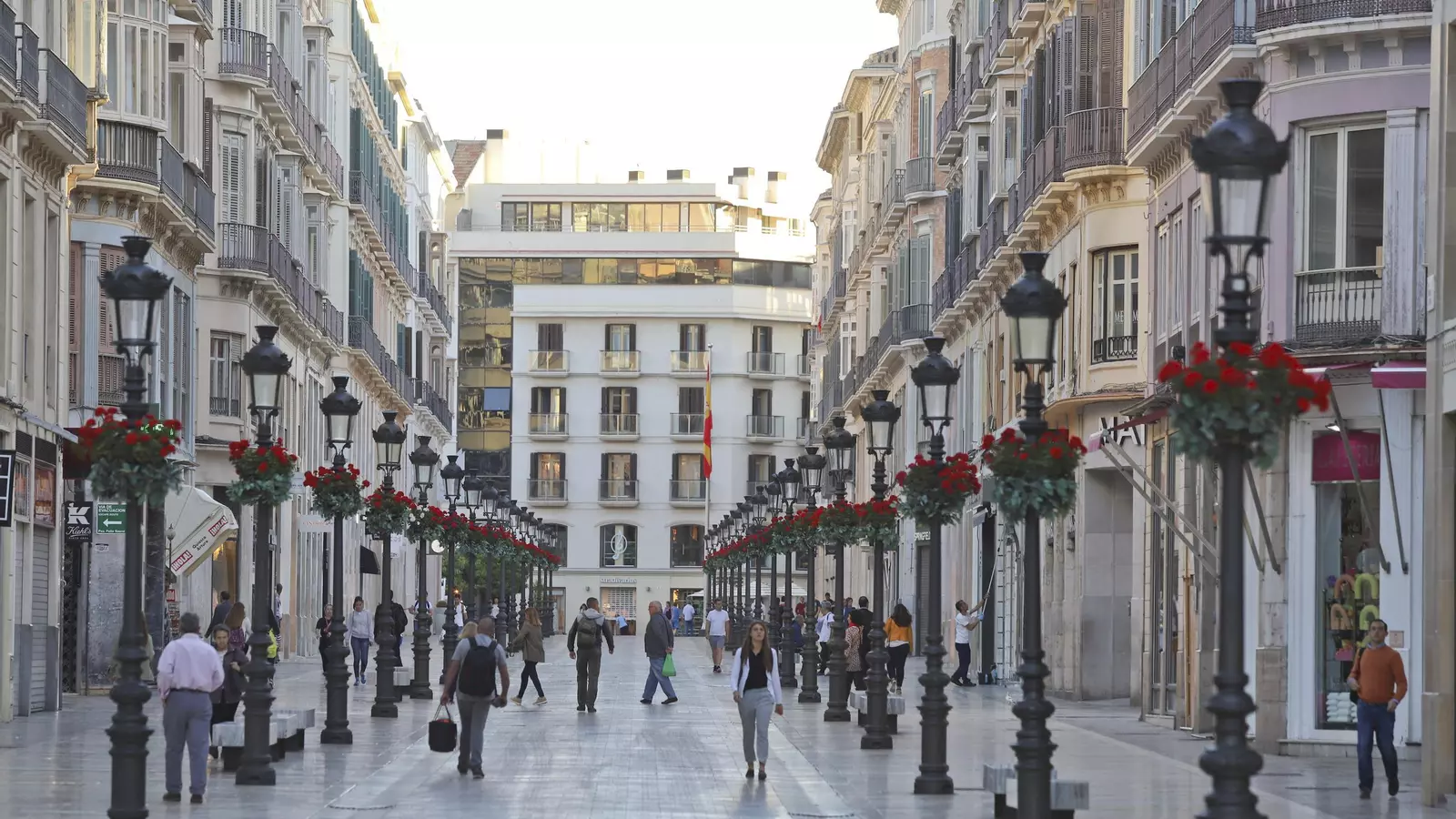

The Marqués de Larios street, popularly shortened to calle Larios, is undoubtedly the most recognizable street in Málaga capital, at the heart of the historic center and one of the most emblematic roads in all of Spain. Its elegant layout, its history linked to the urban progress of the 19th century and its connection with one of the most influential families in the city have made it a true symbol of Malaga's identity. But, why is it named that way?
At the end of the 19th century, Málaga needed modernization. The old town, of Muslim heritage, was made up of a labyrinth of narrow and poorly ventilated alleys, where unsanitary conditions were a recurring problem. In 1880, under the mayoralty of Alarcón Luján, the City Council proposed a profound urban transformation: to open a large avenue connecting the Plaza de la Constitución with the port, improving circulation, ventilation, and hygiene in the city.
To finance the work, a joint-stock company was formed with a capital of one million pesetas, divided into 40 shares of 25,000 pesetas each. The Larios family, one of the major economic engines of 19th-century Málaga, purchased the majority of these shares and took charge of the project. Hence, in recognition of their crucial role, the new urban artery was named Marqués de Larios street, in honor of Manuel Domingo Larios y Larios, the second Marquis of Larios.
An ambitious project with its own architectural hallmark
The original layout was the work of engineer José María de Sancha, although the final design of the buildings was carried out by architect Eduardo Strachan Viana-Cárdenas, a key figure in the aesthetic renewal of 19th-century Málaga. Strachan applied influences from the Chicago school and Haussmann's Parisian urbanism, creating a harmonious, modern, and functional avenue.
An archive image of the Almacenes Masó building, at the corner of Larios street with Bolsa street. / ARCHIVO HISTORICO PROVINCIALThe buildings were constructed with a uniform height of 20 meters, equivalent to the width of the street, creating a sense of balance and symmetry. Their rounded corners not only added visual elegance but also had a practical function: facilitating the circulation of sea air and cleansing the city's atmosphere, which then lacked an effective sanitation system.
Each facade was designed to maintain aesthetic coherence, so that balconies and cornices aligned at the same vanishing point at the end of the street. At street level, the residences incorporated uncommon amenities for the time: running water, private sanitation, and hydraulic floors, in addition to metal structures that allowed for increased height without compromising stability.
From wooden floors to bourgeois emblem
Larios street was constructed with a unique pavement: wooden plugs that gave the floor the appearance of an elegant parquet. This detail, in addition to reinforcing the street's noble character, absorbed the noise of carriages, leading Malagueños to affectionately nickname it the ballroom. However, after the flood of 1907, that floor was replaced by granite cobblestones.
The works, which began on May 15, 1887, lasted four years. More than 1,200 workers participated, under the constant supervision of Strachan. Finally, the street was inaugurated on August 27, 1891 and blessed by Bishop Marcelo Spínola y Maestre, in an act that symbolized the opening of a new stage in the urban history of Málaga.
A benchmark of elegance and urban life
Since its inauguration, Larios street has become the commercial and social epicenter of the city. The first luxury shops settled on its ground floors, and affluent families occupied the upper floors, making the street a showcase of Málaga's economic progress. Its architecture, spaciousness, and privileged location soon made it one of the most elegant streets in Spain.
Larios street with Christmas lighting seen from Plaza de la Constitución. / Daniel Pérez / EfeOver the years, Larios has witnessed historical events, urban transformations, and popular celebrations. In 2001, its pedestrianization marked a new chapter: the space was adapted for strolling, commerce flourished, and the historic center regained its splendor. Today, its 300 meters in length and 16 meters in width are the stage for Holy Week, Carnival, the Fair, or the already iconic Christmas lights, moments when the street recovers its original spirit: that of a place for meeting, coexistence, and beauty.

Latest news





Upcoming events
12
Nov
El Desembarco, la traición de Viriato at La Caja Blanca
12
Nov
HOMER El Mero Mero at Sala Trinchera Málaga
13
Nov
Marbella Startup Lab – Innovate & Collaborate
13
Nov
Candlelight: Coldplay & Imagine Dragons at Sala Fundación Unicaja María Cristina
13
Nov
Candlelight: Tribute to Ludovico Einaudi at Anantara Villa Padierna
Similar News

Málaga Airport Makes History with More Than Three Million Passengers in One Month
Málaga

Port of Málaga looks beyond its docks to support future growth
Málaga

Guide to the Virgen del Carmen Processions in Málaga and the Province
Málaga
