


The five Malaga towns united by their Andalusian past
The area known as the Taha de Comares became an important administrative division that included the small villages of Cútar, El Borge, Almáchar, and Benamargosa.
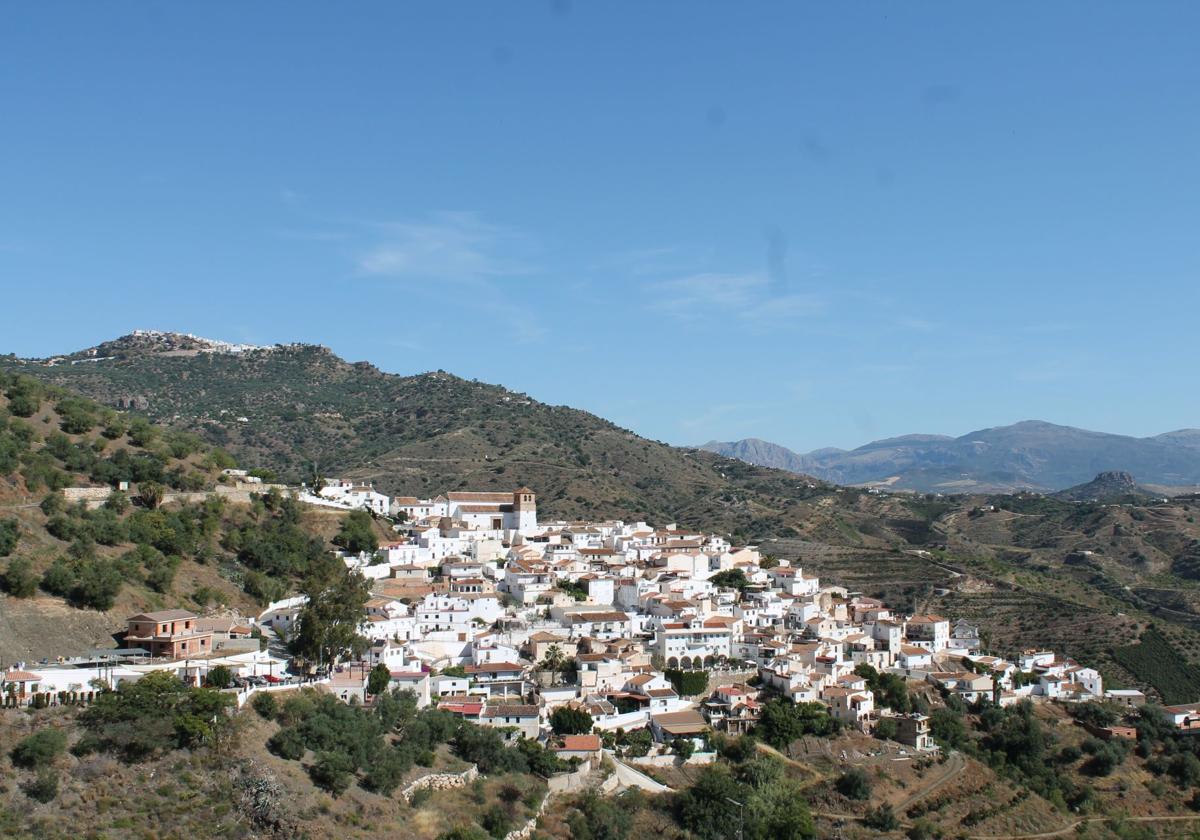

Today, some of them are so close to each other that you can easily walk from one to the other. They even share almost the same landscape. The area known as Taha de Comares was for a long time a small administrative division that united five towns in the Axarquía region. In addition to Comares, which had a strategic fortress, during the last years of the Nasrid kingdom, this district also consisted of four small villages, which today are independent towns with many differences among them: Almáchar, Benamargosa, El Borge, and Cútar.
From what is now known as the castle of La Tahona, one of the emblems of Comares, a good part of this vast fertile territory could be seen. This town has a strategic location thanks to its elevated position on a hill, about seven hundred meters above sea level. A true eagle's nest, between the Montes and the most western towns of the Axarquía.
There, several medieval remnants can be seen, such as some remains of a fortress that played a very relevant role for centuries, until, like its four small villages, it surrendered to the Christian troops in April 1487.
In addition to the labyrinthine layout of Comares, which still hints at its Andalusian past, another medieval site near the village of Los Ventorros should be explored. From there, one can take a beautiful hiking route up to the so-called Mesa de Mazmúllar, where a valuable Mozarabic cistern, presumably built between the 9th and 11th centuries, is preserved.
At the foot of Comares lies the tranquil town of Cútar, which has an interpretation center where one can learn about life in that small village, but especially the fascinating story of Al-Ŷayyār, the legal scholar and imam of the mosque of Cútar from 1490, that is, three years after the small village fell under Christian rule. This imam left behind a hidden Quran and other manuscripts, which were found a couple of decades ago in one of the houses in the town. It is best to visit this interpretation center to learn in detail about this curious episode. Furthermore, it is worth getting lost in its peaceful streets to discover passages like La Algorfa or the church of Our Lady of the Incarnation.
From Cútar, one can drive down a winding road through Moscatel vineyards to its neighbor El Borge, another of the small villages of the Taha de Comares. There awaits another labyrinth of narrow and steep streets, at the heart of which is the current church of Our Lady of the Rosary, built in 1505 in the Mudejar Gothic style.
What usually attracts attention about this church is that it has two towers, different from each other. In fact, each was built for a different reason; one was erected as a bell tower and the other as a chamber.
In the town, it is also advisable to visit another interpretation center, the Bandolero Gallery, where one of the best collections in the country about this historical phenomenon, occurring between the 18th and early 20th centuries, awaits. It should be noted that one of the best-known figures of the Axarquía, El Bizco de El Borge, was born in this town, and his birthplace, the Posada del Bandolero, serves as a cozy hotel and excellent restaurant.
From El Borge, one could even walk to its neighbor Almáchar, a town that sprawls down a slope with its white houses. They are arranged around the church of San Mateo, another church with a lot of history. In addition to visiting this church, it is advisable to delve into the most hidden streets, like the one leading to the Raisin Museum House, a space where an interesting ethnographic collection awaits.
The tour of the Taha de Comares ends in Benamargosa, which can be reached by road from Almáchar in a few minutes. Here the landscape changes quite a bit, as subtropical crops have gained much ground in recent decades over the traditional raisin producers or even the famous lemon trees of old. Today, the points of interest in this Malaga town revolve around the Arch of the Orchard, the church of the Incarnation, or the iconic bridge of the Ten Eyes.

Latest news





Upcoming events
12
Nov
El Desembarco, la traición de Viriato at La Caja Blanca
12
Nov
HOMER El Mero Mero at Sala Trinchera Málaga
13
Nov
Marbella Startup Lab – Innovate & Collaborate
13
Nov
Candlelight: Coldplay & Imagine Dragons at Sala Fundación Unicaja María Cristina
13
Nov
Candlelight: Tribute to Ludovico Einaudi at Anantara Villa Padierna
Similar News

Málaga Airport Makes History with More Than Three Million Passengers in One Month
Málaga

Port of Málaga looks beyond its docks to support future growth
Málaga

Guide to the Virgen del Carmen Processions in Málaga and the Province
Málaga
