


Don't be one of those who haven't discovered it yet: this small town in Málaga looks like it's straight out of an autumn postcard.
Nestled in the Genal Valley, Cartajima dazzles with its beauty, history, and the hues of the Copper Forest. Cobbled streets, the scent of firewood, and endless views: this is the most beautiful village of the Malaga autumn. Surrounded by the Cliffs of Cart...
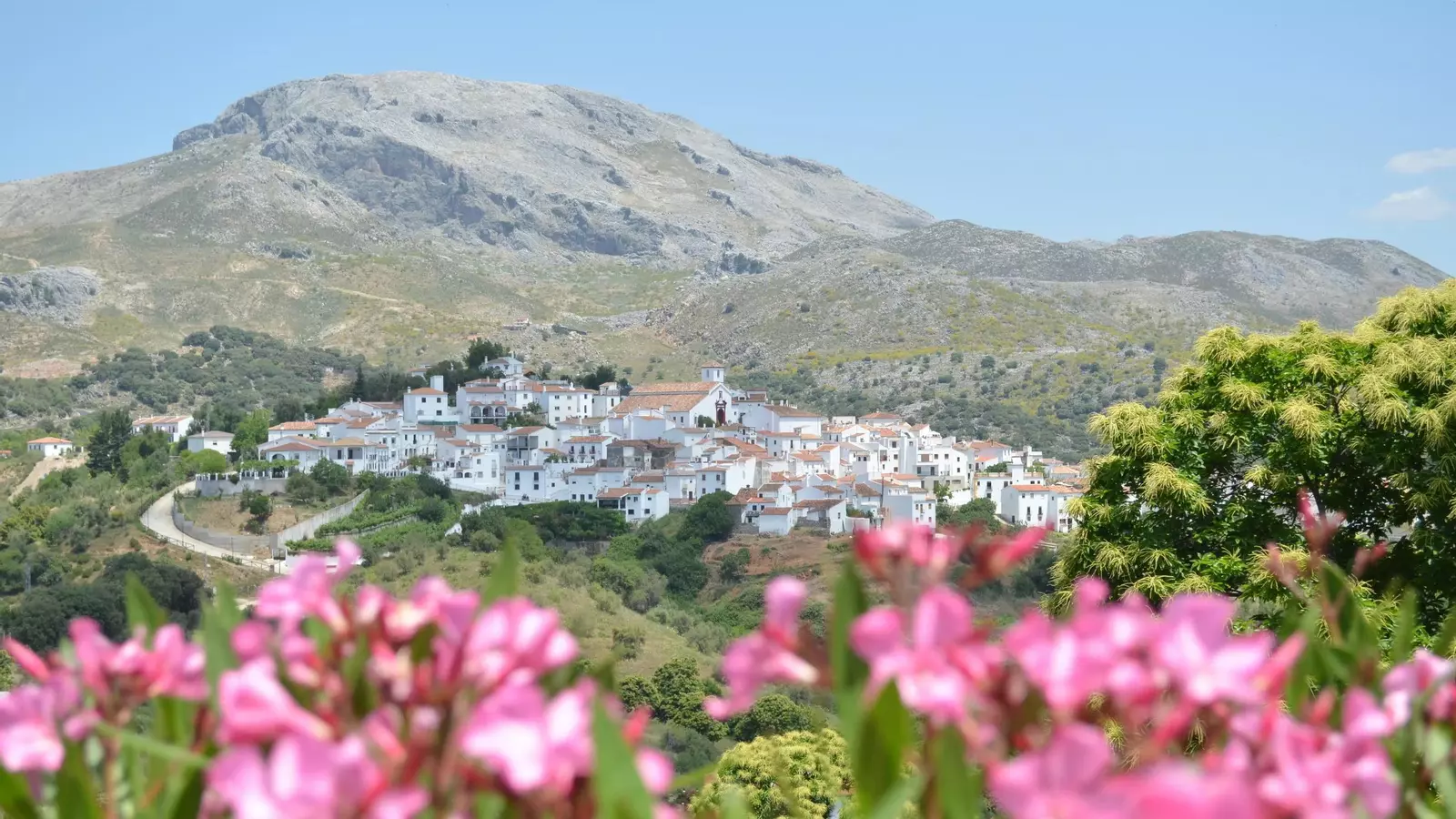

In the heart of the Serranía de Ronda, at an altitude of 845 meters, stands Cartajima, a small white village that seems frozen in time. Its cobblestone streets, pure mountain air, and natural surroundings make it one of the most picturesque locations in the province of Málaga, especially during autumn, when the forests of the Genal Valley are painted in ochres, golds, and reds. Surrounded by the Riscos de Cartajima, an impressive group of karst formations, this municipality stands as a true natural viewpoint of the region, dominating landscapes that in November seem taken from a painting.
The cool climate and soft light of this time of year enhance the beauty of its surroundings. The coppery tones of the chestnut groves and the smell of wood burning in the chimneys create an atmosphere that envelops the visitor and invites them to wander its narrow alleys and discover the secrets held by its whitewashed facades.
History and heritage in every corner
The name of Cartajima has Arabic roots. It derives from Al-Z’jaima, meaning “the highest place,” a definition that perfectly fits its location. The first written references mention it as Xaritalxime, a linguistic evolution that would eventually lead to the current name. Its history is marked by various periods, from Andalusian rule to the times of the War of Independence, when the guerrilla leader Andrés García led an action against the French governor of Ronda, an act that earned the village the recognition of King Fernando VII, who granted it the title of villa in 1814.
The 19th century was a time of splendor for Cartajima thanks to the exploitation of iron mines and the establishment of a cannon factory, which led to it being popularly known as the “little Cádiz.” Today, that industrial past contrasts with the tranquility that characterizes a municipality where silence and nature play a leading role.
Monuments that tell its story
The most emblematic building of Cartajima is the Church of Nuestra Señora del Rosario, a 16th-century temple located at the highest part of the village, opposite the Town Hall. Inside, it houses images of the Virgin of the Rosary, Saint Joseph, and the Child Jesus, as well as architectural elements that reflect the religious style of the era. The town's streets are filled with murals that adorn every corner, each wall, giving it a different identity while sharing a common sense where we can see its customs and signs of identity of the Cartajimeños.
The Church of Nuestra Señora del Rosario. / malaga.esIn the surroundings of the municipality, archaeological remains from different historical periods are located. From the Roman era, the thermas of Cañada del Harife and the necropolis of Cortijo del Ratón are preserved, while from the medieval age, the remains of the castle and the ancient settlements of Casapalma and Cartabón remain. Also noteworthy is the Fuente de los Peces, of Andalusian origin, decorated with Moorish motifs and located on the Arroyo Blanco path.
Nature and legend in the Riscos de Cartajima
The natural environment of Cartajima is one of the most impressive in the province. At the foot of Oreganal, surrounded by holm oaks, cork oaks, and chestnut trees, the municipality is part of a unique landscape that reaches its peak splendor in autumn. The karstic complex of the Riscos de Cartajima is the second most important in Málaga, only behind El Torcal de Antequera. The whimsical shapes of the limestone rock have given rise to legends and popular tales passed down from generation to generation. In this environment, there are also caves and chasms such as those of Carrión, Ronda, Umbría, Miguela, or Charcón Bajo, genuine natural refuges loaded with history.
The Riscos de Cartajima. / malaga.esFestivals, tradition, and gastronomy
Cartajima keeps its customs alive with a festive calendar that reflects the mountain identity of the village. During Holy Week, the Festival of the Courtesies stands out, in which the villagers create a niche of branches and a poplar for the Child Jesus, while on Resurrection Sunday a procession takes place in which the Virgin of the Rosary searches for the Child. In August, the patron saint festivals fill the streets with music and cultural activities, while in autumn, the Festival of the Tostón, during All Saints' Day, and the Mosto Festival, celebrated every November, take center stage.
The local gastronomy is another of the great attractions of Cartajima. Its cuisine is characterized by the flavors of the Serranía de Ronda, with dishes made from seasonal products. Among its most traditional recipes are rabbit stews, mountain pots, bread and garlic soups, or fried mushrooms. In the sweet section, the baked doughnuts and chestnut tostaeras, made with cinnamon, anise, and coffee, stand out as a direct inheritance from Arab pastry.

Latest news





Upcoming events
12
Nov
El Desembarco, la traición de Viriato at La Caja Blanca
12
Nov
HOMER El Mero Mero at Sala Trinchera Málaga
13
Nov
Marbella Startup Lab – Innovate & Collaborate
13
Nov
Candlelight: Coldplay & Imagine Dragons at Sala Fundación Unicaja María Cristina
13
Nov
Candlelight: Tribute to Ludovico Einaudi at Anantara Villa Padierna
Similar News

Málaga Airport Makes History with More Than Three Million Passengers in One Month
Málaga

Port of Málaga looks beyond its docks to support future growth
Málaga

Guide to the Virgen del Carmen Processions in Málaga and the Province
Málaga
