


First queues due to the new passport control system at Malaga airport
Travelers report that they waited more than an hour to pass, and the management admits that "yesterday there were occasionally longer than normal waits."
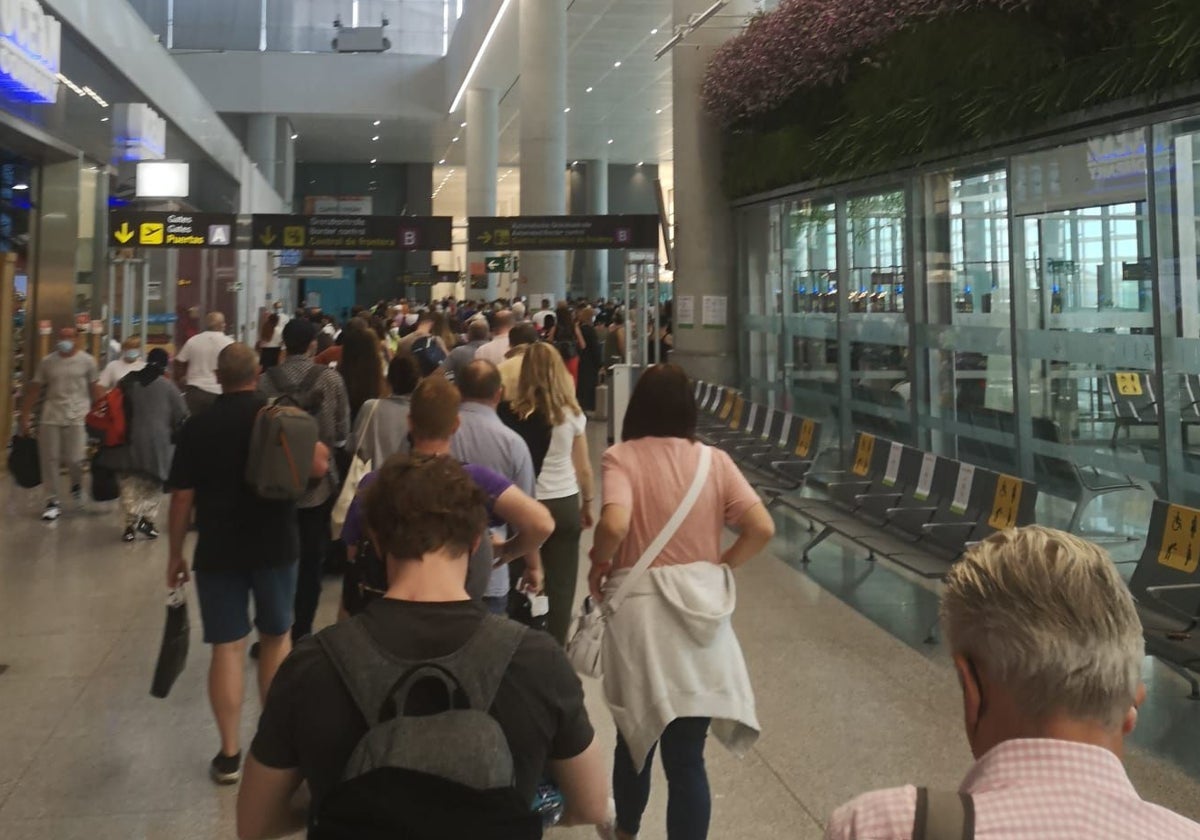

Since the adaptation process to the new European Union border control model started at Malaga-Costa del Sol Airport on October 20th, the situation was progressing smoothly. However, this changed on Thursday when a build-up of passengers, mainly heading to the United Kingdom, caused dozens of people to wait more than an hour to validate their passports. Normally, this procedure takes a maximum of 15 to 30 minutes, according to frequent travelers.
Follow Diario SUR on Google DiscoverSeveral affected individuals have contacted this newspaper to report on the tension generated yesterday, due to the fear of many passengers of being left behind as they were caught in the long queue. Therefore, they have requested more staff and resources to expedite these procedures as quickly as possible. "There were many stressed people because they saw they were going to miss their flights... This should not happen at a top-tier tourist airport like the Costa del Sol," they warn.
Asked about these complaints, sources from the Malaga airport admitted that yesterday morning there were "briefly waiting times a bit longer than usual." These sources could not specify the delay duration or the exact causes of this situation, which, in any case, is part of the process of implementing the new EU border controls. "It has been implementing for several days now and had always been smooth," claim the institution, although they admit that during the adjustment process of these new procedures "inconveniences may arise."
"The ETIAS (European Travel Information and Authorization System) has been implementing since October 20th and is developing normally, although there may be some congestion at specific times," add from the Government Sub-delegation. These controls are carried out by the National Police officers.
Brexit has complicated travel for the British, "who are not always aware that they are no longer in Schengen territory"
Moreover, this organization reminds that the situation mainly affects British citizens post-Brexit, who "are not always aware that they are no longer in (Schengen territory)" (the EU's border-free treaty, which requires them to undergo passport controls like travelers from other non-EU countries). "It would be good to educate about this issue."
What does it entail?
In any case, despite the initial inconveniences, the airport highlights the benefits that the new system will have for travelers, especially for frequent ones; it will also provide more security to EU countries regarding the people who intend to enter.
Europe has given a deadline of 180 days for the complete implementation, which will end on April 10, 2026. The so-called Entry/Exit System (EES) is an automated computer procedure that records the entries and exits of the Schengen Area by third-country nationals. The Interior Ministry is investing 83 million euros to adapt all Spanish border posts to the new technical requirements, which will continue to be managed by the National Police; while the Civil Guard retains its fiscal tasks.
Related news
Malaga airport tests new control of passengers from outside the EU
The EES records passport data, photo, fingerprints, and the date and place of entry or exit, and will replace the traditional manual stamping of passports with a digital record. For this, the border posts are equipped with specific computer equipment that scans these documents' data and automatically records the rest of the identification data.
During these six months of transition, the EES will coexist with the traditional manual stamping of passports, which will disappear once it is fully operational. Then, the new process will shorten the time spent at the control, in addition to providing reliable data on border crossings and allowing the detection of individuals who have exceeded the maximum duration of their authorized stay. For regular travelers, biometric data is collected only the first time, so their subsequent border crossings will be faster and smoother.

Latest news





Upcoming events
12
Nov
El Desembarco, la traición de Viriato at La Caja Blanca
12
Nov
HOMER El Mero Mero at Sala Trinchera Málaga
13
Nov
Marbella Startup Lab – Innovate & Collaborate
13
Nov
Candlelight: Coldplay & Imagine Dragons at Sala Fundación Unicaja María Cristina
13
Nov
Candlelight: Tribute to Ludovico Einaudi at Anantara Villa Padierna
Similar News

Málaga Airport Makes History with More Than Three Million Passengers in One Month
Málaga

Port of Málaga looks beyond its docks to support future growth
Málaga

Guide to the Virgen del Carmen Processions in Málaga and the Province
Málaga
