


What are the enigmatic symbols that have appeared at some EMT stops in Málaga?
The neighbors of Juan XXIII and Ortega y Gasset are surprised by the appearance of pictograms such as a fairy, a dragon, an elephant, or a comb on the bus shelters.
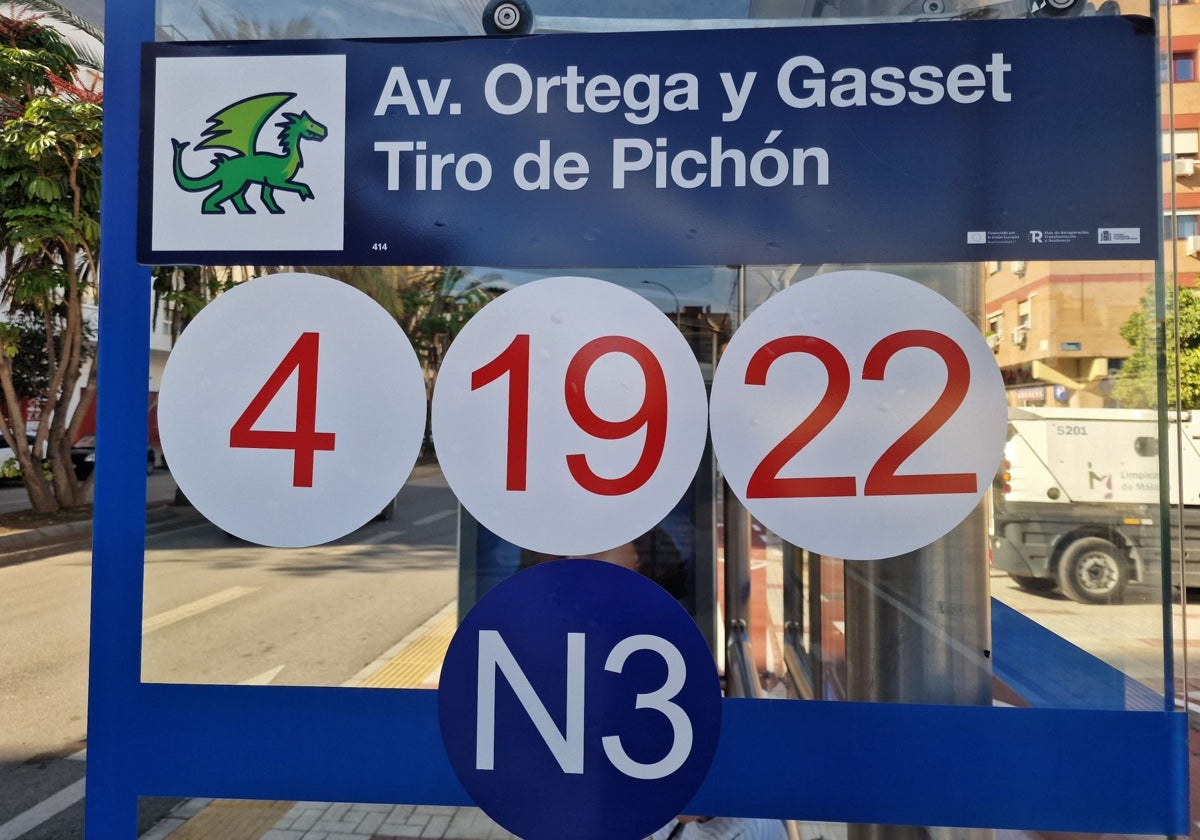

For weeks now, eye-catching logos have been appearing on the EMT bus stop shelters in the area of Juan XXIII, Ortega y Gasset, and Camino de San Rafael... featuring images of fairies, combs, decks of cards, elephants, and more. This rollout has caused confusion among some users, who have reached out to this newspaper to inquire about what it all means.
Expand
A montage of several pictograms at the bus stops, compiled by Escudero. JOSÉ MARÍA MARÍNIn fact, there has been speculation in the neighborhood these days about the possibility of it being an advertising campaign or a marketing action by some company that has rented these spaces. But the truth is far from it. The real reason is much deeper, as it is an initiative by the City Council of Málaga to promote the integration of people living with Autism Spectrum Disorder (ASD). Indeed, this project is funded by the European Next Generation funds.
The pictograms are visual tools that help people with ASD to communicate, follow routines, and better understand their environment. Thus, EMT has become involved in facilitating the mobility of these users, essentially by marking the destinations they are heading to with this new image code, as reported by the Málaga City Council.
According to this plan, the municipal company is deploying a network of accessible pictograms on its bus shelters that allow identifying references in their environment, a result of a collaboration between the municipal areas of Mobility and Social Rights with associations and entities that promote accessibility such as Aproinla, the Telephone of Hope, Málaga Acoge, and the Federated Society of Deaf People.
In this way, Málaga has become the first city to implement such a system on all lines of its urban bus network, which consists of 1,100 stops. The project is part of the second phase of the 'Málaga Saludable' plan presented by the City Council to the Next Generation EU funds call from the Ministry of Transport. The planned investment is 45,450 euros (90% funded by European funds).
The new signage in Málaga links the name of the stop with an image to facilitate its identification by all users
When the deployment is completed, all EMT stops will be marked with pictograms, so that the name of the stop is always linked to a specific image, which has been developed exclusively for the city of Málaga according to criteria of cognitive and perceptual accessibility.
What do the symbols mean?
In some cases, the images are quite evident, such as those alluding to medical centers, represented by stethoscopes, crosses, and bones, in the vicinity of the Care de Barbarela. This is also true for a stop near Santa Julia, close to the old prison and symbolized by a façade that closely resembles this historic building. However, there are others that are not so obvious and are designed to allow people with these capabilities to easily recognize their specific destination, without the need to read the name.
Expand
Another group of images collected by Escudero at the stops. JOSÉ MARÍA MARÍNIn this case, the logos act as a "proper name," and thus you can see a goat and a gnome at various stops in the La Rosa area on Ortega y Gasset; a dragon and an elephant (at different points in Tiro de Pichón); a badger and a unicorn (Cruz del Humilladero); a hedgehog (Santa Cristina); an owl (Paseo de los Tilos); a cupid (Santa Cristina); a lemon and a mermaid (at different points of Santa Julia); a fairy (Ortega y Gasset); a deck of cards (Camino de San Rafael) and a comb (Barriada El Carmen).
Ultimately, it is about creating a unique and exclusive graphic style that meets criteria of cognitive and perceptive accessibility. Moreover, it integrates semantic and visual elements characteristic of urban space, local culture, and heritage. The company responsible for designing these elements is Tropical SC, based in Zaragoza, which specializes in this type of work and has carried out augmentative communication projects for numerous cities and companies.

Latest news





Upcoming events
12
Nov
El Desembarco, la traición de Viriato at La Caja Blanca
12
Nov
HOMER El Mero Mero at Sala Trinchera Málaga
13
Nov
Marbella Startup Lab – Innovate & Collaborate
13
Nov
Candlelight: Coldplay & Imagine Dragons at Sala Fundación Unicaja María Cristina
13
Nov
Candlelight: Tribute to Ludovico Einaudi at Anantara Villa Padierna
Similar News

Málaga Airport Makes History with More Than Three Million Passengers in One Month
Málaga

Port of Málaga looks beyond its docks to support future growth
Málaga

Guide to the Virgen del Carmen Processions in Málaga and the Province
Málaga
