Costa del Sol News
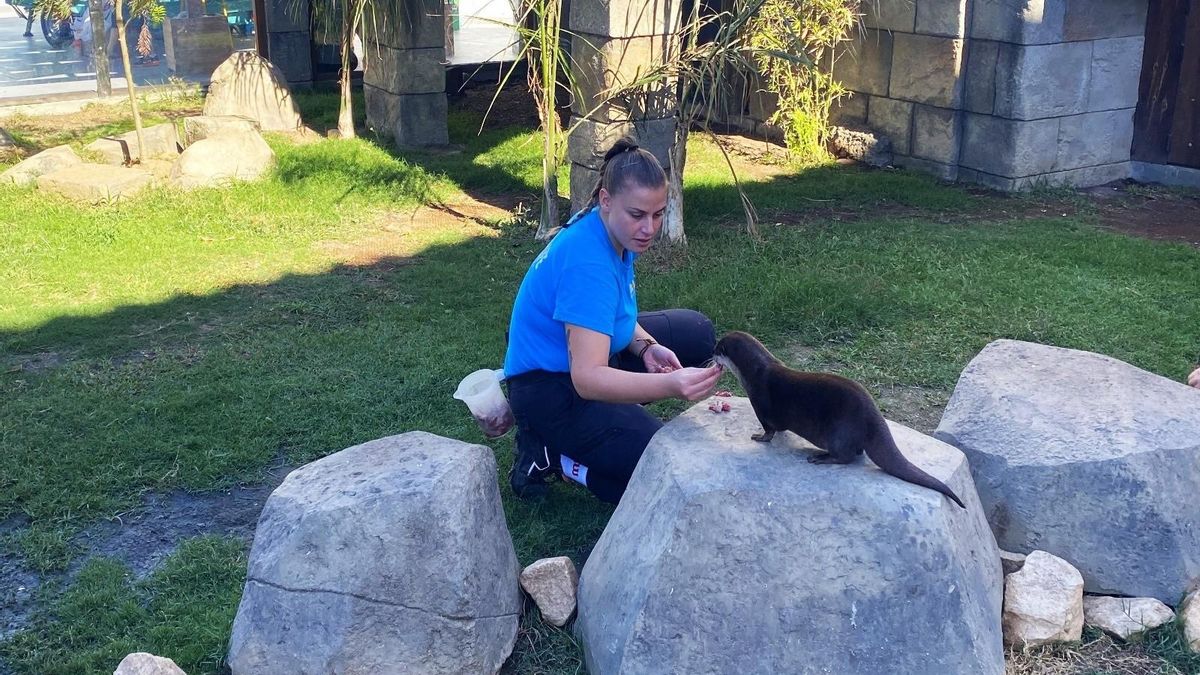
Sea Life Benalmádena has successfully completed its captive breeding program for the short-clawed otter, managing to house up to six new specimens of this protected species. Now, the time has come for one of these specimens to continue with the program at another Sea Life center, this time in Germany, specifically at Sea Life Oberhausen, where it will meet other specimens of the species to continue this otter protection program promoted by the Sea Life Trust organization.
The family of otters at Sea Life Benalmádena belongs to the branch of the Asian short-clawed otter, which has a high level of international protection. The achievement of breeding six specimens in captivity has been of utmost importance, thus strengthening the longevity and protection of a species that is threatened and supported by several significant international entities.
The journey of this specimen from Málaga to Germany will be carried out with the highest protections and guarantees. It's a 3,000-kilometer trip where the animal will be monitored at all times to ensure it travels safely and calmly, as detailed by the aquarium.
María Morondo, the Marketing Director of Sea Life Benalmádena, emphasized that "we have arranged all the means for the transfer of our otter Zoe to be carried out with the utmost safety, so that in Germany she can quickly find her new home and continue with the breeding program and form her own family."
The Asian short-clawed otter typically has a total body length of 85 centimeters and is the smallest otter species in the world. It lives in riverine habitats, freshwater, wetlands, and mangroves. It feeds on mollusks, crabs, and other small aquatic animals.
It lives in pairs, but family groups of up to 12 individuals have also been observed in many ecosystems. It is classified as Vulnerable on the IUCN Red List, the International Union for Conservation of Nature, and is threatened by habitat loss, pollution, and, in some areas, hunting as well. Since August 2019, it has been included in Appendix I of CITES, thus strengthening its protection regarding international trade.