


The sweetest village in Málaga that hides an enigmatic cemetery: it is one of the most unique places in the interior
Sayalonga, the loquat paradise, combines the flavor of Axarquía with a historical legacy full of secrets. Nestled among mountains and tropical orchards, this white village reveals its Andalusian past and a unique cemetery in Spain. Nature, tra
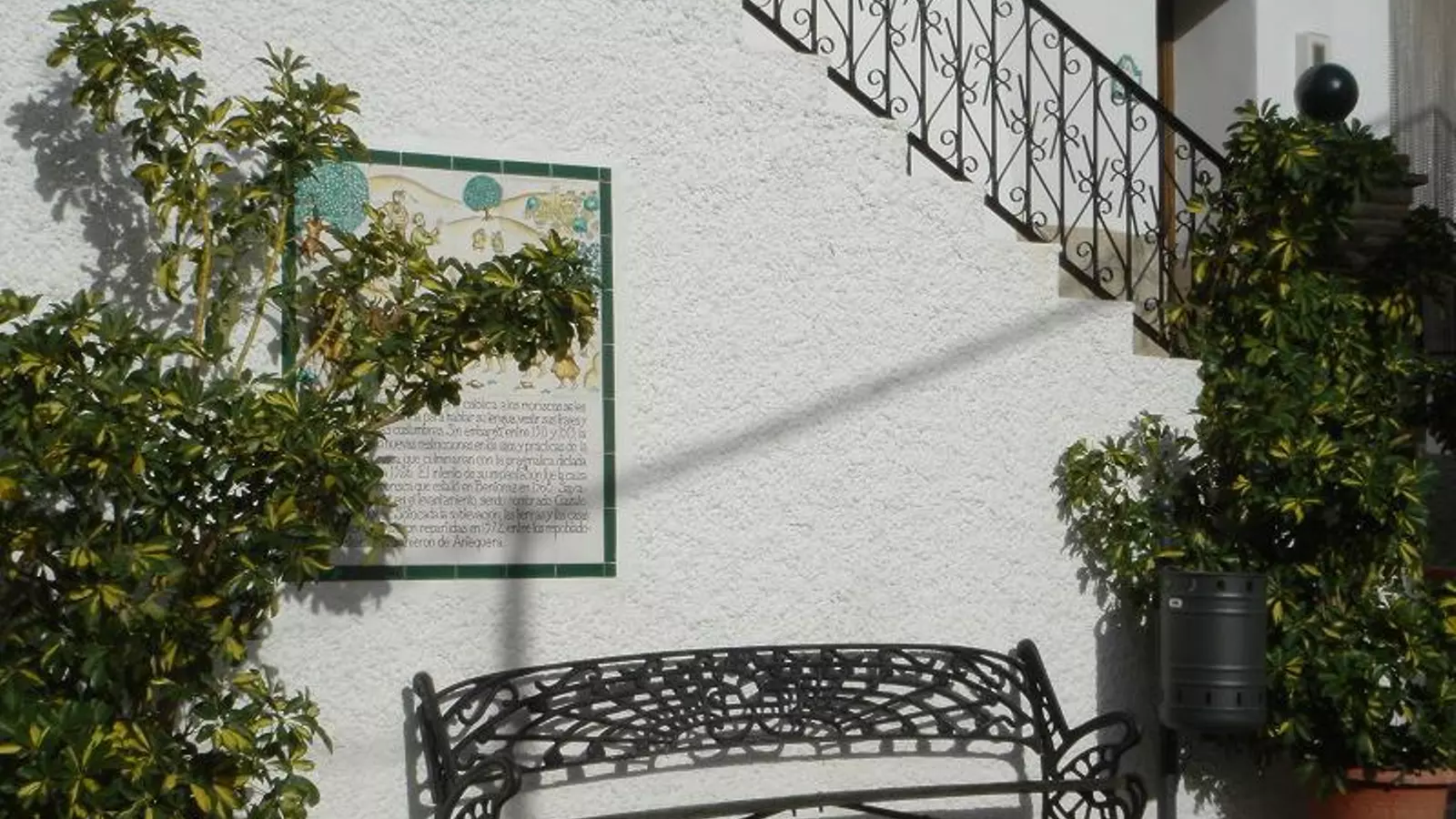

In the heart of Axarquía in Málaga, among mountains that overlook the sea and fields where green blends with the golden sun, stands Sayalonga, a small municipality that has managed to preserve its identity and history. Known as the "loquat paradise," this white village combines the flavor of its star product with an architectural and cultural legacy that makes it one of the most unique enclaves in the interior of Málaga.
Sayalonga has built its fame around a fruit that defines its landscape and economy: the loquat, a sweet and slightly acidic fruit that adapts perfectly to the temperate climate of the area. Thanks to the protection of the La Rábita mountain and the passage of the Céjula river, the municipality enjoys a Mediterranean microclimate that favors the cultivation of tropical fruits such as mango, avocado, cherimoya, and persimmon.
Each year, on the first Sunday of May, Sayalonga dresses up to celebrate Loquat Day, an event that pays tribute to local agriculture and the roots of Axarquía. Around its main squares, Plaza D. Rafael Alcoba and Plaza de la Constitución, the village multiplies its activity with a festive atmosphere featuring proclamations, music, exhibitions, and craft stalls. The day thus becomes a living display of the culture and traditions of the interior of Málaga, where agriculture intertwines with neighborhood coexistence.
White streets with Andalusian heritage
The urban layout of Sayalonga retains the essence of its Islamic roots, visible in its narrow, winding, whitewashed streets, inviting one to get lost among flowery facades and quiet corners. This network, inherited from the ancient Arab medinas, reveals the imprint of centuries of history.
Among its most notable constructions is the Church of Santa Catalina, a 16th-century Mudejar temple that combines Christian and Muslim elements in its architecture. Its tower, made of brick and Arab tile, stands as a point of reference in the town's profile, while its interior maintains the sobriety and charm typical of rural Andalusian churches.
The Church of Santa Catalina, in Sayalonga. / malaga.esAnother corner that surprises visitors is Alcuza Alley, considered one of the narrowest in the province. At just 50 centimeters wide, this passage epitomizes Andalusian urban planning: streets adapted to the terrain, designed to protect from the heat and maintain the privacy of the home.
The octagonal cemetery, symbol and mystery
Beyond its whitewashed streets and sweet agricultural production, Sayalonga holds a secret that distinguishes it from other towns in Málaga: its octagonal cemetery. This cemetery, unique in the province, surprises with its perfect geometric shape and the air of mystery that surrounds it.
Built in the 19th century, the octagonal cemetery of Sayalonga has sparked the interest of historians and visitors for its unusual design and the theories that link it to Freemasonry, an organization with a strong symbolic presence at that time. Its layout, with whitewashed walls and niches arranged around a central courtyard, offers a serene and harmonious image that contrasts with the usual austerity of rural cemeteries.
The round cemetery of Sayalonga. / malaga.esToday, this site has become one of the tourist emblems of the municipality, both for its historical value and the curiosity its structure arouses. Those who visit Sayalonga often stop before its white walls to contemplate the uniqueness of this space that, far from being gloomy, is an essential part of the local heritage.
Footprints of the past and charm of the present
The history of Sayalonga dates back to the Muslim era, when it was a small farmstead located on a route between Málaga and Granada. After the surrender of Vélez-Málaga in 1487, the town came under Christian rule, although it maintained a significant Moorish population for a time. During the rebellion of the Alpujarras, Sayalonga played a prominent role as a point of resistance, an episode that deeply marked the collective memory of the place.
The passage of centuries has not erased that identity. Today, the town combines its Andalusian past with the tranquility of a privileged natural environment. From its viewpoints, landscapes that link the mountains of Axarquía with the proximity of the Mediterranean Sea are visible, offering a panorama that summarizes the geographical diversity of the region.

Latest news





Upcoming events
12
Nov
El Desembarco, la traición de Viriato at La Caja Blanca
12
Nov
HOMER El Mero Mero at Sala Trinchera Málaga
13
Nov
Marbella Startup Lab – Innovate & Collaborate
13
Nov
Candlelight: Coldplay & Imagine Dragons at Sala Fundación Unicaja María Cristina
13
Nov
Candlelight: Tribute to Ludovico Einaudi at Anantara Villa Padierna
Similar News

Málaga Airport Makes History with More Than Three Million Passengers in One Month
Málaga

Port of Málaga looks beyond its docks to support future growth
Málaga

Guide to the Virgen del Carmen Processions in Málaga and the Province
Málaga
