Can 30 proper names define the history of Spain?
That selection is inevitable given the vastness of the past, but it can also be dangerous and biased, especially when it is carried out by institutions without an academic nature or intention.

We often look to the past for a return of our image. But the past is not a mirror: in the words of American geographer and historian David Lowenthal, it is a strange country. And a very complex one. That is why it is necessary to make a selection of facts and characters to talk about it.
This selection is inevitable given the immensity of the past, but it can also be dangerous and biased, especially when it is carried out by institutions with no academic nature or intention.
The historical figures and events that give names to our streets, are immortalized in statues or monuments, are commemorated in festivities or remembered in series, documentaries, television programs or press articles are nothing more than a subjective (and sometimes arbitrary) selection of those who claim to represent the values on which the “we” is built.
The problem is that this selection (which is also echoed in school history), often involves creating an image of the past to justify what we want to be now. And this involves the perpetuation of master narratives: a standardized discourse, often sponsored by institutions, about how countries have been formed. These master narratives tend to defend the idea that from the beginning people were, thought and felt as they are now. This is what is known as “essentialism”.
Teachers' image of the past
To try to find out what image of the past future teachers of the primary education stage (which children in Spain receive between the ages of 6 and 12) have of the past, a group of researchers from different Spanish universities launched the EduHicon project. We surveyed more than 600 teachers in training and active teachers from all over Spain.
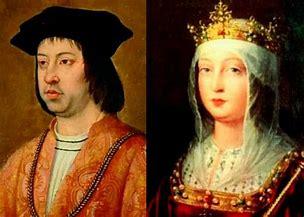
The participating trainee teachers, who could freely choose who were the four most important figures in the history of Spain, agreed on about thirty figures, who accounted for more than 83% of the answers. In order of frequency, they were: Franco, Christopher Columbus, Juan Carlos I, Isabella the Catholic, Miguel de Cervantes, the Catholic Monarchs, Adolfo Suarez, Miguel Primo de Rivera, Isabella II, Federico Garcia Lorca, Philip II, Clara Campoamor, Napoleon, Charles I, Joanna I of Castile, Alfonso X, Philip VI, Don Pelayo, Ferdinand VII, El Cid and Pablo Ruiz Picasso.
These characters give a very specific image of the past: almost totally masculine and dominated by political characters (mainly kings and military men), in which women are relegated to the background.
Where are the queens?
The answers of the survey coincide with the role of women in history textbooks, reduced to groups or companions of male characters.
But current historical research has put on the table the important role played by monarchs throughout the history of Spain, whether they were holders of the kingdom, regents, mothers of kings or consorts, to focus specifically on the characters related to power, as did those who responded to our questions.
None of the queens who played a key role in the government of their territories (Urraca, Berenguela, Blanca de Castilla, Violante de Aragón, María de Molina or Isabel de Farnesio, among others) are mentioned in this list of the thirty most important figures in the history of Spain.
Historical references are important not only because they surround us in the names of streets or squares, in statues or festivities: they help action. Making figures visible is crucial because they inspire and provide arguments for action. When Isabella I wanted to justify her access to the throne, being a woman and having other pretenders like her own husband, in her arguments she resorted to historical female figures that preceded her (Urraca, Sancha de León, Berenguela and others) to convince the nobles to support her candidacy to the throne.
Change: only through violence?
Apart from this androcentric vision, most of the characters cited are linked to situations of violence (wars, invasions, coups d'état, repression...). The fact that Francisco Franco is the most cited character is a good example of this.
This happens because, on the one hand, the traumatic nature of violence means that those characters or actions linked to situations that have generated an important emotional impact tend to be remembered more frequently.
Also because these characters tend to appear in textbooks related to those warlike or violent actions they carried out: the treatment of these wars in school textbooks generates a utilitarian idea of violence. Thus, in historical narratives, wars, conquests, rebellions, revolutions and repressions are usually considered as the main factors of history.
The problem arises when, instead of highlighting the responsibilities and negative consequences such as destruction, deaths and suffering of certain groups, greater emphasis is given to the social, economic or political advances that these traumatic changes supposedly entailed.
This association (character-violent acts-change) does not offer alternatives or contrary opinions to the implementation of violence. Therefore, for characters related to the events that took place in Spain between 1936 and 1939, Franco is imposed in the collective imagination over Unamuno, Amparo Poch and those who did not consider war as the only way to resolve conflicts.
Napoleon, El Cid, Don Pelayo, Ferdinand VII... stand out, above all, for their violent processes. But those voices opposed to violence as the only means to resolve conflicts also existed, and should not be forgotten so as not to generate the idea that violence is the best, if not the only means, to resolve differences and move forward.
History as a cohesive force
Finally, the characters selected offer a very common and stereotyped image in the history of Spain, in which there is a tendency to praise those who have participated in the forging and creation of the unity of the nation. From Don Pelayo, through the medieval Christian kings, the Catholic Monarchs, the forgers of the Empire and the centralist Bourbons, to the protagonists of the fight against Napoleon, the creation of the Liberal State and, finally, the traumatic evolution of the Civil War, the dictatorship and the Transition.
The selection ignores a multitude of voices that show the diversity of Spanish history: it does not take into account dissidents, minorities, heterodox, marginalized or those who have been considered “the others”: Hispano-Muslims, Jews, Moors....
The selection shows that history is used more as an element to cohere the group, endowing it with values that respond to current “needs”, than as a critical knowledge of the past.
Beyond 'great men' and names
In order for our vision of history to make visible characters beyond the “great men”, we have launched the Lethe project for use in the school context. This project aims to guide teachers to introduce diversity and multiperspective in history lessons and to implement active and creative methods. To do so, it pays attention to the role of women, children or migrants as aspects that fight against the simple vision of history that can be summarized in just a handful of names.
We want to show a plural and complex past. Dynamic and changing. To show societies that adapt and change. To avoid, in short, showing a past that is limited to the past.

Latest news





Upcoming events
12
Nov
El Desembarco, la traición de Viriato at La Caja Blanca
12
Nov
HOMER El Mero Mero at Sala Trinchera Málaga
13
Nov
Marbella Startup Lab – Innovate & Collaborate
13
Nov
Candlelight: Coldplay & Imagine Dragons at Sala Fundación Unicaja María Cristina
13
Nov
Candlelight: Tribute to Ludovico Einaudi at Anantara Villa Padierna