


No yachts or luxury, this unique corner of Malaga dates back to the 2nd century and now is the best time to visit and discover it.
Between Marbella and Estepona lies one of the best-preserved Roman treasures of the Costa del Sol. The Las Bóvedas Baths in San Pedro de Alcántara reveal the footprint of the Roman Empire by the Mediterranean. A journey back in time to the
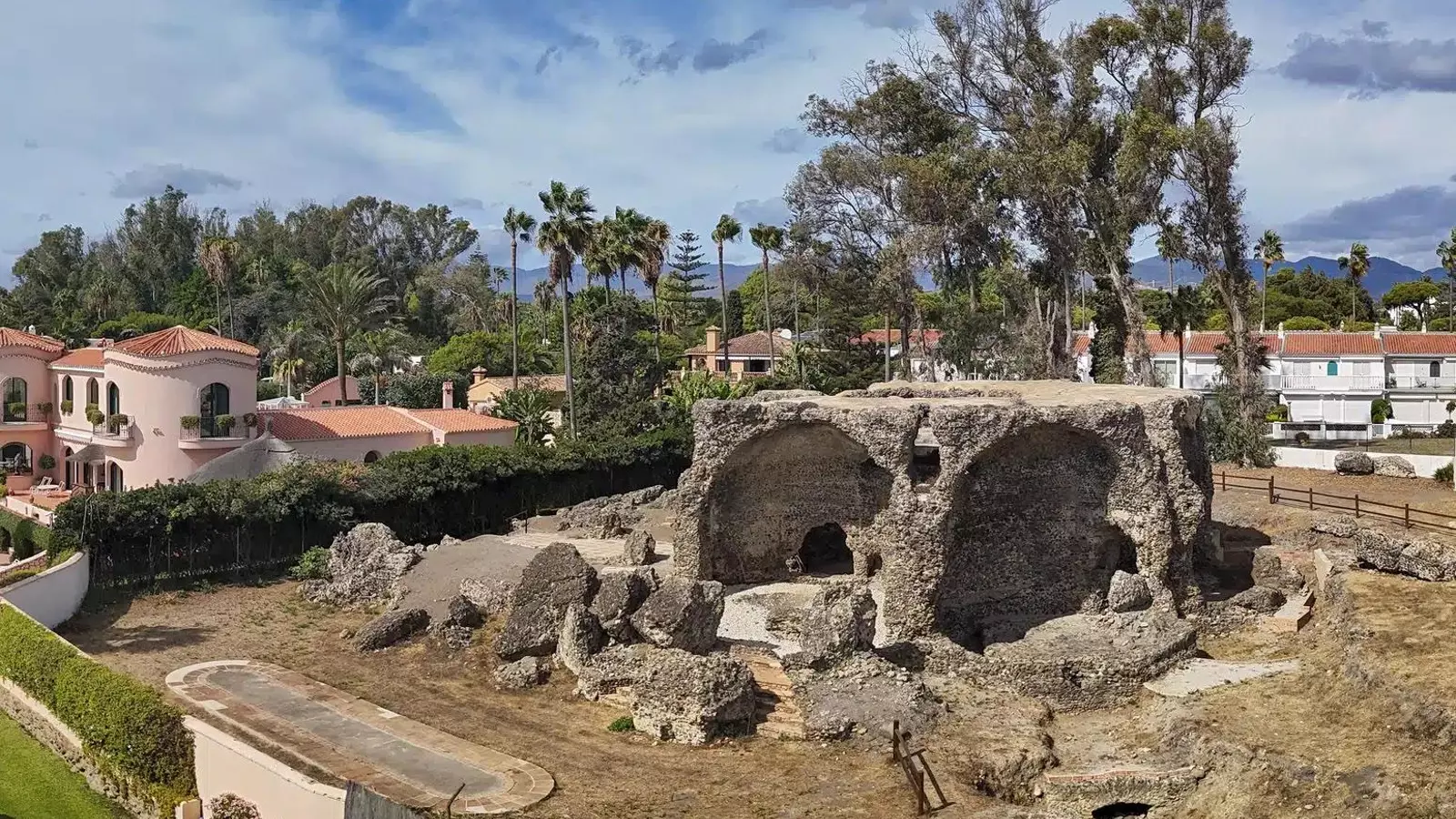

The province of Málaga is synonymous with beaches, sea, and modernity, but in one of its most famous corners, San Pedro de Alcántara, a treasure hidden from the contemporary luxury of Marbella can be found. There, where the Mediterranean meets history, stand the Las Bóvedas Baths, a Roman archaeological complex that almost perfectly preserves the splendor from over seventeen centuries ago. October is one of the most suitable times to explore this unique heritage space, when the mild weather allows for a calm enjoyment of the rich historical and architectural treasures it holds.
The Las Bóvedas Baths rise on the right bank of the Guadalmina river's mouth, in an environment that combines coastal landscape and historical memory. This thermal complex, dated back to the 3rd century AD, is one of the best-preserved examples of Roman bath architecture in the southern Iberian Peninsula. Its discovery in 1926 revealed the magnitude of a building that, according to specialists, would have been part of the ancient Roman city of Cilniana, a city of which little remains but which played a significant role in the Mediterranean trade routes.
The site is located in a strategic area, close to the coast and other historically significant constructions, such as the Las Bóvedas watchtower, built in the 16th century as a defense against pirate incursions, or the salting pools, used to produce the famous garum, a highly prized sauce in the Roman world. This archaeological environment reflects the continuity of human occupation on the Malaga coast for over a thousand years, bringing together vestiges of different civilizations at a single site.
An Architectural Gem of Two Millennia
The main building of the baths combines different construction techniques that demonstrate the mastery of Roman engineers. Among them, the opus latericium, based on the use of bricks compacted with lime mortar, and the opus incertum, formed by irregularly shaped stones perfectly fitted together. These techniques provided solidity and durability, which is why parts of the vaults and two levels of the complex are still standing.
The layout of the building revolves around a central octagonal room, a design that responded not only to functional criteria but also to aesthetic and symbolic ones. From this core, various interconnected rooms housed the different thermal spaces—the frigidarium, the tepidarium, and the caldarium—each dedicated to a specific type of bath within the Roman ritual. In the eastern end of the building, the remains of the underground heating system, with ovens and channels through which hot air circulated, are still visible, showcasing the technical ingenuity of the time.
Parts of the original flooring are still visible, with fragments of mosaics formed by large tesserae that suggest the refinement and social status of the users of this complex. It was not just a space for hygiene, but also a place for social and cultural gatherings, where Roman citizens conversed, negotiated, or enjoyed leisure in the community.
Materials from Torcal and the Art of Building with Stone
One of the most unique aspects of the Las Bóvedas Baths is the use of oolitic limestone from the Torcal de Antequera, a rock with a unique texture and tone that was highly valued at the time for its resistance and beauty. This material was used to create a system of raised floors in certain areas, reproducing the octagonal shape of the central space and improving heat distribution. The use of this stone, transported from the interior of the province, demonstrates the importance of trade routes and the logistical organization of the Roman Empire in southern Hispania.
Details of the Roman Baths of Las Bóvedas, in San Pedro Alcántara. / malaga.esThe choice of materials and the careful interior design indicate that the San Pedro de Alcántara baths not only fulfilled a practical function but also an aesthetic one. The architectural harmony, mosaics, vaulted spaces, and the combination of light and shadow inside make this complex an exceptional testimony to the Roman way of life.
An Archaeological Complex of Great Historical Value
Alongside the thermal building, the archaeological area preserves other structures that complete the understanding of the settlement. Among them, a cold water pool located north of the complex stands out, linked to the thermal cycle that culminated with a revitalizing bath. These routes were considered healthy and had a deep social meaning, reflecting a culture that understood physical and spiritual well-being as part of everyday life.
Today, the Las Bóvedas Baths represent one of the most notable sites of Roman heritage in Málaga. Their conservation allows us to understand the magnitude of the Roman presence on the Costa del Sol, a past that is still perceived in the stone remains, in the vaults that give them their name, and in the quiet coastal environment that surrounds them.

Latest news





Upcoming events
12
Nov
El Desembarco, la traición de Viriato at La Caja Blanca
12
Nov
HOMER El Mero Mero at Sala Trinchera Málaga
13
Nov
Marbella Startup Lab – Innovate & Collaborate
13
Nov
Candlelight: Coldplay & Imagine Dragons at Sala Fundación Unicaja María Cristina
13
Nov
Candlelight: Tribute to Ludovico Einaudi at Anantara Villa Padierna
Similar News

Málaga Airport Makes History with More Than Three Million Passengers in One Month
Málaga

Port of Málaga looks beyond its docks to support future growth
Málaga

Guide to the Virgen del Carmen Processions in Málaga and the Province
Málaga
