From Taíno Drums to Bad Bunny: The Musical Legacy that Defines Puerto Rico
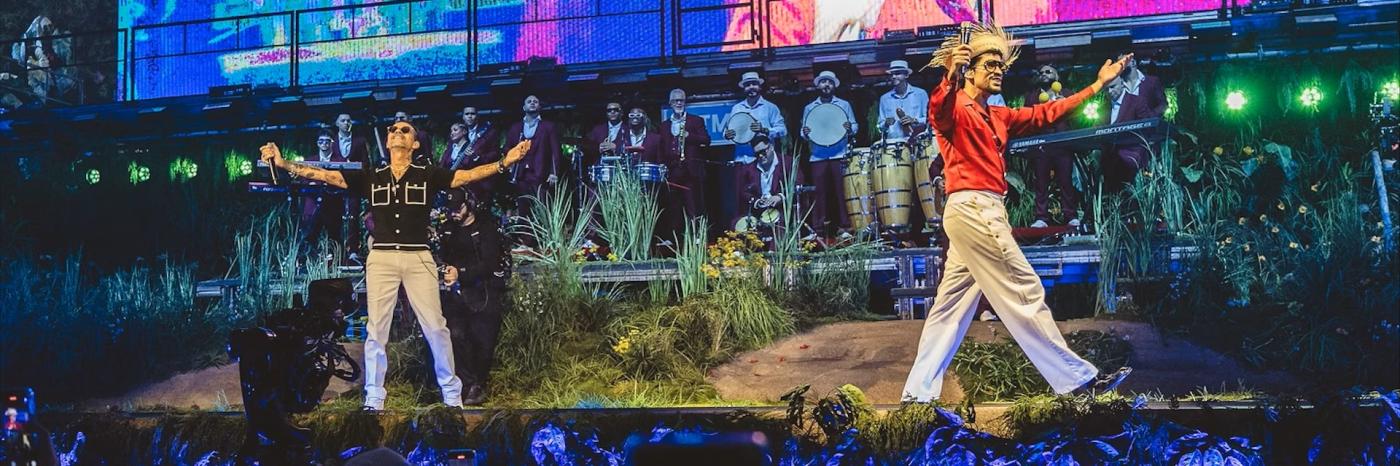
Marc Anthony and Bad Bunny at the last concert that the latter gave during his one-month residency in Puerto Rico.

Throughout history, the relationship between reggaeton and traditional Latin music has been complex. While certain sectors saw its emergence as a threat to salsa, others recognised the ties that bound them, interpreting them as an opportunity for mutual development.
Both genres, in their heyday, have reflected the experiences of urban life, and since its inception, reggaeton has maintained a connection to its roots, a fact that has recently been evidenced by the latest albums from two of its most prominent figures: Rauw Alejandro with Cosa nuestra (2024) and Bad Bunny with Debí tirar más fotos (DtMF) (2025).
The latter surprised the world not only by reaffirming the artist's global success, but also because it turns urban music into a direct tribute to Puerto Rico's cultural heritage. Between historical samples, collaborations with traditional musicians and sonic nods to centuries of history, the album brings the island's musical richness to the fore.
In “WELTiTA”, Bad Bunny mixes Latin hip hop with plena.
A crossroads of cultures
Puerto Rican music was born from the encounter of three great traditions: the Taíno, African and Spanish. This fusion, which began in the 16th century, not only defined the character of the island, but also laid the foundations for all its subsequent musical genres.
The Taínos contributed their areítos, collective songs accompanied by maracas and simple drums, which conveyed mythical and community stories. During the Spanish Conquest, many rhythmic and ceremonial elements survived, merging with other traditions. The repetitive patterns and use of simple percussion instruments are still reflected in current genres.
Africans, brought as slaves, introduced polyrhythm, call-and-response singing, and barrel drums. From their tradition, bomba and plena were born. Bomba is both dance and music: the drum responds to the dancer's movements, while maracas and cuás complete the base. Plena, known as ‘sung newspaper,’ uses three tambourines (requinto, punteador, and seguidor) to narrate everyday life, from celebrations to social commentary.
Don't just consume news, understand it.
Subscribe to the newsletter
The Spanish brought the guitar, the lute and poetry in décima form, the basis of jíbara music from the countryside. Over time, the Puerto Rican cuatro, with its metal strings, became a national symbol. Genres such as the seis and the aguinaldo combine Iberian melodies with poetic improvisations, where the troubadour sings décimas accompanied by the cuatro, the güiro and the guitar.
From tradition to modernity
In the 19th century, Puerto Rico saw the birth of composers who combined European and popular music. Dances and contradanzas coexisted with Creole forms, while music printing and the first recordings helped spread these expressions throughout the island. During the 20th century, the Puerto Rican diaspora in New York gave rise to salsa, a Caribbean synthesis combining bomba, plena, Cuban son and jazz. Orchestras such as El Gran Combo de Puerto Rico and La Sonora Ponceña took this music to international stages, and figures such as Héctor Lavoe and Willie Colón turned the migrant experience into universal anthems.
'Fuego en el 23', one of the hits by the Puerto Rican orchestra La Sonora Ponceña.
Musical development was reinforced by the creation of institutions: the Symphony Orchestra (1958) offered classical and Caribbean repertoires; the Conservatory of Music (1960) trained new generations of performers; and the Casals Festival attracted international figures, connecting the island with global musical trends without losing its local identity.
Reggaeton and roots
The arrival of reggaeton in the 1990s transformed the urban music scene. Many feared that it would erase traditional roots, but artists such as Tego Calderón vindicated bomba and plena within the genre. Don Omar and Daddy Yankee collaborated with salsa artists, and projects such as Los Cocorocos (2006) showed that urban and folk music could coexist. These fusions paved the way for global artists to unapologetically incorporate Puerto Rican musical history.
On the album Los Cocorocos, they reinterpret the song “Che Che Colé”, popularised by Héctor Lavoe and Willie Colón, this time performed by Víctor Manuelle and Tego Calderón.
In this context, Debí tirar más fotos presents itself as a work that goes beyond the commercial. Bad Bunny does not use his roots as mere decoration: he places them at the centre of the album. In “CAFé CON RON”, he collaborates with Los Pleneros de la Cresta to highlight the plena; in “BAILE INoLVIDABLE”, he records a salsa track lasting more than six minutes that evokes the “Universidad de la Salsa”; in ‘PIToRRO DE COCO,’ he revives the voice of Chuíto el de Bayamón, an icon of jíbara Christmas music. In ‘NUEVAYoL,’ he quotes El Gran Combo and their classic ‘Un verano en Nueva York,’ paying tribute to the diaspora.
El disco también integra elementos jíbaros, con décimas y el sonido del cuatro, mostrando que la música campesina puede convivir con sintetizadores y beats urbanos.
Bad Bunny aprende a bailar salsa en el videoclip de ‘BAILE INoLVIDABLE’.
Un legado que sigue vivo
La historia musical de Puerto Rico es una línea continua. Desde los areítos taínos hasta las salas de concierto, cada época ha sumado capas sin borrar las anteriores. A finales del siglo XIX, ya existían compositores que combinaban folclore con formas modernas; en el siglo XX, trovadores, pleneros y salseros convivieron con el auge de la música sinfónica. Hoy, reguetón, bolero, rock, plena y salsa coexisten, alimentados por escuelas, festivales y archivos que mantienen vivas estas tradiciones.
Con DtMF, Bad Bunny enlaza ese pasado con el presente: muestra que la música de Puerto Rico no necesita elegir entre tradición y modernidad. Puede ser global sin dejar de ser profundamente local, y puede hablarle al mundo mientras reafirma quiénes son los puertorriqueños y de dónde vienen.
· Puerto Rico
· salsa
· Bad Bunny
· música latina

Cláusula de Divulgación
Carmen del Rocío Monedero Morales no recibe salario, ni ejerce labores de consultoría, ni posee acciones, ni recibe financiación de ninguna compañía u organización que pueda obtener beneficio de este artículo, y ha declarado carecer de vínculos relevantes más allá del cargo académico citado.
Nuestros socios

Universidad de Málaga aporta financiación como institución colaboradora de The Conversation ES.

Latest news





Upcoming events
12
Nov
El Desembarco, la traición de Viriato at La Caja Blanca
12
Nov
HOMER El Mero Mero at Sala Trinchera Málaga
13
Nov
Marbella Startup Lab – Innovate & Collaborate
13
Nov
Candlelight: Coldplay & Imagine Dragons at Sala Fundación Unicaja María Cristina
13
Nov
Candlelight: Tribute to Ludovico Einaudi at Anantara Villa Padierna