


Three ancient necropolises in Málaga you can visit: history, nature, and millennial legacy
The Eagles of Campillos, Bobastro, and Castillépolis reveal the most remote past of the provinceCampillos, Ardales, and Pizarra hold millennial vestiges that merge history, art, and natureTombs carved into the rock, hidden basilicas

The province of Málaga harbors corners where time seems to have stood still. Places where history, nature, and silence coexist in perfect harmony. The ancient necropolises of Málaga are an essential part of this lesser-known heritage, locations that blend the legacy of past civilizations with the serenity of unique natural landscapes.
Often located far from urban hustle, these ancient burial grounds offer visitors an evocative environment full of meaning. They are sites where stones tell stories of thousands of years, and where visitors can reflect, disconnect, and connect with the most remote memory of humanity. In Málaga, three of these necropolises stand out for their historical value and integration into the landscape: the Ruins of Bobastro in Ardales, the Necropolis of las Aguilillas in Campillos, and the site of Castillépolis in Pizarra.
Bobastro (Ardales): the legacy of Omar ibn Hafsún and the mystery of the rock
In the heart of the Guadalteba Natural Park, the Ruins of Bobastro stand as an exceptional testimony to the medieval history of Málaga. This site, closely linked to the figure of Omar ibn Hafsún, combines legend and reality in a landscape of stunning natural beauty.
Aerial view of the ruins of Bobastro. / ardales.Bobastro was for nearly half a century the stronghold of Ibn Hafsún, who rebelled against the Umayyad power of Córdoba. Here, he carved a Christian basilica directly into the rock, a monument unique in the context of Al-Ándalus for its symbolism and complex architectural structure. After the conquest of the enclave by Abderramán III, the Christian monuments were destroyed, and according to chronicles, the bodies buried there were exhumed.
Legend has it that when Ibn Hafsún's tomb was found, his body was oriented towards Mecca, which fueled theories about his final conversion to Islam. Beyond the stories, it is certain that Bobastro remains one of the most suggestive historical spaces in the province, surrounded by a natural landscape of mountains and cliffs that invite contemplation.
Necropolis of las Aguilillas (Campillos): the eternal rest of the Chalcolithic
A short distance from Ardales, in Campillos, lies the Necropolis of las Aguilillas, one of the oldest funeral sites in the province. Located at the confluence of the Guadalteba, Guadalhorce, and Turón rivers, this necropolis dates from the Final Chalcolithic and the Early Bronze Age (between 2100 and 1900 B.C.) and is situated on a Miocene promontory, about 500 meters above sea level.
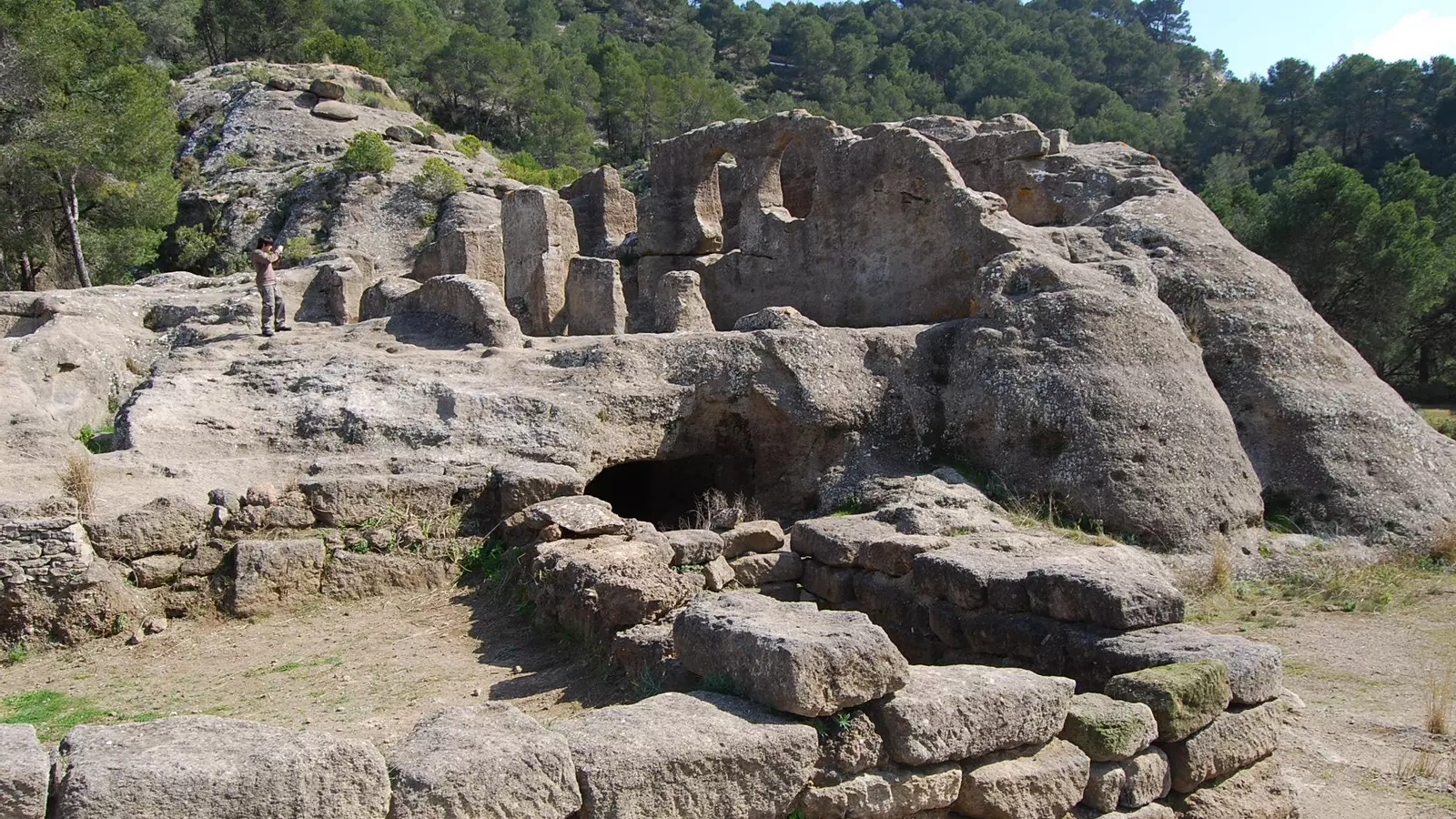
An image of the necropolis of Las Aguilillas / malaga.esThe complex consists of seven structures carved into the sandstone, with corridors leading to main chambers. These spaces, symbolically interpreted as a return to the womb, reflect the worldview of the ancient communities that inhabited the area. Inside, funerary goods consisting of ceramics, amulets, ornaments, and some of the first metal tools of the region, such as copper spear tips, have been found.
Las Aguilillas is part of the archaeological complex of Guadalteba, along with Bobastro and the Cave of Ardales, three notable examples of troglodyte architecture in the interior of Málaga. According to studies, this necropolis was likely associated with the settlement of El Castillón, reinforcing its importance within the network of prehistoric settlements in the area.
Castillépolis (Pizarra): a Mozarabic legacy carved in stone
In the municipality of Pizarra, the site of Castillépolis offers another perspective on Málaga's past, with remains spanning from the Roman era to the Mozarabic period. In its vicinity, traces of ancient Christians who lived under Andalusian rule have been found, contemporaneous with other nearby communities of the Guadalhorce Valley.

Latest news





Upcoming events
12
Nov
El Desembarco, la traición de Viriato at La Caja Blanca
12
Nov
HOMER El Mero Mero at Sala Trinchera Málaga
13
Nov
Marbella Startup Lab – Innovate & Collaborate
13
Nov
Candlelight: Coldplay & Imagine Dragons at Sala Fundación Unicaja María Cristina
13
Nov
Candlelight: Tribute to Ludovico Einaudi at Anantara Villa Padierna
Similar News

Málaga Airport Makes History with More Than Three Million Passengers in One Month
Málaga

Port of Málaga looks beyond its docks to support future growth
Málaga

Guide to the Virgen del Carmen Processions in Málaga and the Province
Málaga
