


An engineer from Madrid offers to shelter horses to prevent them from being slaughtered
She would keep the animals at her private equestrian center to ensure they had a good life without having to work.
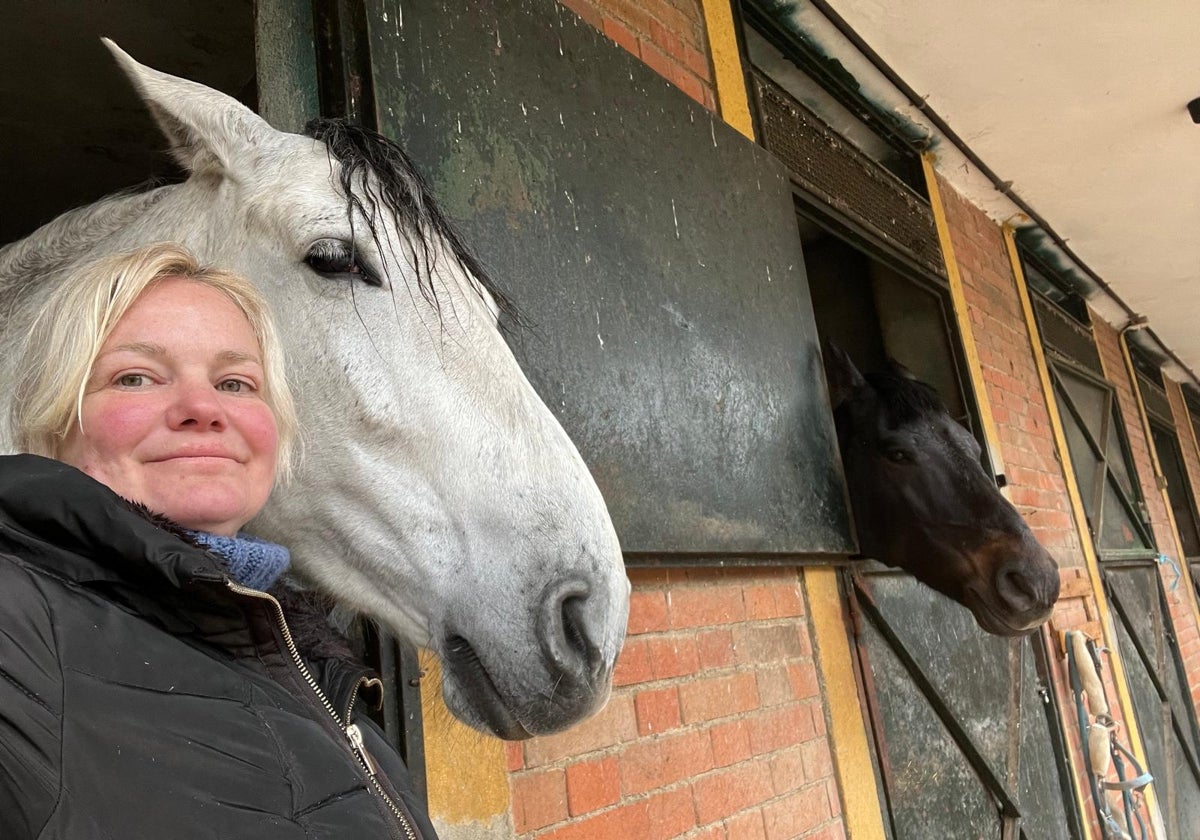

Tania Pamies is a lover of horses. Although her profession has nothing to do with them—she is a civil engineering doctor—the mere possibility of seeing them suffer deeply affects her. Therefore, she has not hesitated to offer to take in the horses that can no longer work in Malaga and whose fate would have been the slaughterhouse.
After reading that the Malaga City Council has revoked the 25 remaining active horse carriage licenses and that some of the carriage drivers suggest they might be slaughtered, Tania has contacted SUR to offer her facilities: "Let them give them to me and I will give them the good life they deserve," she says. She even adds, "I will go pick them up if necessary, but let them not end up in the slaughterhouse." Those interested can contact her through her Instagram profile 'lasencinasdejimena'.
This volunteer from Madrid, who lives in the municipality of Valdemorillo, has a private equestrian center with stables, paddocks, and a track for them, so she could take care of them without any problems. Currently, she has a mare that she uses for riding and another older horse that she cares for and maintains. "I have a soft spot for them," she declares.
She assures that it would not be for commercial use or for giving lessons, but so that they can live a good life in freedom. "I have been with horses all my life and I am used to seeing many people who, when they stop profiting from them, kill them," she laments.
She assures that horses "are wonderful beings" and that after having led such a hard life "they deserve a place to rest and spend the remaining time they have." She would take care of all the maintenance, feeding, and care. "The least they (the owners) can do is thank the horse for all it has given them over the years and find them an ethical way out," she adds.
Regarding the measure approved in Malaga, she thinks it is very good, although she believes that the prohibition alone is not enough, but it is equally important to ensure that the horses have a good end. "If you see their little legs, they are swollen because they have arthritis from the work they have done; it's time for them to find a good life."
"Very delicate" animals
Regarding the possibility that many people mention of ideally leaving them in the forest, Tania assures that this is not possible because as domesticated animals they would die without finding food. She explains that "they are very delicate, they need to eat on their schedule and their forage: unless they have been raised in freedom."
Tania's offer comes just two days after the mayor of Malaga, Francisco de la Torre, announced the end of horse-drawn carriages as a tourist activity in the city after compensating them with more than four million euros. The problem is that some of the license holders have stated that they do not see their maintenance as viable and that some of them might be slaughtered.
Following this initial announcement, the mayor insisted yesterday on the need to make this decision because "the image of those animals working like that provokes a certain rejection by the local population and also those from outside" and considered that "there are more interesting, more civilized alternatives than taking them to slaughter for meat."
Neighborhood Welfare
Those who have also applauded the prohibition of horse-drawn carriages are the residents of the Historic Center. The Association of Neighbors of the Old Center of Malaga considers that the measure is "positive and aligned with respect for animal welfare."
However, they wanted to highlight that the residents of the Centro Histórico neighborhood "continue to suffer conditions that severely affect our quality of life: excessive noise, insecurity, and problems derived from the concentration of nightclubs in the area."
In this line, they have urged the City Council to continue on this path of protection, this time towards the citizens, complying with the PGOU of 1997, which establishes the incompatibility of nightclubs in residential areas, and respecting the motion approved by the municipal plenary—with the support of all groups except the Popular Party—to relocate these establishments where they do not disturb the neighborhood.

Latest news





Upcoming events
12
Nov
El Desembarco, la traición de Viriato at La Caja Blanca
12
Nov
HOMER El Mero Mero at Sala Trinchera Málaga
13
Nov
Marbella Startup Lab – Innovate & Collaborate
13
Nov
Candlelight: Coldplay & Imagine Dragons at Sala Fundación Unicaja María Cristina
13
Nov
Candlelight: Tribute to Ludovico Einaudi at Anantara Villa Padierna
Similar News

Málaga Airport Makes History with More Than Three Million Passengers in One Month
Málaga

Port of Málaga looks beyond its docks to support future growth
Málaga

Guide to the Virgen del Carmen Processions in Málaga and the Province
Málaga
