


The 'Cerbantes' trilogy concludes with the literary years of the author of 'Don Quixote'
Álvaro Espina closes the novelist's life with episodes such as the Ezpeleta crime in Valladolid.
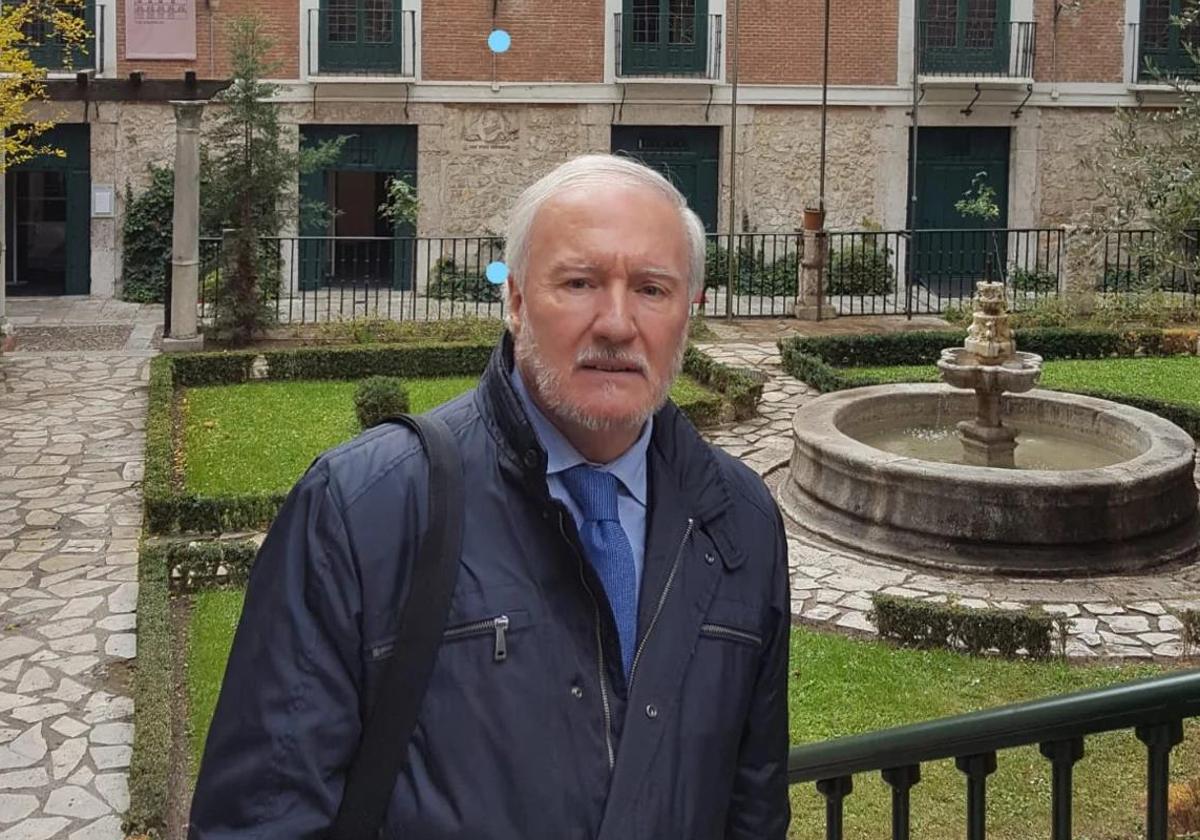

With 'Cerbantes: The Combat of Letters,' Álvaro Espina (Ourense, 1948) puts the final touch to his life's work: an ambitious trilogy about the life of Miguel de Cervantes, to whom he has dedicated the bulk of his life since his doctoral thesis was suggested to him in the seventies by his mentor José Antonio Maravall.
Today, after 'Cerbantes in the House of Évoli' and 'Cerbantes: Money Changer, Sailor, Spy, Captive', the essayist signs off on the culmination of this series of novels about the figure of the author of Don Quixote, which are heavily dialogued and look, in the final book, at the last vital episodes of the novelist from Alcalá de Henares, including his tireless literary output and the Ezpeleta crime in Valladolid.
"Cervantes' life is so varied, due to being poor and making a living, that much of what he lived before publishing anything already justifies the previous novels," Espina points out. Indeed, in his first volume, published in 2017, the stage lived in three key Cervantine years; from 1566 to 1569, as a tutor to the daughter of the princes of Évoli, is covered.
Five years later, the second book covers the many jobs of Cervantes in the following twelve years; until 1581, including his captivity at the hands of Berber pirates in Algiers or his espionage tasks. This last book already addresses Cervantes' friendship with other great contemporary writers (such as Lope or Góngora), the creation of his most representative works (from 'La Galatea' to the various Exemplary Novels, and, of course, Don Quixote) and various life episodes with his family and his day-to-day life.
"There is a clear intention to demystify Cervantes' image, making him a relatable man," the author explains. Indeed, aside from his acclaimed literary works, Cervantes (or "Cerbantes," as he signed) had to navigate everyday life and insert himself into a mundane world, getting daily work done through ordinary activities: "Seeing him with these eyes helps us to take him off the pedestal; he is someone we have idealized as a great writer, and we can discover a much more vitalistic aspect, within a context of family relationships and friendships," Espina explains.
The novel unfolds with a strong emphasis on dialogue between Cervantes and other characters, with few or no descriptions of settings or atmospheres, nor delving into the psychological aspects of the protagonist, in what Espina labels as a tribute to Chandler's literature and an approach designed for the general public.
"Emphasizing the dialogic aspect over the narrative is a false dilemma, as through the dialogues also emerges what he does and his activities," he elaborates. "It's an iconic bias of certain literature from the second half of the 20th century, highly influenced by cinematography, where there are basically no descriptions and everything is done through movements, sparkling and dynamic dialogues, situations, contexts...". This approach, in his view, "attracts the reader more, today with a certain deficit of attention; because a long description might be tedious, while introducing contexts and everything that happens through dialogue is fresher," reports El Norte de Castilla.
With no interest in psychoanalyzing the character, Espina thus pays homage to Chandler and to noir fiction by constructing a "Cerbantes" who is pushed by the publisher Francisco de Robles to publish the first part of Don Quixote (given the contemporary successes of 'La pícara Justina' or 'Guzmán de Alfarache') and, later, the second; following the apocryphal work of Avellaneda.
The audience will also have the opportunity to see how this third part of the Cerbantes trilogy reconstructs the Ezpeleta crime, one of the most documented of that era, and how "due to the corruption of a court mayor who to protect the murderer imprisons the entire family of Cervantes." Espina recalls, from one of his recent visits to Valladolid, how this event "still remains very much alive through the collective imagination."

Latest news





Upcoming events
12
Nov
El Desembarco, la traición de Viriato at La Caja Blanca
12
Nov
HOMER El Mero Mero at Sala Trinchera Málaga
13
Nov
Marbella Startup Lab – Innovate & Collaborate
13
Nov
Candlelight: Coldplay & Imagine Dragons at Sala Fundación Unicaja María Cristina
13
Nov
Candlelight: Tribute to Ludovico Einaudi at Anantara Villa Padierna
Similar News

The Cat Guardian: Nearly 14 Years of Rescues and 16,500 Neutered Cats
Málaga

María Barranco resurfaces after hitting rock bottom: "No one can sink me"
Málaga

Ana Duato: "Merche taught me to be a woman, a person, and an actress"
Málaga
