


Daniel Ibáñez, the actor who does it all in Spain:
Arnold Schwarzenegger, Linda Hamilton, Javier Bardem, and Ángela Molina were their first mentors: now, after representing Spain at the Oscars with 'Second Prize', the film by Isaki Lacuesta, they dream of winning their first Goya.
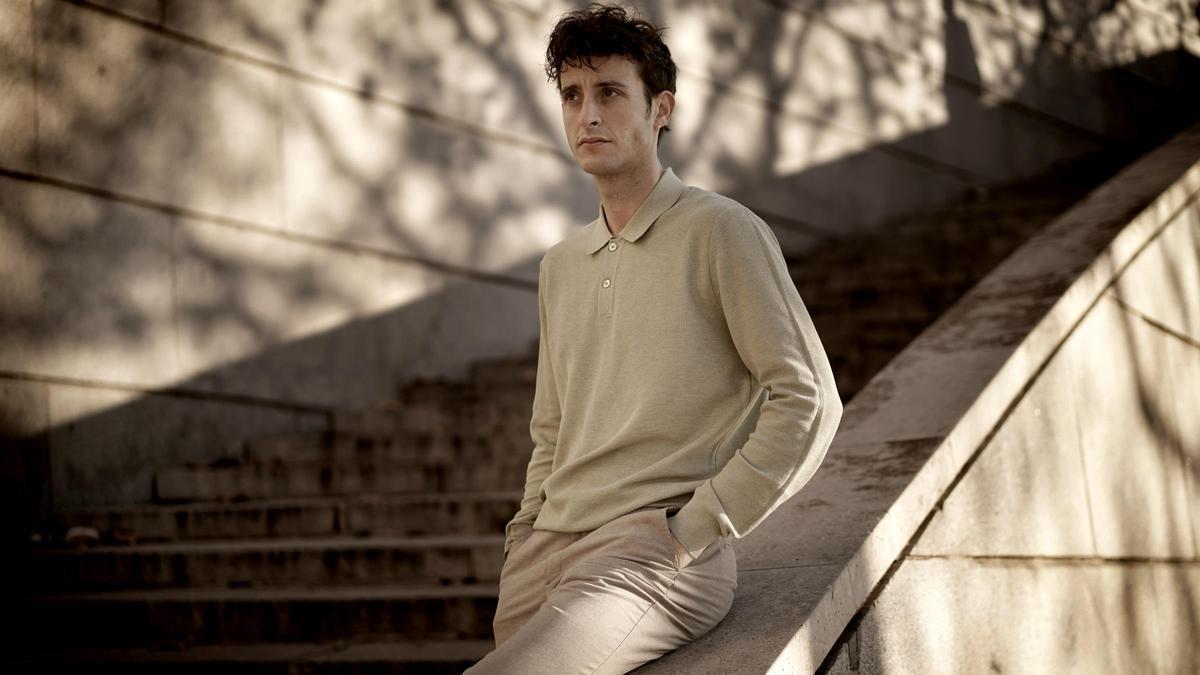

Daniel Ibáñez is still amazed when, like reciting the Lord's Prayer, he goes through his extensive resume in one breath. He has just finished the Oscar race to steer towards the Goya Awards. And, of course, the vertigo is palpable from the first word. Second Prize has given him the most important award in any career: a prominent role. The film by Isaki Lacuesta came to him after years of unstoppable rise: a peak he has reached thanks to his memorable roles in Terminator, Las leyes de la frontera, and El buen patrón. At 29, he has managed to carve out a niche in an industry filled with similar profiles. However, if it's about staying, few have his craftsmanship. This Saturday, he could take home the Best New Actor award, and despite this being no small feat, he continues to believe that there is no greater recognition than working. And he is indeed working. A lot.
"I don't usually look back, I prefer to focus on new projects," he says. However, it doesn't hurt to glance at the past to discover the level that precedes him: Arde Madrid, Los nuestros, La valla, La edad de la ira, and Galgos are some of the series that have placed him in the spotlight. He acts slowly, as he wants to leave the best taste. Perhaps, for this reason, today he is highly sought after by producers.
'Second Prize' is the film that represented Spain at the Oscars. / José Luis Roca
P. You were heading to be a doctor, what happened?
R. I've never been too squeamish about the human body. And, well, my father is in that field. So, apparently, my destiny was clear. But then, acting appeared. It led to a big argument, you know? When someone gets angry about something you decide, you tend to do it with more intensity. That's exactly what happened.
P. What did this profession offer you that you didn't find in another?
R. I've been doing theater since I was young, and since then, I realized there were other ways to express oneself. I was crazy about changing my voice and transforming reality. It was a game, it still is. So, you throw yourself into trying, experimenting, creating... It opens up paths and you meet people.
P. What kind of actor did you dream of being?
R. A good one. I've always had Javier Bardem, Javier Cámara, and Meryl Streep in mind, three solid choices.
P. Has it been fulfilled?
R. It's not for me to say. All I can say is that I can dedicate myself to it, offering the best I know how.
P. Do you remember your first casting?
R. It must have been with Rosa Estévez, I was very young. I was nervous. Today I face them with calm because, as things have gone better, I feel valued. And that helps me trust myself. At first, I went with the need to prove myself. Over time, you simplify everything because you know that both parties need each other.
P. When did you realize that this was a job?
R. Apart from the economic aspect, it was while doing Las amistades peligrosas that I felt that, if I failed, it had a consequence in the show. I was risking things. That's when I understood that, when someone pays to see you, you have to deliver.
Daniel Ibáñez has filmed 'El buen patrón' and 'Las leyes de la frontera'. / José Luis Roca
P. After debuting in Amar, by Esteban Crespo, you participated in Terminator: Dark Fate. Quite a leap.
R. Absolutely. I did a test in Spain without knowing what project it was for. I only had the script. Soon after, they told me the director wanted to see me in Madrid. I went and met Tim Miller. I was super nervous, my legs were shaking. After finishing, he dropped: "You remind me of Edward Norton." I didn't know how to take it. That night he confirmed I was in. The joy was tremendous.
P. Did you meet Arnold Schwarzenegger?
R. Yes. Although my role in the movie was with Mario de la Rosa and Claudia Trujillo, the studios are so large that you end up meeting most of the team. In fact, I bumped into Linda Hamilton in a hallway. She offered me a cigarette. I don't smoke, but I was on the verge of saying yes. Imagine that. With Schwarzenegger, I had a somewhat involuntary political conversation; he started ranting left and right.
P. On Instagram, you have a photo having coffee with Woody Allen.
R. It was a coincidence. A buddy asked me if I wanted to meet him, and a few days later, I met him in Porto. It was a strange meal, one for the memory books. Everyone has a preconceived idea of him and the strangest thing is that sometimes, it holds true. You expect him to break your schemes and no: it was Woody Allen with his legs crossed. We talked about the craft, I remember he asked me about the Rubiales matter. Later, we went to a jazz concert.
P. One of the series that made the most impact was La valla, set in a dictatorial Spain in 2045. What did you think when you read the script?
R. Luis San Narciso called me into the Mediapro offices to talk about a role he had for me. He only mentioned that the plot was a dystopia. When I read the text, I thought it was risky and that it could work. However, no one then anticipated the quarantine we had to live through weeks later due to COVID-19.
P. You worked with Ángela Molina, Unax Ugalde, and Juan Blanco. Is it intimidating to share the screen with such prestigious artists?
R. It's impossible not to feel tiny next to them. However, during filming, I discovered that the most recognized personalities in the industry are, surprisingly, the most dedicated and generous.
P. What did you learn from Javier Bardem in El buen patrón?
R. Something that surprised me is that he looks for things in each take. It's amazing, everything that goes through him is true. I don't know how he does it. He's a powerhouse. Working with people like that helps you relax and enjoy. For his part, Fernando León de Aranoa repeats a lot. He is meticulous with elements that he knows and is interested in refining.
Daniel Ibáñez's latest project is 'Aves de corral'. / José Luis Roca
P. Your last movie was Second Prize, the film about Los Planetas that won the Silver Biznaga in Malaga and was chosen to represent Spain at the Oscars. What is it like to live such a journey at 29?
R. So many good things are happening that I don't want the bubble to burst. I'm not capable of managing either the good or the bad. Fortunately, there's a lot of joy around me.
P. You're nominated for a Goya, what could a cabezón give you?
R. Visibility. However, awards are designed to prolong the life of movies; we shouldn't give them vital importance. They are unfair, whether you receive them or not. My performance will remain there regardless of what happens.
P. You are on tour with Para la libertad, a play in which you embody Miguel Hernández. Is it overwhelming to step into the shoes of someone like that?
R. I surrounded myself with professionals better than me, I thought it would help to listen to them. Joan Manuel Serrat gave me confidence. He told me to do with his music the same he did with the poetry of Miguel Hernández.
P. Do you feel that your career, from the series Si fuera tú, the first one, has grown rapidly?
R. Yes. It hasn't been overnight, but it has been exponential. Second Prize has meant a lot in the projects I will tell about. It has seriously introduced me to cinema.
P. Aren't you afraid of losing focus?
R. That fear exists, especially because of the sirens' calls that hit us. Sometimes, you're deafer. And other times, on the contrary, you sharpen your hearing. The key is to surround yourself with people who love you and whom you love.
P. Who do you dedicate your successes to?
R. To my family and friends. Not forgetting those who have given me an opportunity.

Latest news





Upcoming events
12
Nov
El Desembarco, la traición de Viriato at La Caja Blanca
12
Nov
HOMER El Mero Mero at Sala Trinchera Málaga
13
Nov
Marbella Startup Lab – Innovate & Collaborate
13
Nov
Candlelight: Coldplay & Imagine Dragons at Sala Fundación Unicaja María Cristina
13
Nov
Candlelight: Tribute to Ludovico Einaudi at Anantara Villa Padierna
Similar News

The Cat Guardian: Nearly 14 Years of Rescues and 16,500 Neutered Cats
Málaga

María Barranco resurfaces after hitting rock bottom: "No one can sink me"
Málaga
Ana Duato: "Merche taught me to be a woman, a person, and an actress"
Málaga
