


Science and history will come together in Marbella from October 6 to 8 in the series 'Scientific Expeditions in Latin America'
Experts from the University of Málaga will give lectures at the Hospital Real de la Misericordia on the explorations of Malaspina, Balmis, and Humboldt.
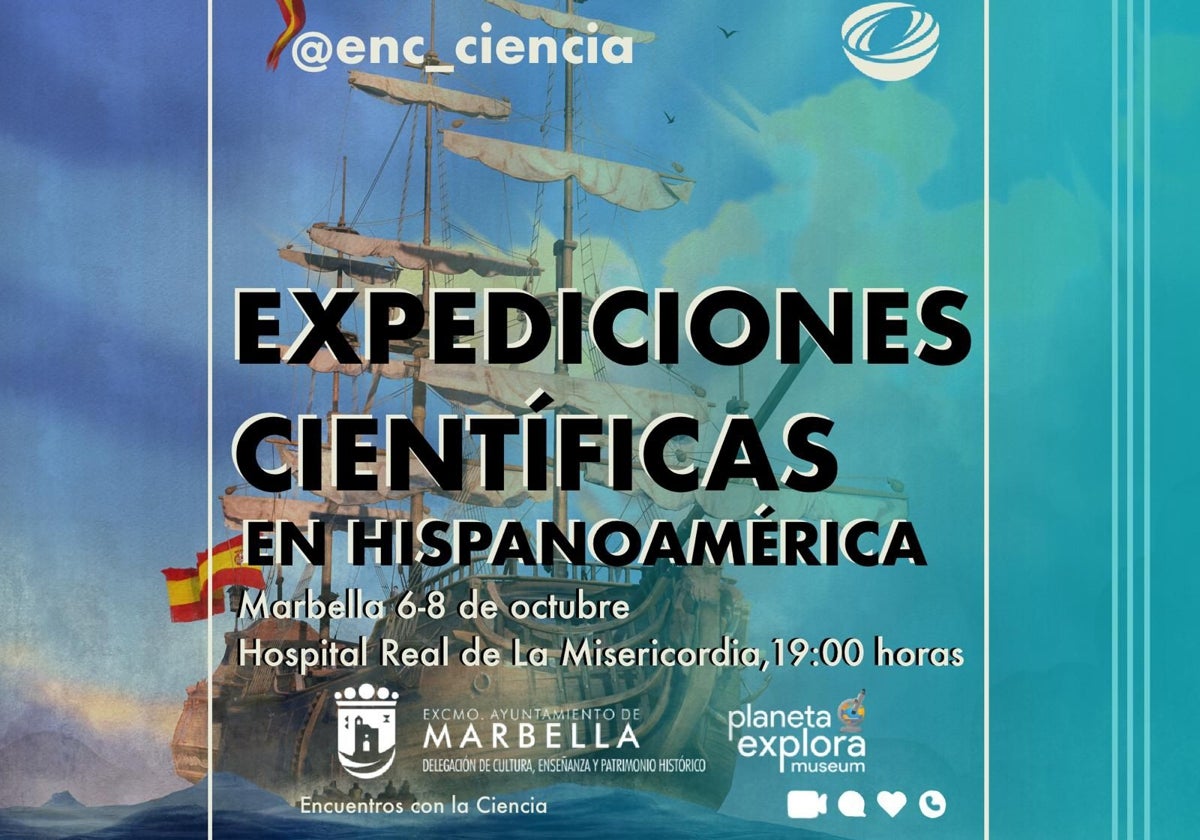

Science and history will come together from October 6 to 8 in the series 'Scientific Expeditions in Spanish America', organized by the Cultural Department of the Marbella City Council. The Royal Hospital of Mercy will host lectures on the explorations of Malaspina, Balmis, and Humboldt given by experts from the University of Málaga. This initiative, which is held annually around October 12, aims to bring to the public significant historical episodes and provide a space for reflection on the role of science in the shared history of Spain and America.
The program will start on Monday, October 6, at 7:00 PM, with the lecture 'Malaspina: the voyage around the world in the name of science', given by Professor Enrique Viguera Mínguez, who will discuss the enlightened expedition that traveled across oceans and continents with naturalists, astronomers, and cartographers on board. On Tuesday, October 7, also at 7:00 PM, Professor Ana Grande Pérez will deliver the talk 'The Smallpox Vaccine: Balmis' Philanthropic Expedition Overseas', dedicated to the mission that brought smallpox immunization to overseas territories, saving thousands of lives and laying the foundation for international vaccination.
Finally, on Wednesday, October 8, at 7:00 PM, Professor Miguel Ángel Medina Torres will conclude the series with 'The Humboldt Expedition to Spanish America, 1799-1804', in which he will highlight the scientific significance of a journey that fed much of the work of the German naturalist and made him a key figure in modern ecology. The three lectures are free to attend until full capacity is reached and represent an opportunity to value the union of science, exploration, and social commitment that characterized those expeditions, as well as their essential legacy to understand history and its impact on society.

Latest news





Upcoming events
12
Nov
El Desembarco, la traición de Viriato at La Caja Blanca
12
Nov
HOMER El Mero Mero at Sala Trinchera Málaga
13
Nov
Marbella Startup Lab – Innovate & Collaborate
13
Nov
Candlelight: Coldplay & Imagine Dragons at Sala Fundación Unicaja María Cristina
13
Nov
Candlelight: Tribute to Ludovico Einaudi at Anantara Villa Padierna
Similar News

Málaga Airport Makes History with More Than Three Million Passengers in One Month
Málaga

Port of Málaga looks beyond its docks to support future growth
Málaga

Guide to the Virgen del Carmen Processions in Málaga and the Province
Málaga
